
Blog
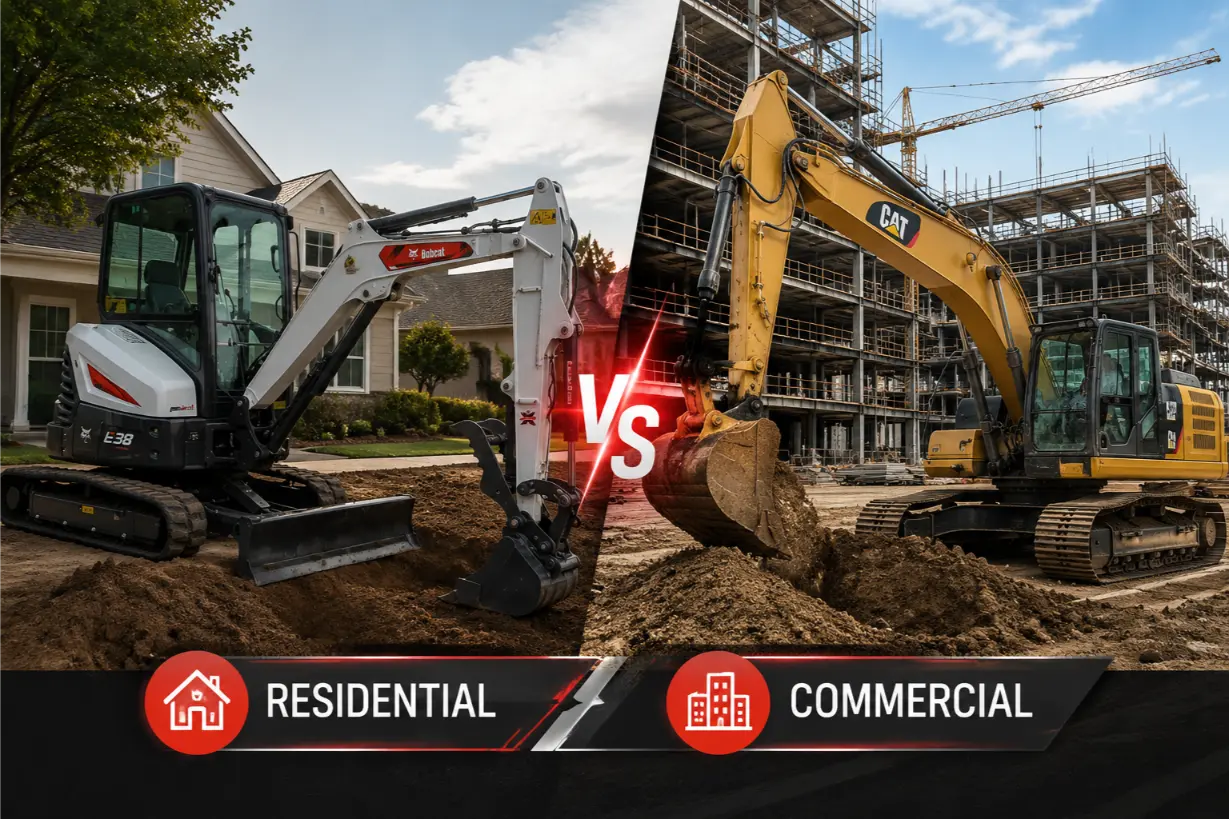
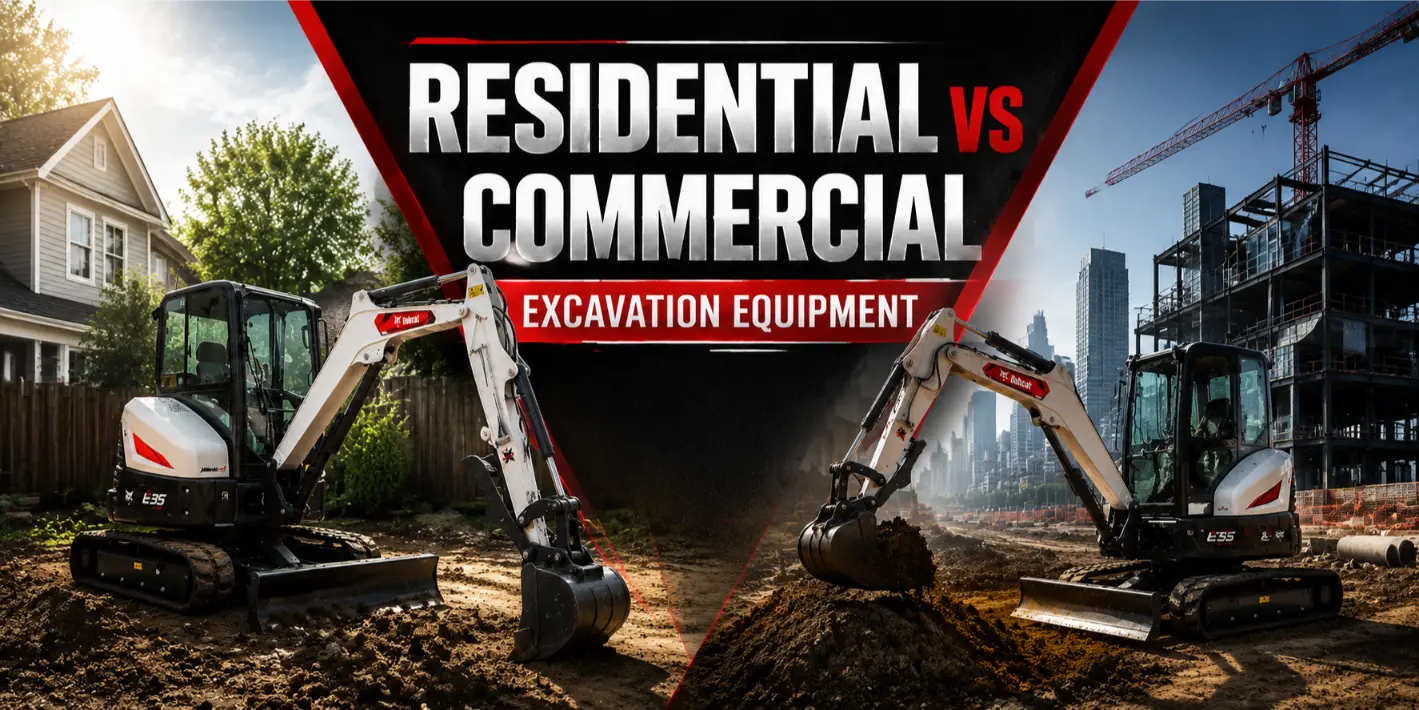
Ask five contractors what “excavation equipment” means and you’ll get five different answers, depending on whether they’re digging a backyard drainage line or clearing a half acre commercial pad. That difference matters more than most homeowners and even some new contractors realize. The wrong machine on a residential job doesn’t just slow things down, it can tear up a lawn, crack a driveway or get stuck in a gate that was never meant for anything wider than a garden cart. If you’re comparing residential excavation equipment against commercial grade machinery for a project on Long Island, here’s what actually separates the two and how to pick correctly the first time.
Why Size Is the First Decision, Not an Afterthought
Every excavation project starts with the same question: how much machine does this job need? On a residential lot in Nassau or Suffolk County, the real constraint usually isn’t horsepower, it’s access. Narrow driveways, fenced yards and septic systems buried three feet from the foundation mean the machine has to fit before it can dig.
Commercial sites flip that equation. A parking lot expansion or a new warehouse pad has room to work with, so the priority shifts to output: how much material can move in a day and how deep can the bucket reach before the operator needs a second pass.
Residential Excavation Equipment: Built for Tight Spaces
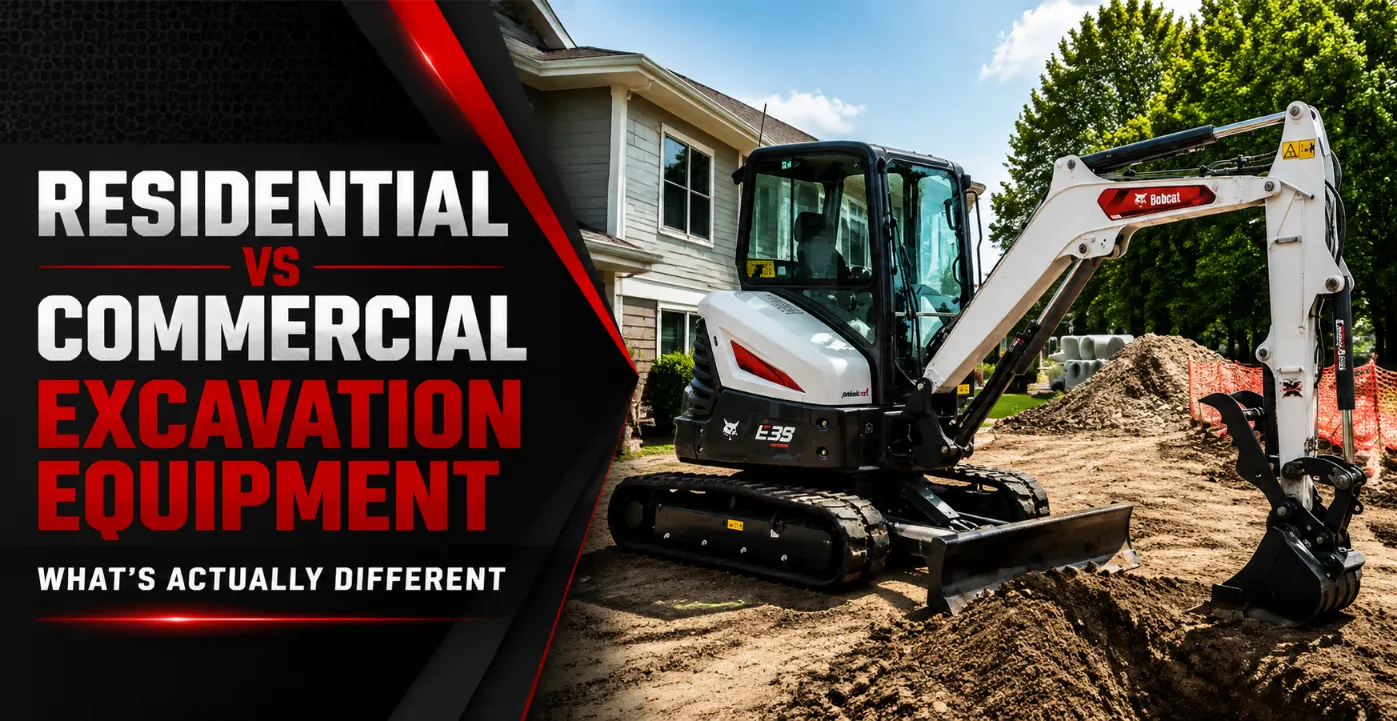
Most residential jobs on Long Island call for a mini or compact excavator, generally in the 2 to 5 ton range. These machines are narrow enough to pass through a standard gate, light enough to avoid rutting a lawn and precise enough to dig a trench beside an existing foundation without touching it.
- Foundation and basement work — digging along an existing structure where a few extra inches of clearance make the difference between a clean job and a repair bill
- Drainage and septic installation — trenching that needs to follow a specific grade without overdigging
- Pool excavation — working inside a fenced backyard where a full-size machine simply won’t fit through the gate
- Landscaping and grading — reshaping a yard without destroying what’s left of it
A zero tail swing model is worth asking about specifically if the yard has a fence, a shed or a neighbor’s property line close by. The rear end of the machine stays inside the tracks instead of swinging out, which matters a lot on the tight lots common across Nassau and Suffolk. JEH’s Bobcat E35 mini excavator is built around exactly this kind of job and it’s the machine we send out most often for backyard and foundation work.
Commercial Excavation Equipment: Built for Volume
Commercial excavation trades precision for capacity. A full size or crawler excavator, often in the 10 ton and up range, can move dramatically more material per bucket pass, dig deeper for utility and foundation work on larger structures and hold up to the kind of daily runtime a construction schedule demands.
These machines show up on:
- New commercial foundations and building pads
- Site preparation for retail, warehouse or municipal projects
- Utility installation that runs deeper or wider than a residential trench
- Grading and land clearing across larger parcels
The tradeoff is straightforward: a full size excavator needs road access, a stable staging area and enough clearance to maneuver. That’s rarely a problem on a commercial lot but it’s exactly why the same machine doesn’t belong on a residential job.
How Do I Know Which Excavator Size I Need?
If you’re not sure which category your project falls into, ask three questions. First, how wide is the access point the machine has to pass through? Anything under 4 feet generally rules out a full size machine. Second, how deep does the dig need to go? Mini excavators typically reach 8 to 10 feet, which covers most residential foundation and drainage work, while commercial-depth utility trenching often needs more. Third, is there a structure, fence or utility line within a few feet of the dig? If yes, precision matters more than speed and that points toward a compact machine regardless of the project’s overall size.
What About Skid Steers and Backhoes?
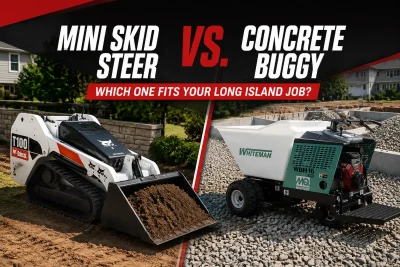
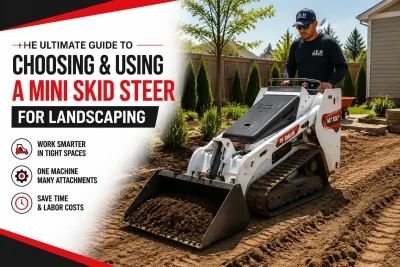
Excavators aren’t the only option and sometimes they’re not even the right one. A skid steer or compact track loader handles material movement, grading and site cleanup faster than an excavator on jobs that don’t need deep digging. JEH’s Bobcat MT100 mini skid steer is a common pairing on residential projects that need both trenching and material hauling, since it can access the same tight spaces a mini excavator can. A backhoe loader splits the difference, offering digging on one end and loading on the other, which works well for utility and drainage jobs that need both functions without renting two machines.
Local Conditions on Long Island Change the Equation Too
Soil composition across Nassau and Suffolk County runs from sandy loam near the coast to heavier clay further inland and that affects digging speed and bucket selection regardless of machine size. High water tables in low lying areas can also turn a straightforward trench into a job that needs shoring and a pump on standby. In NYC’s outer boroughs, the bigger constraint is usually the property itself: row houses, narrow driveways and shared walls mean compact equipment isn’t a preference, it’s the only option that fits. Anyone planning excavation near a property line or an existing structure should also be familiar with the trenching and excavation safety standards published by OSHA, which cover protective systems for anything deeper than five feet.
Renting the Right Equipment for Your Project
Getting equipment sizing wrong costs more than a rental fee. An oversized machine on a residential lot can mean landscaping repairs, a damaged driveway or a job that takes longer because the equipment can’t maneuver. An undersized machine on a commercial site means falling behind schedule and paying for a second rental to finish the job.
JEH Equipment Rentals stocks both ends of that range, from compact mini excavators built for backyard and foundation work to the larger equipment commercial sites need, with same day delivery available across Long Island and NYC. If you’re not sure which machine your project calls for, our team will walk through the access points, depth requirements and soil conditions with you before anything gets delivered.
Ready to get the right equipment on site? Reserve your excavator or skid steer online or give us a call and we’ll help you match the machine to the job.