
Blog
Pour a patio, pave a driveway or set fence posts on ground that hasn’t been properly compacted and for a little while, everything looks fine. Then a wet spring comes or the ground freezes and thaws a few times and you start noticing things: a paver that’s sunk an inch lower than its neighbors, a hairline crack creeping across the slab, a low spot where water now pools after every rainstorm. None of that is bad luck. It’s almost always the soil underneath telling you it was never packed down the way it should have been.
Soil compaction doesn’t get much attention because you can’t see it once the job is done. But it’s the single biggest factor in whether a driveway, patio, shed pad, retaining wall or foundation stays flat and stable for the next twenty years or starts failing within two.
What Compaction Actually Does
Soil in its natural or freshly dug state is full of tiny air pockets between the particles. Compaction is simply the process of mechanically pressing those particles closer together, squeezing the air out and creating a denser, more solid base. A properly compacted soil is:
- Stronger : it can carry more weight without shifting or deforming.
- More stable: the particles interlock instead of sliding past each other.
- Less permeable: water moves through it more slowly, which cuts down on erosion and pooling.
The amount of moisture in the soil matters just as much as the compaction effort itself. Soil that’s too dry won’t bind together; soil that’s too wet acts almost like a water balloon and resists compaction entirely. Getting that moisture window right engineers call it the “optimum moisture content” is why experienced crews test soil rather than just running equipment over it and hoping for the best.
Why This Matters More on Long Island
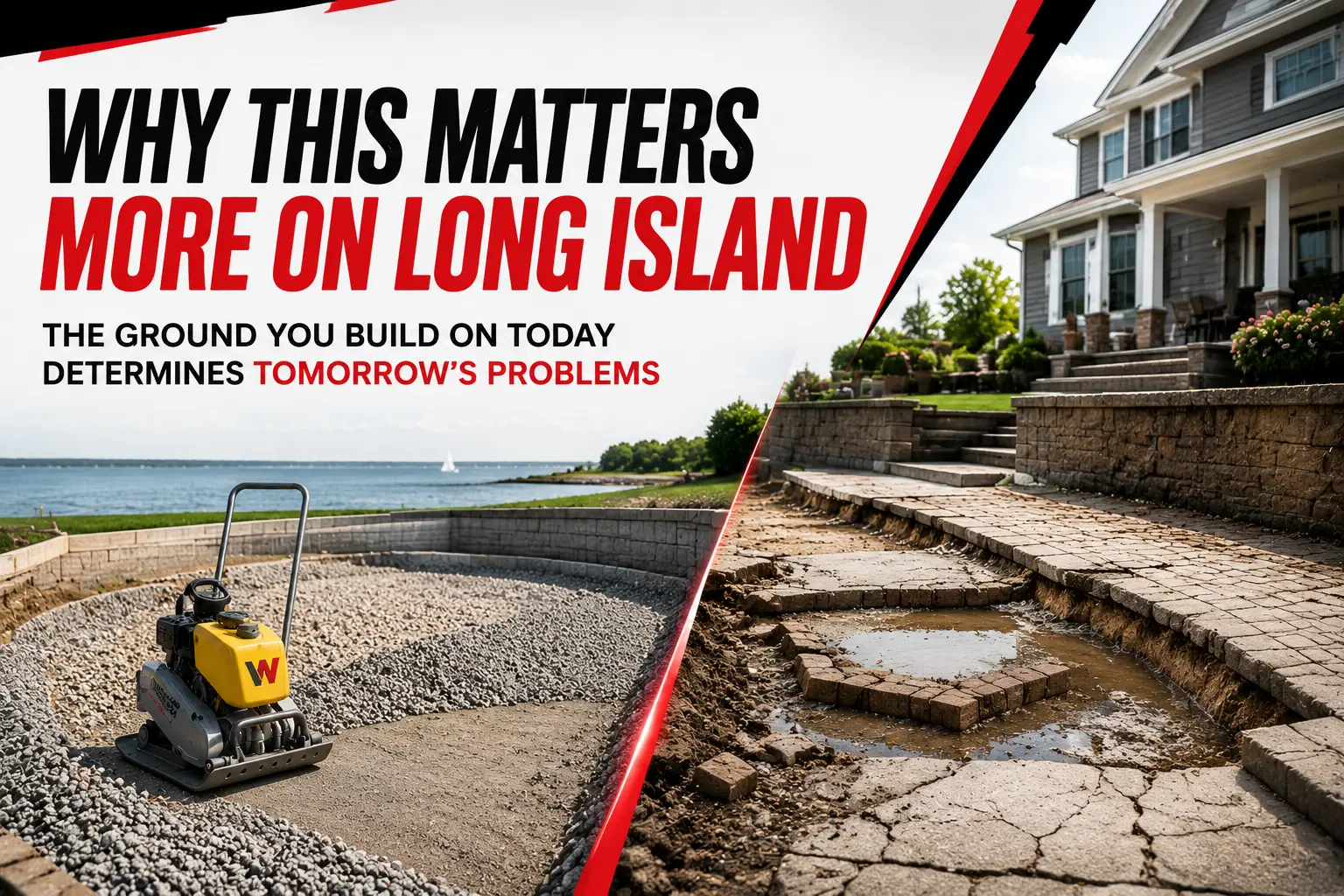
Soil conditions here aren’t uniform and that’s exactly the problem. Long Island’s ground is largely sandy and glacially deposited, which means it can range from loose, well-draining sand in one yard to compacted clay lenses or loamy fill just a few properties over. Add a high water table in many coastal and low-lying areas and you’ve got soil that’s especially prone to shifting when it isn’t compacted correctly during backfill or site prep.
A lot of residential lots also sit on fill brought in during past development soil that was never engineered for load-bearing use in the first place. Skip proper compaction on fill like that and it’s not a matter of if it settles, it’s when.
What Happens When Compaction Gets Skipped
The consequences rarely show up on day one. They show up months or years later, which is exactly why the step gets overlooked:
- Uneven settling: sections of a patio, walkway or driveway sink at different rates, creating trip hazards and drainage low points.
- Cracked concrete and pavers: once the base underneath shifts, whatever sits on top has nowhere stable to rest.
- Standing water and erosion: loose soil doesn’t shed water the way compacted soil does, so puddling and soil washout become chronic problems.
- Foundation and structural issues: for sheds, additions, retaining walls or any structure, poor compaction under the footing is one of the most common causes of cracking and shifting down the road.
- Redo costs: fixing a settled base after the fact almost always costs more than compacting it correctly the first time.
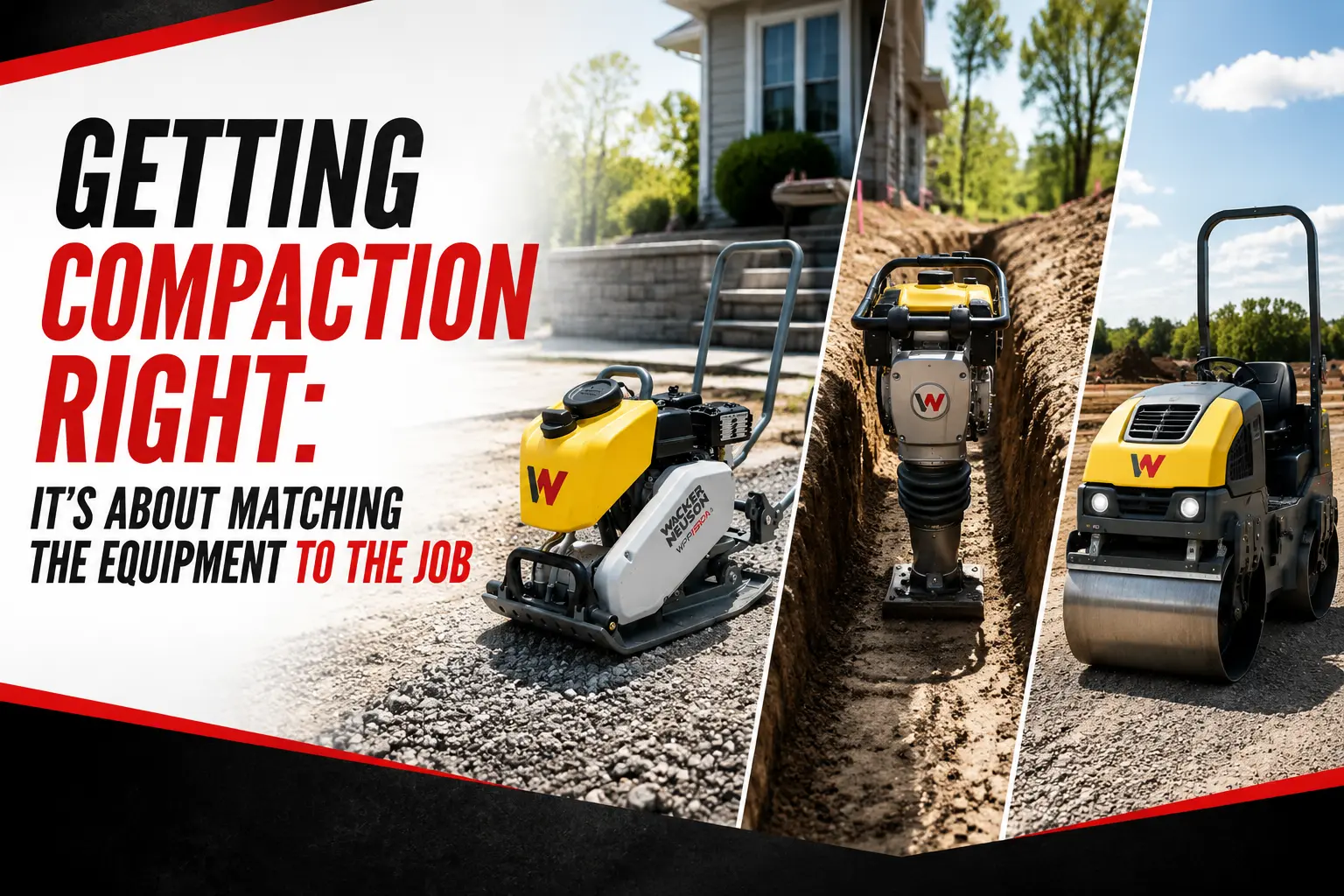
Getting Compaction Right: It’s About Matching the Equipment to the Job
There’s no single tool that handles every compaction job. The right equipment depends on the soil type, the depth of the fill and what you’re building on top of it:
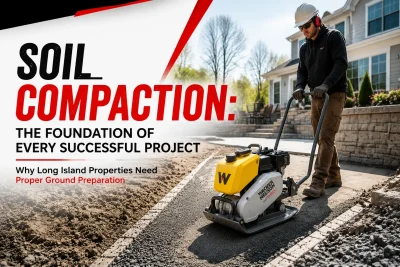
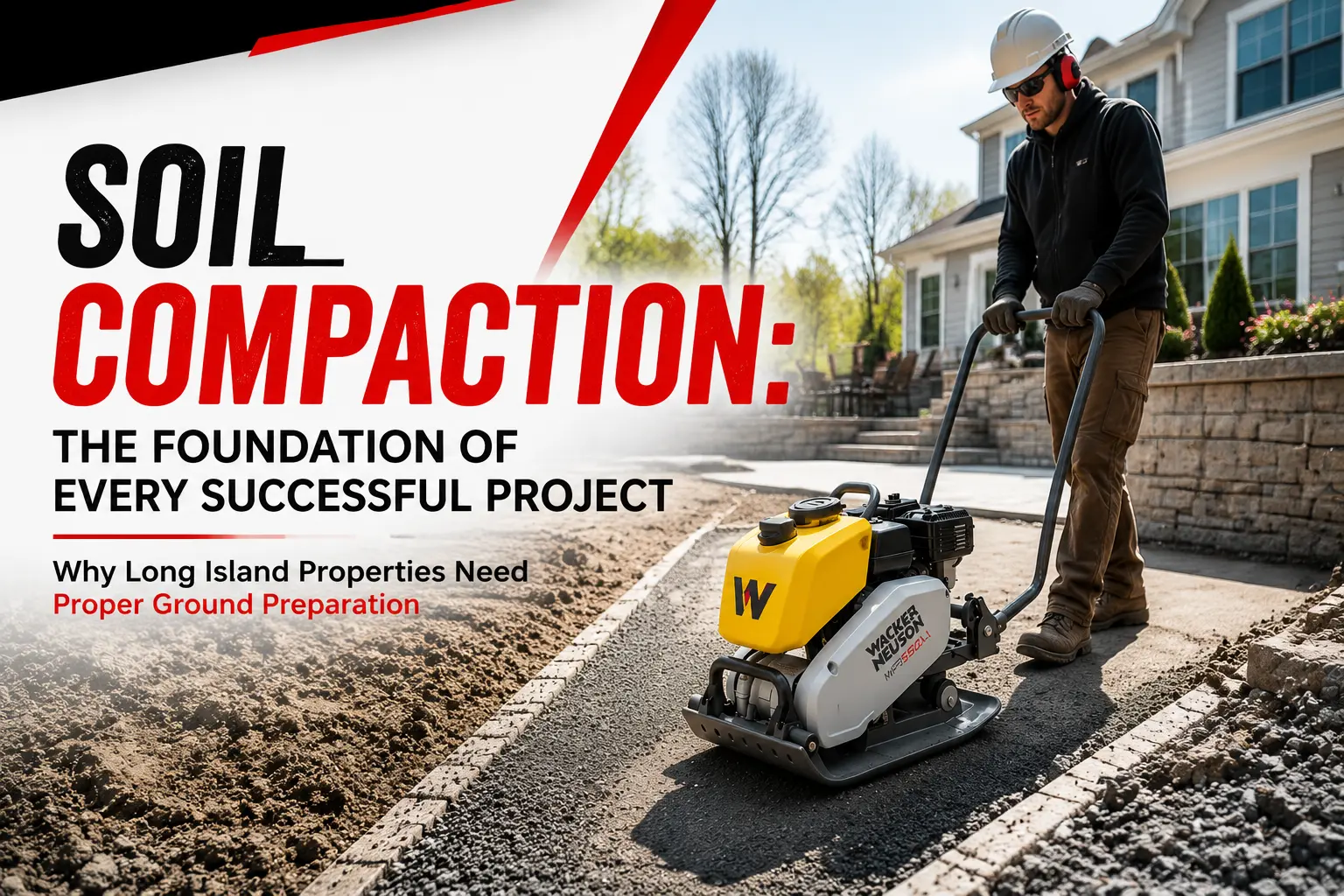
- Plate compactors are the workhorse for granular soils like sand and gravel ideal for patios, walkways, paver projects and shallow backfill around utility lines. A vibratory plate compactor rated for the job can achieve far more density in a few passes than hand-tamping ever will.
- Vibratory rammers (jumping jacks) are built for cohesive soils like clay and loam and they’re the better choice for narrow trenches think utility lines, footings and backfill against foundation walls where a wide plate compactor can’t reach.
- Rollers come into play on larger areas driveways, parking pads and bigger landscaping projects where covering ground efficiently matters as much as compaction depth.
Using an underpowered compactor or the wrong type for the soil, is one of the most common reasons a homeowner does the work and still ends up with the same settling problems a few seasons later.
Renting the Right Compactor for Your Long Island Project
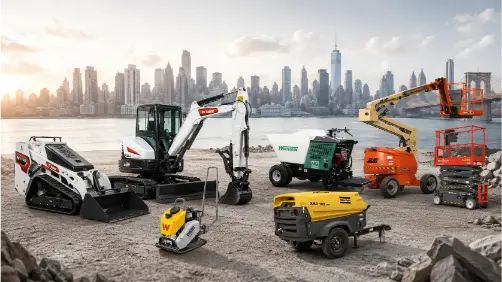
You don’t need to own a plate compactor or rammer to get this step right you need access to the correct one for a day or a weekend. That’s where J.E.H Equipment Rentals comes in. We stock commercial-grade compaction equipment, including Wacker Neuson plate compactors and rent to homeowners and contractors across Nassau County, Suffolk County, NYC, Queens and Brooklyn.
Whether you’re prepping a base for a new paver patio, backfilling a trench, compacting fill before a shed pad or handling a larger driveway job, our team can help you match the right machine to your soil and project no guesswork required.
A few tips before you rent:
- Know your soil type. Sandy, well-draining soil and dense clay respond differently to compaction and that affects which machine you’ll want.
- Compact in layers, not all at once. For any fill deeper than a few inches, compact in stages (commonly 6–8 inch “lifts”) rather than trying to compact the whole depth in one pass.
- Check the moisture. If you can form the soil in your hand and it holds together without crumbling or oozing water, you’re usually in a reasonable range to compact.
- Don’t undersize the equipment. A small homeowner-grade compactor may not deliver enough force for anything beyond the lightest landscaping tasks.
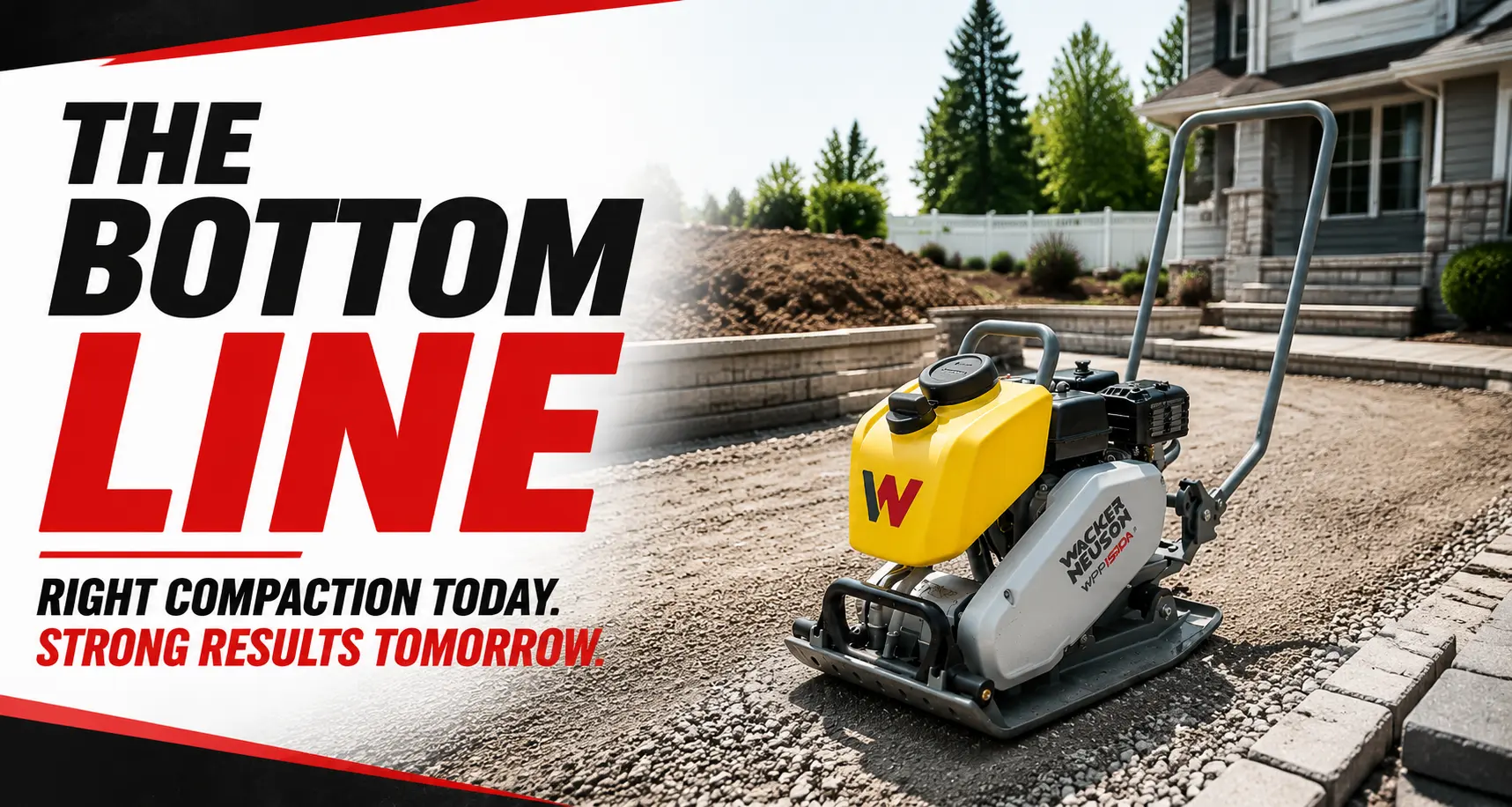
The Bottom Line
Soil compaction is easy to overlook because it happens below the surface, but it plays a major role in the long-term stability of driveways, patios, retaining walls, foundations, and other construction projects. Using the right compaction equipment at the beginning of a project can help reduce settling issues and create a more stable base for the work ahead.
If you have a project coming up on Long Island and need the right compaction equipment, J.E.H Equipment Rentals can help you choose the right machine for your application. From Wacker Neuson plate compactors to other jobsite equipment, we provide reliable rental solutions for contractors, landscapers, and property owners across Long Island, Nassau County, Suffolk County, and nearby New York areas.
Contact J.E.H Equipment Rentals to request availability and get your project started with the right equipment.