
Blog
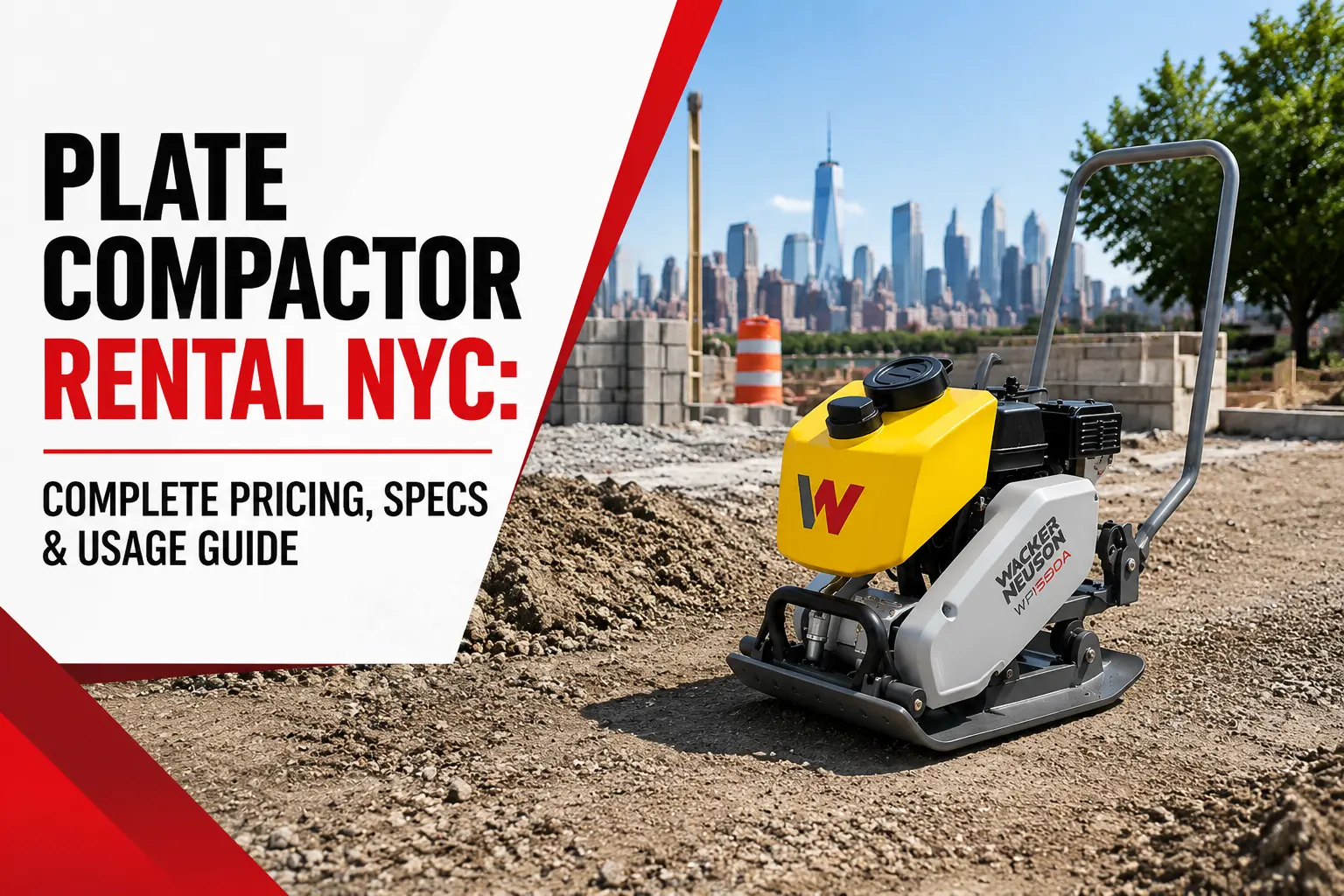
Getting a paver patio, driveway sub-base or trench backfill to hold up for years instead of settling after one season comes down to one thing: proper compaction. Renting the right plate compactor and using it correctly is the fastest way to get there. Here’s a guide for NYC contractors and property owners, covering equipment selection, typical rental rates, safe operation and what to expect when you book with J.E.H Equipment Rentals.
What Is a Plate Compactor and When Do You Need One?
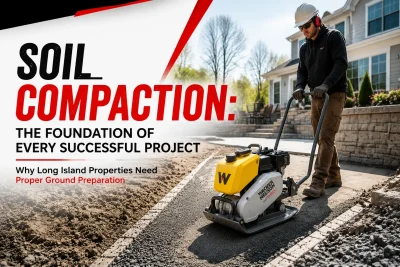
A plate compactor is a vibrating machine that presses down on soil, gravel, sand or asphalt to drive out air pockets and increase material density. That density is what helps prevent pavers from shifting, concrete slabs from cracking and drainage systems from failing after heavy rain.
You’ll typically need one for:
- Paver patio, walkway or driveway base preparation
- Backfilling utility or drainage trenches
- Compacting gravel or crushed stone before a concrete pour
- Small-scale asphalt patch repair
- Prepping a sub-base for a shed, deck footing or fence line
Plate Compactor vs. Rammer (Jumping Jack): Which One Do You Need?
This is one of the most common mix-ups on NYC job sites and renting the wrong machine can mean a wasted trip and a redo.
- Plate compactors generally work best on granular, non-cohesive materials sand, gravel, crushed stone over broader, relatively flat areas. Think patios, driveways and open trench bottoms.
- Rammers (jumping jacks) deliver a higher impact, more concentrated force typically better suited to cohesive soils like clay and silt and to narrow trenches where a wide plate won’t fit.
If your project involves both say, a wide trench that narrows near a foundation wall you may need both machines or you can ask J.E.H which single unit best fits the bulk of the job.
Forward-Plate vs. Reversible Plate Compactors
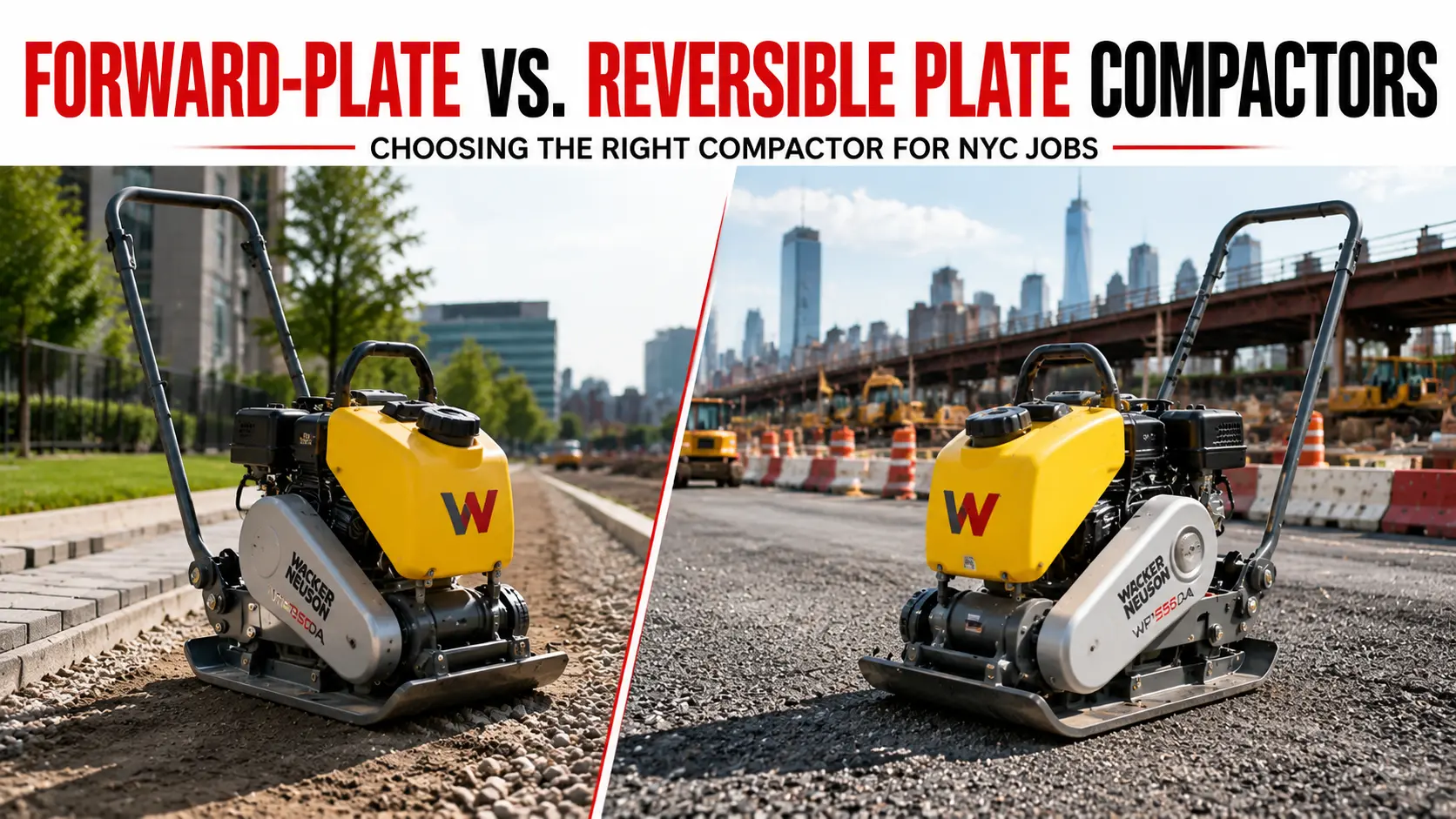
Within the plate compactor category, there are two main options:
- Forward-plate (vibratory) compactors move in one direction and are generally suited to granular materials sand, gravel, crushed stone covering compaction depths in roughly the 6″–12″ range. This fits the majority of residential and light commercial jobs: paver bases, walkways, small driveways and trench backfill.
- Reversible plate compactors travel forward and backward with higher compaction force and are generally better suited to larger areas and greater compaction depths, such as parking lots or roadwork.
For many jobs across NYC’s five boroughs, a forward-plate vibratory compactor in the 17″–20″ plate width range is a common fit though the right size ultimately depends on your specific site and soil conditions, so it’s worth confirming with J.E.H before booking.
The Wacker Neuson Plate Compactor Available at J.E.H
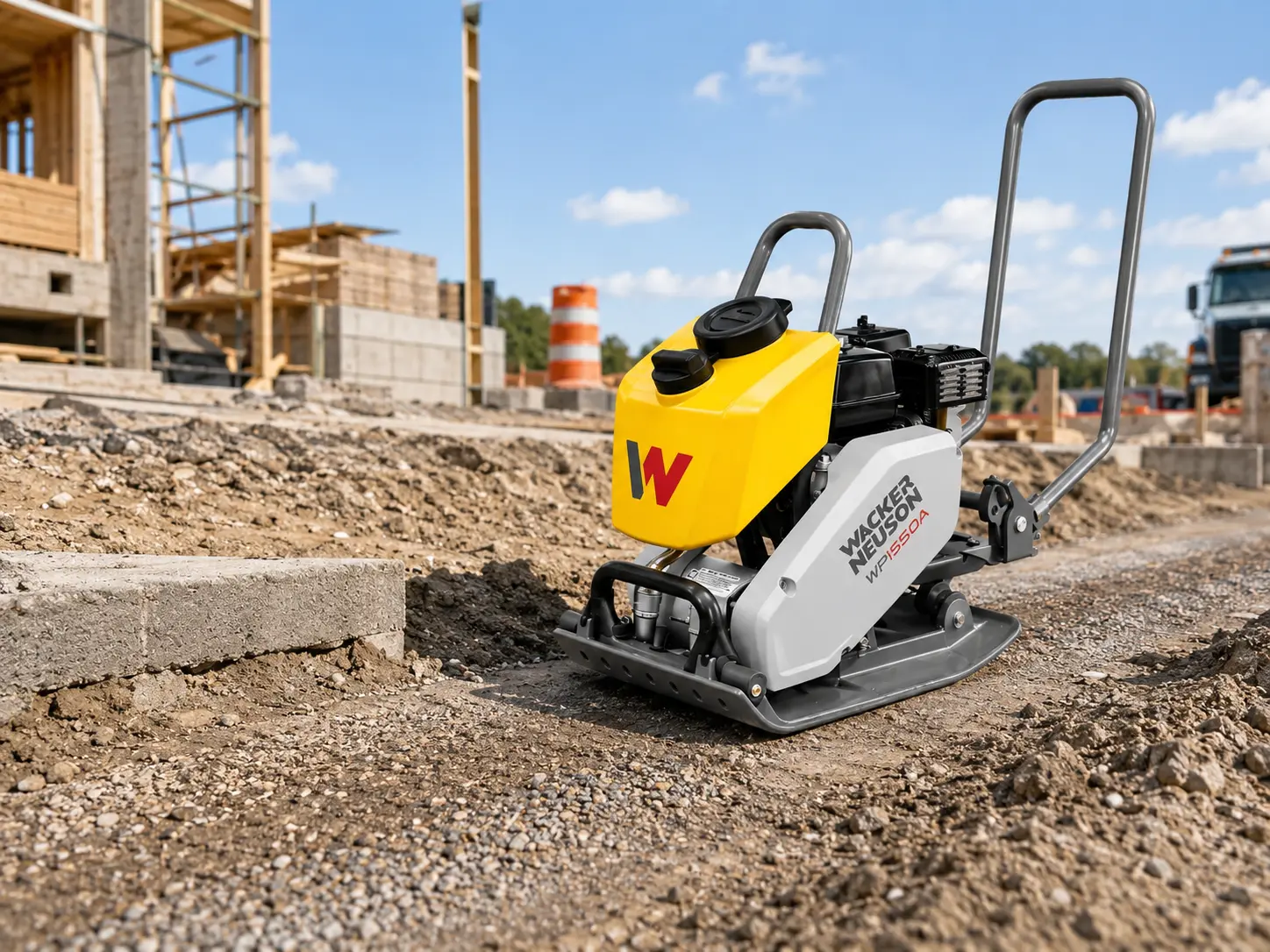
J.E.H Equipment Rentals stocks a Wacker Neuson 17″–20″ vibratory plate compactor, a widely used machine known for balancing compaction force with maneuverability on tight residential and urban lots. It’s commonly used for:
- Paver and hardscape base preparation
- Driveway and walkway sub-base compaction
- Trench backfill after utility or drainage work
- Small-scale asphalt patch compaction
Check the product page for current availability and full specs or visit our NYC equipment rentals page to see the rest of our contractor lineup excavators, skid steers, lifts and compressors.
Plate Compactor Rental Rates in NYC
Pricing depends on the vendor, machine size and rental duration. As a general New York market estimate, rates commonly fall into these ranges:
| Rental Period | Typical Price Range |
| Daily | $70 – $120 |
| Weekly | $280 – $480 |
| Monthly | $800 – $1,200 |
These figures are general market estimates, not a quote actual pricing depends on the specific machine, rental dates, configuration, delivery distance and current availability. Weekly rentals often offer better value per day than daily rates stacked together, since many rental companies price the week at roughly 3–4x the daily rate rather than 5–7x.
J.E.H’s own Wacker Neuson compactor listing separately shows a $100–$860 range depending on rental length. Reserve online or call to confirm the exact rate for your dates.
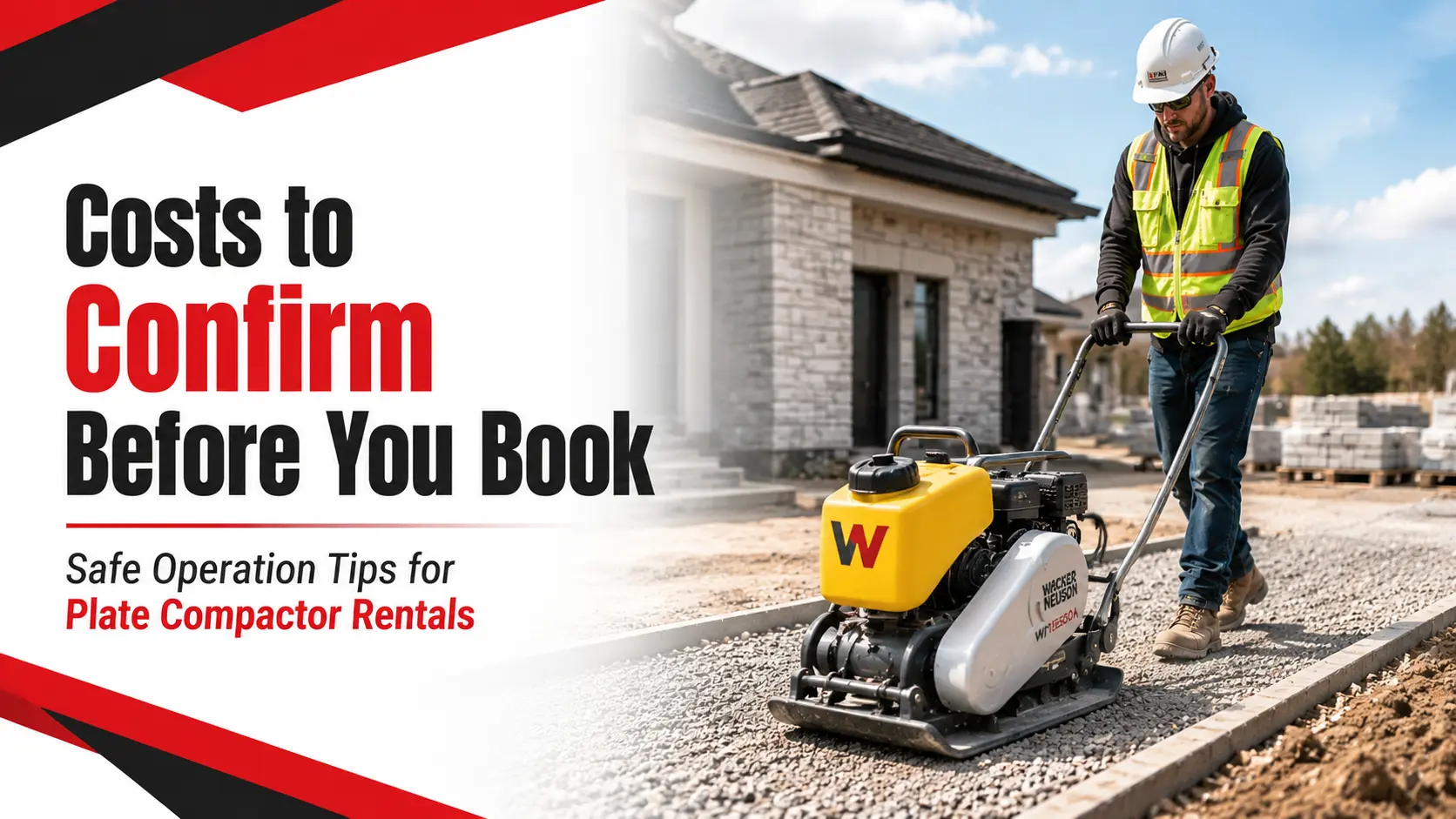
Costs to Confirm Before You Book
Ask about these when you reserve, since practices vary by rental company and by job location:
- Delivery and pickup fees may be flat-rate or mileage-based; confirm whether your specific job site is within the standard delivery area
- Fuel surcharges
- Damage waiver ask whether one is offered, what it covers and its cost
- Cleaning fees equipment returned with excess mud, concrete or debris can incur extra charges
- Weather-related scheduling flexibility ask whether your rental window can be adjusted if rain delays your start
Confirming these upfront with J.E.H avoids surprises on your final invoice.
Safe Operation Tips
Plate compactors are relatively simple to run, but always follow the specific manufacturer’s operating manual for the unit you’re using controls, guarding and safety features vary by model. General good practice includes:
- Wearing hearing protection and steel-toe boots, since these machines are loud and heavy
- Keeping both hands on the guide handle and maintaining a firm, balanced stance; never standing in front of or straddling the plate
- Walking the compactor at a steady pace rather than forcing it forward
- Maintaining a safe distance from open trench edges, per your site’s shoring and excavation safety plan
- Following the manufacturer’s shutdown procedure before making adjustments or clearing debris from the plate
- Requesting a walkthrough at pickup if it’s your first time operating that specific model
For broader guidance on safely operating mechanized construction equipment, see OSHA’s construction standards for motor vehicles and mechanized equipment (29 CFR 1926 Subpart O).
Renting for Tight-Access NYC Job Sites
Tight-access sites narrow brownstone side yards, rear gardens behind a walk-up or lots with only alley access are common across NYC and they affect which machine size makes sense:
- Measure gate widths, alley clearances and any stairs or grade changes before booking and share those dimensions with J.E.H so an appropriately sized compactor is loaded for delivery
- Narrower plates tend to maneuver more easily through gates and around existing landscaping than wider units, though the tradeoff is coverage speed on open areas
- For rooftop or elevator-access jobs, confirm the machine’s weight against your building’s freight elevator limits before scheduling delivery
- If truck access to the site is limited, ask J.E.H about curbside drop-off options and any hand-carry distance involved
Protecting Pavers, Existing Surfaces & Hardscaping During Compaction
If you’re compacting near finished surfaces you need to preserve an existing walkway, a neighbor’s driveway or hardscape already installed a few precautions can help reduce risk of damage:
- A protective mat or pad under the plate is commonly used when compacting close to pavers, to help reduce the risk of chipping or surface marring check with the equipment manufacturer or rental provider on compatible options for your specific machine
- Keeping some distance from the finished edge and hand-tamping the final border is a common approach, rather than running the plate directly against it
- Some machines offer adjustable vibration settings; consult your unit’s operating manual to see whether reducing intensity near delicate surfaces is an option
- Sweeping loose debris away from the plate before each pass helps avoid grinding grit into finished stone
Compacting in Wet or High-Moisture Conditions
Moisture content has a significant effect on how well soil or gravel compacts:
- Soil that’s too wet often won’t compact properly it can pump or shift under the plate instead of densifying, sometimes trapping water underneath
- Soil that’s too dry may not bond well either; a light misting can sometimes help granular material compact more effectively
- After heavy rain, allowing the site to drain toward a workable moisture level before compacting is generally advisable
- If weather is affecting your schedule, ask J.E.H whether there’s flexibility on your rental window so you’re not paying for days lost to conditions outside your control
How to Choose the Right Compactor for Your Job
- Match the machine to the material. Sand and gravel generally call for a forward-plate compactor; clay-heavy or mixed soils or narrow trenches, may call for a rammer instead.
- Size the plate to the space. Narrower plates tend to maneuver better in tight NYC lots; wider plates typically cover open areas faster J.E.H can help you weigh the tradeoff for your site.
- Confirm operator familiarity. Ask for a quick walkthrough at pickup if it’s your first time on that specific model.
- Time the rental to your workflow. Scheduling delivery for the start of compaction work, rather than before, helps you get full use of your rental window.
- Plan the return. Rent for the number of days you expect to use the machine and return it promptly extra rental days add up.