
Blog
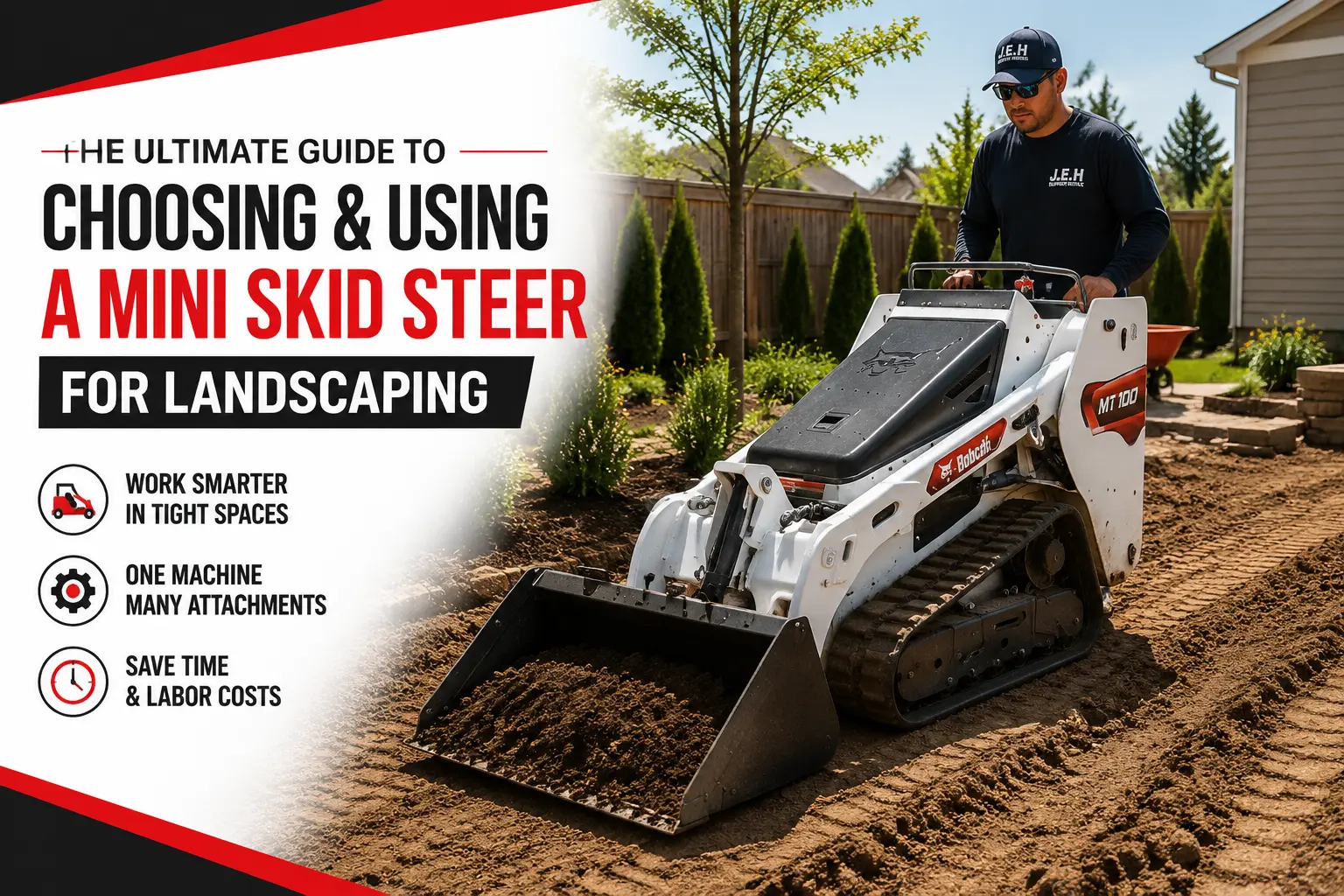
Have you ever watched a crew spend an entire morning hand-digging a trench or hauling wheelbarrow after wheelbarrow of mulch across a backyard? In landscaping, tight spaces are the norm, not the exception. Backyard renovations, narrow side yards and gated properties all rule out full size equipment but the work still has to get done fast, clean and on budget.
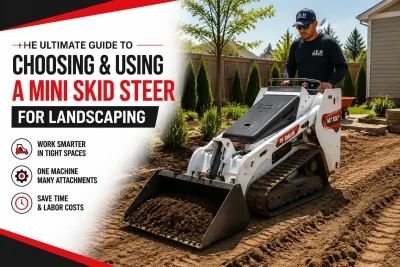
That’s where the mini skid steer comes in. Also called a compact utility loader or mini track loader, this machine is purpose-built to squeeze full-size productivity into a footprint small enough to fit through a standard gate. In this guide, we’ll cover what a mini skid steer actually is, the different types available, the attachments that make it so versatile and how to pick the right one for your next job, whether you’re renting for a single project or outfitting a fleet.
What Is a Mini Skid Steer?
Featured Snippet Target: A mini skid steer is a compact, engine-powered loader, typically under 36 inches wide, designed to grade, dig, trench and move material in tight spaces where standard skid steers or mini excavators can’t easily maneuver. Most models are ride-on or stand-on units running on rubber tracks and they accept a wide range of quick-attach tools.
Think of it as the little sibling to a standard skid steer loader. It trades raw size and horsepower for maneuverability, letting one operator do the work that would otherwise take a full crew with hand tools. Because most units run on tracks rather than wheels, they distribute weight over a larger surface area, which means far less damage to lawns, pavers and irrigation lines than a wheeled machine or full-size loader would cause.
Types of Mini Skid Steers
Not every mini skid steer is built the same way. Here’s what separates the major categories on the market.
Stand-On vs. Sit-Down Models
Stand-on models, like Toro’s Dingo line or Ditch Witch’s SK series, put the operator on a small platform at the rear of the machine, controlling it with a joystick or dual-lever setup. These are the most common choice for landscaping because they’re lightweight, easy to load onto a trailer and simple to learn.
Sit-down mini skid steers, such as the Bobcat MT100, offer an enclosed or semi-enclosed operator station with more comfort for longer shifts and typically a bit more lifting capacity and horsepower. If your crew is running the machine for full days across multiple job sites, the extra comfort and control can pay for itself in reduced fatigue and faster cycle times.
Tracked vs. Wheeled
The vast majority of mini skid steers use rubber tracks rather than tires. Tracks lower ground pressure, which protects finished lawns and provide better traction on slopes, mud and loose soil, exactly the conditions landscapers deal with daily. Wheeled mini loaders exist but are far less common in this equipment class, since the whole point of “mini” is minimizing surface disruption.
Mini Skid Steer vs. Mini Excavator
These two machines get compared constantly and the honest answer is that they solve different problems:
- Mini skid steer: Better for grading, material handling, trenching with an attachment and moving loads around a site. Faster to reposition and more attachment-versatile.
- Mini excavator: Better for deep digging, precise vertical excavation and working in a fixed footprint (it doesn’t need to drive forward to dig).
Many landscaping companies rent both for larger jobs: the excavator digs the hole, the mini skid steer hauls the spoil away and regrades the site.
Top Benefits for Landscaping Work
Access Where Full-Size Equipment Can’t Go: At under three feet wide, most mini skid steers fit through a standard 36-inch gate, opening up backyard work that would otherwise require hand labor or expensive fence removal.
Minimal Site Disturbance: Rubber tracks and a light operating weight mean you can cross an existing lawn, garden bed or paver patio without leaving ruts or cracking hardscape.
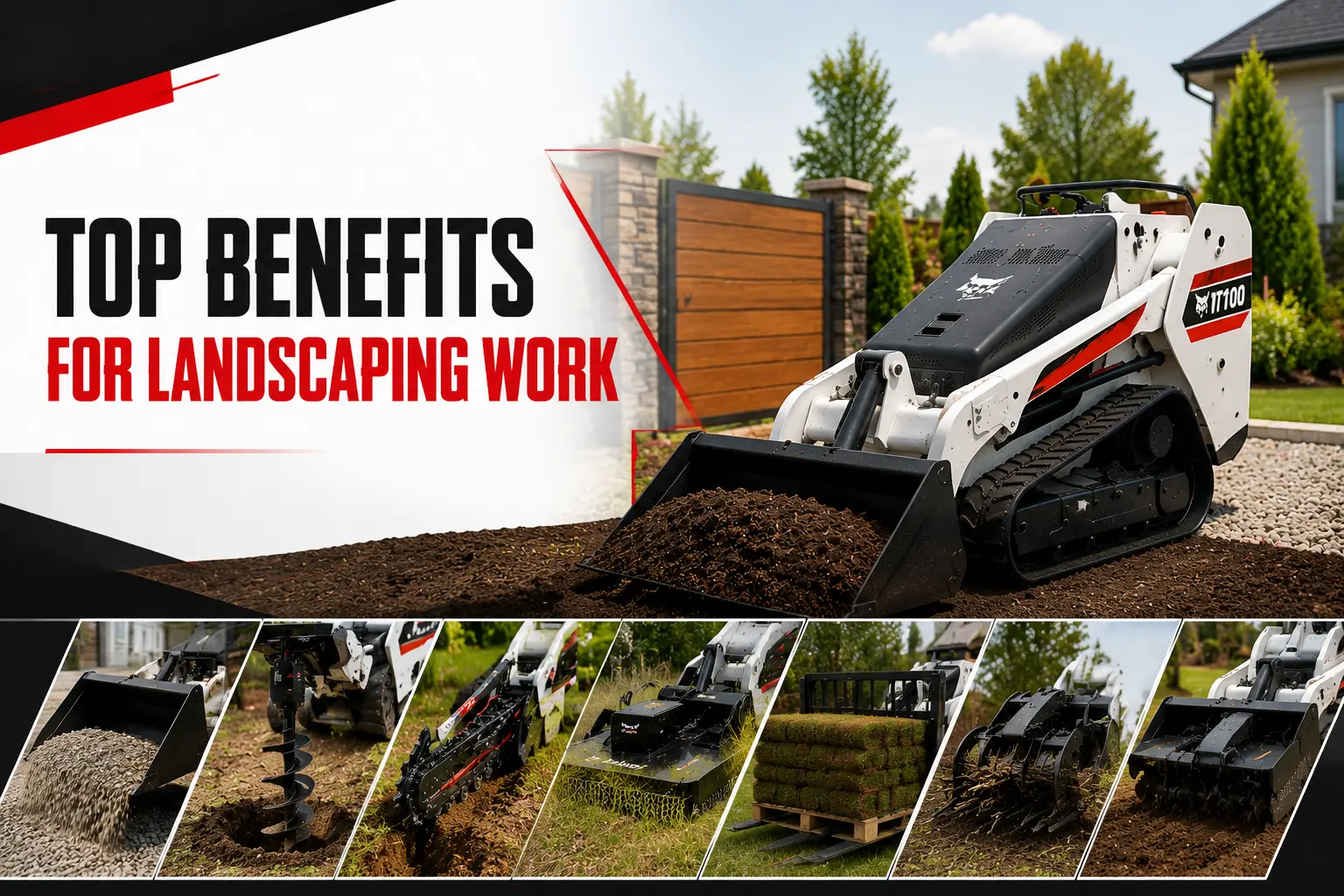
One Machine, Dozens of Jobs: With a quick-attach system, the same base unit becomes a trencher, auger, brush cutter or pallet fork carrier in minutes.
Faster Turnaround: A single operator with a mini skid steer can grade a yard, dig planting holes and haul mulch in the time it would take a two- or three-person crew working by hand.
Popular Attachments for Landscaping
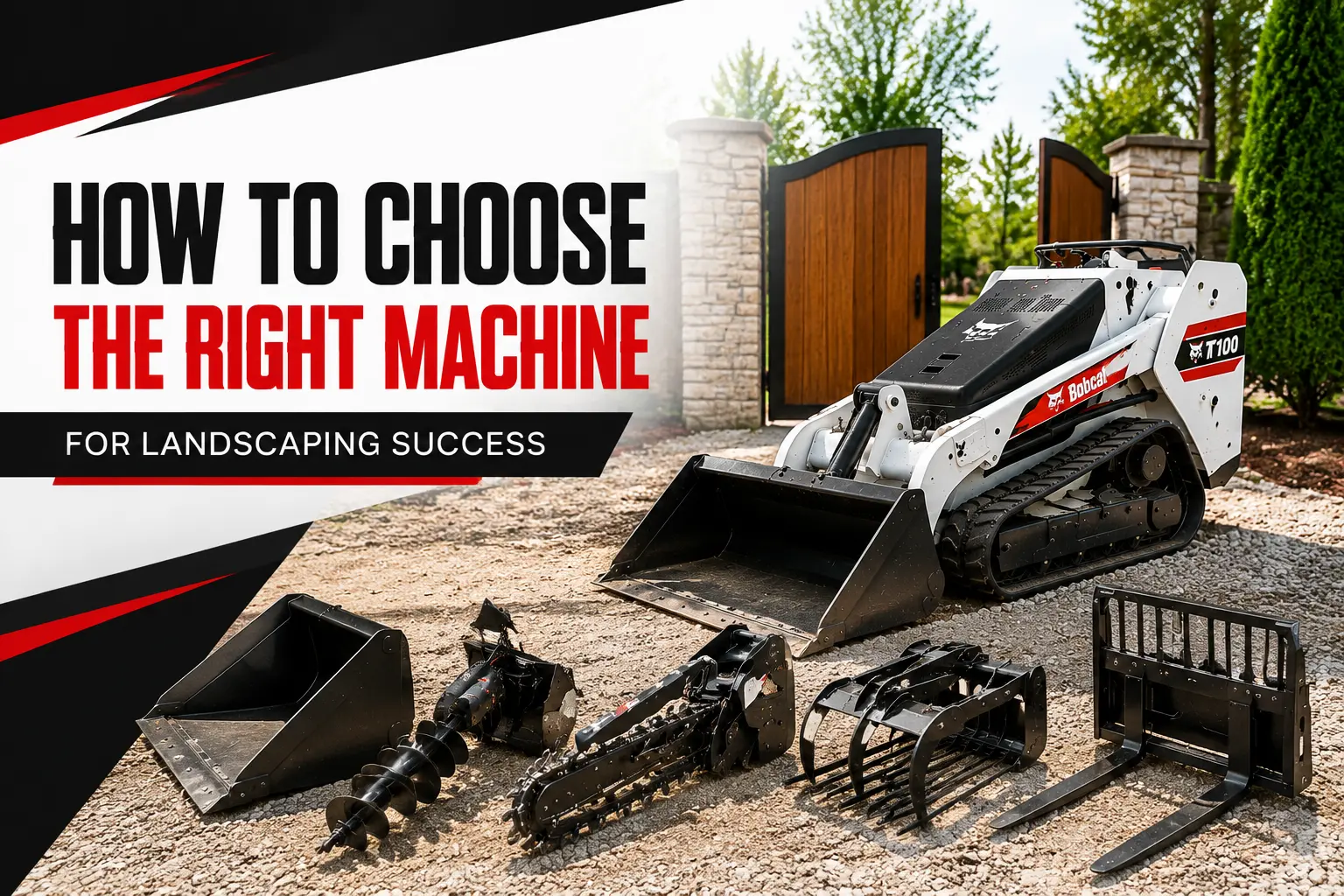
The attachment ecosystem is what makes these machines so valuable. Common options include:
- Buckets for grading, spreading topsoil and moving mulch or gravel
- Augers for quickly digging fence post or tree planting holes
- Trenchers for irrigation lines, drainage and low voltage lighting runs
- Brush cutters and mowers for clearing overgrown lots
- Pallet forks for moving sod pallets, retaining wall block or hardscape materials
- Tillers for prepping garden beds or seed beds
- Grapples for brush and debris cleanup
Before renting, confirm the attachment you need is compatible with the specific machine’s mounting plate and hydraulic flow. Not all mini skid steers run the same attachment standard.
How to Choose the Right Machine
Gate and Access Width: Measure your tightest access point first. If you’re regularly working through 36-inch gates, don’t assume every “mini” machine fits. Some stand-on models are wider than expected once you add tracks or attachments.
Operating Weight: Lighter machines protect finished lawns better but very light units may struggle with heavier attachments like augers in compact soil. Match the machine to your typical ground conditions.
Power Source: Gas engines remain the standard for reliable power and simple refueling on job sites. A handful of newer electric models are entering the market for noise-restricted or indoor-adjacent work, though attachment support is still more limited than gas units.
Lift Height and Capacity: If you’re loading trucks or handling pallets, check both the rated operating capacity and lift height, not just the horsepower rating.
Attachment Availability: A machine is only as useful as the attachments you can get for it. Confirm ahead of time that the rental house stocks the specific tools your project needs.
Maintenance Basics
Even a rented machine benefits from a quick daily check:
- Inspect tracks for proper tension and check for embedded debris
- Check hydraulic fluid levels before starting any attachment-heavy day
- Grease pivot points and quick-attach mechanisms per the manufacturer’s schedule
- Clear grass clippings and mud from the engine intake and cooling fins at the end of each day
For rented equipment, most of this is handled before the machine ever leaves the yard but a quick pre-shift inspection is still good practice and can save a job site headache mid-project.
Renting vs. Buying
For most landscaping companies, renting a mini skid steer makes more financial sense than owning one outright, especially if the work is seasonal or project-based. Renting means no storage, no maintenance overhead in the off-season and the flexibility to size up or down depending on the job.
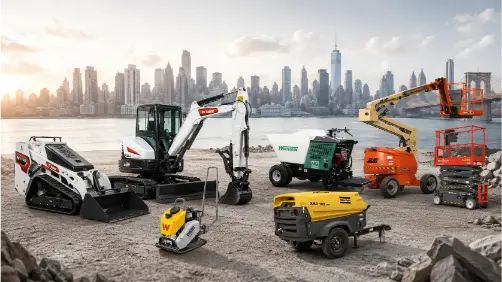
If you’re working across NYC, Brooklyn or Long Island, J.E.H Equipment Rentals stocks compact equipment built for exactly these tight, high-demand job sites, including the Bobcat MT100, a sit-down mini track loader with the power and attachment support to handle everything from trenching to material hauling, without tearing up the property you’re working on.
Final Thoughts
A mini skid steer bridges the gap between hand labor and full-size equipment, letting a small crew take on backyard grading, trenching and material handling jobs that used to eat up an entire day. Whether you’re clearing a small lot or managing a full landscaping install, matching the right base machine and attachment to the job is what separates a smooth project from a costly one.
Ready to get a mini skid steer on your next job site? Contact J.E.H Equipment Rentals to check availability across NYC, Brooklyn and Long Island.