
Blog
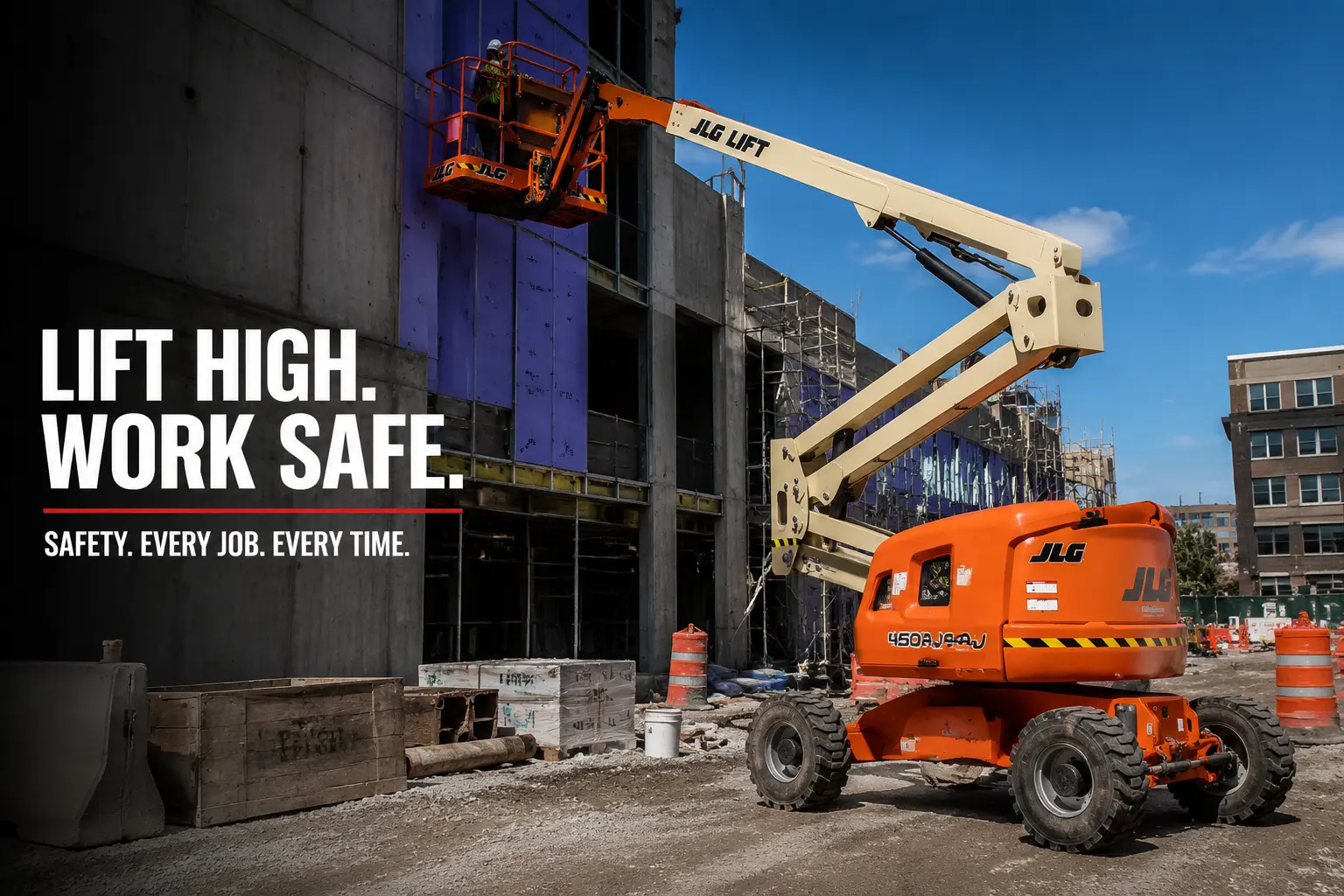
Renting a boom lift in NYC comes with a layer of responsibility that a lot of contractors underestimate until something goes wrong on site. Between tight streets, overhead power lines, pedestrian traffic and inspectors who don’t miss much, boom lift rental NYC safety isn’t a box to check. It’s the difference between a job that finishes on schedule and one that gets shut down. Whether you’re working a facade repair in Midtown or a warehouse job out in Queens, here’s what you need to know before that lift shows up on your jobsite.
Why Boom Lift Safety Looks Different in New York City
Most boom lift safety guides are written for open jobsites with plenty of room to maneuver. NYC doesn’t offer that luxury. Sidewalk sheds, narrow alleys, subway grates and constant pedestrian flow change how you plan a lift, not just how you operate one. A crew working in Manhattan has to think about DOT permitting and street closures. A crew in an outer borough industrial park deals with uneven yard surfaces and delivery truck traffic instead.
That’s why local knowledge matters as much as the equipment itself. Every unit at J.E.H Equipment Rentals’ NYC boom lift and equipment page (jehrentals.com/equipment-rentals-nyc/) gets matched to the jobsite conditions before it ever leaves the yard, not after a crew calls in with a problem.
What Are the OSHA Requirements for Aerial Lifts in NYC?
Federal OSHA standard 29 CFR 1926.453 governs aerial lift use on construction sites and it applies in NYC the same way it applies anywhere else in the country. The short answer: only trained, authorized operators may run a boom lift and the equipment must be inspected before every shift.
A few specifics worth knowing:
- Operators must complete training specific to the type of lift they’re using, not a generic certification.
- A body harness with a lanyard, attached to the manufacturer-designated anchor point, is required in the platform at all times.
- Load capacity limits set by the manufacturer can never be exceeded, even for a quick task.
- Outriggers, when equipped, must be set on stable, level ground or approved pads before the boom is raised.
You can review the full regulation directly through OSHA’s aerial lifts standard (osha.gov/laws-regs/regulations/standardnumber/1926/1926.453) for the exact legal language your safety officer will want on file.
Operator Training and Certification
New York City job sites get inspected often and an untrained operator in the basket is one of the fastest ways to draw a stop-work order. Training has to cover the specific model being used, not just aerial lifts as a category. If your crew hasn’t run a particular boom style before, a quick walkthrough with the delivery technician at drop-off goes a long way and it’s something we build into every rental rather than treating it as an afterthought.
Fall Protection and PPE
A harness alone doesn’t satisfy the requirement. The lanyard has to be short enough to prevent a free fall and anchored where the manufacturer specifies, not to a guardrail or a convenient bar someone welded on. Hard hats and high-visibility clothing round out the minimum gear for most NYC sites and many general contractors now require cut-resistant gloves as well.
Pre Use Inspection Checklist for a Rented Boom Lift
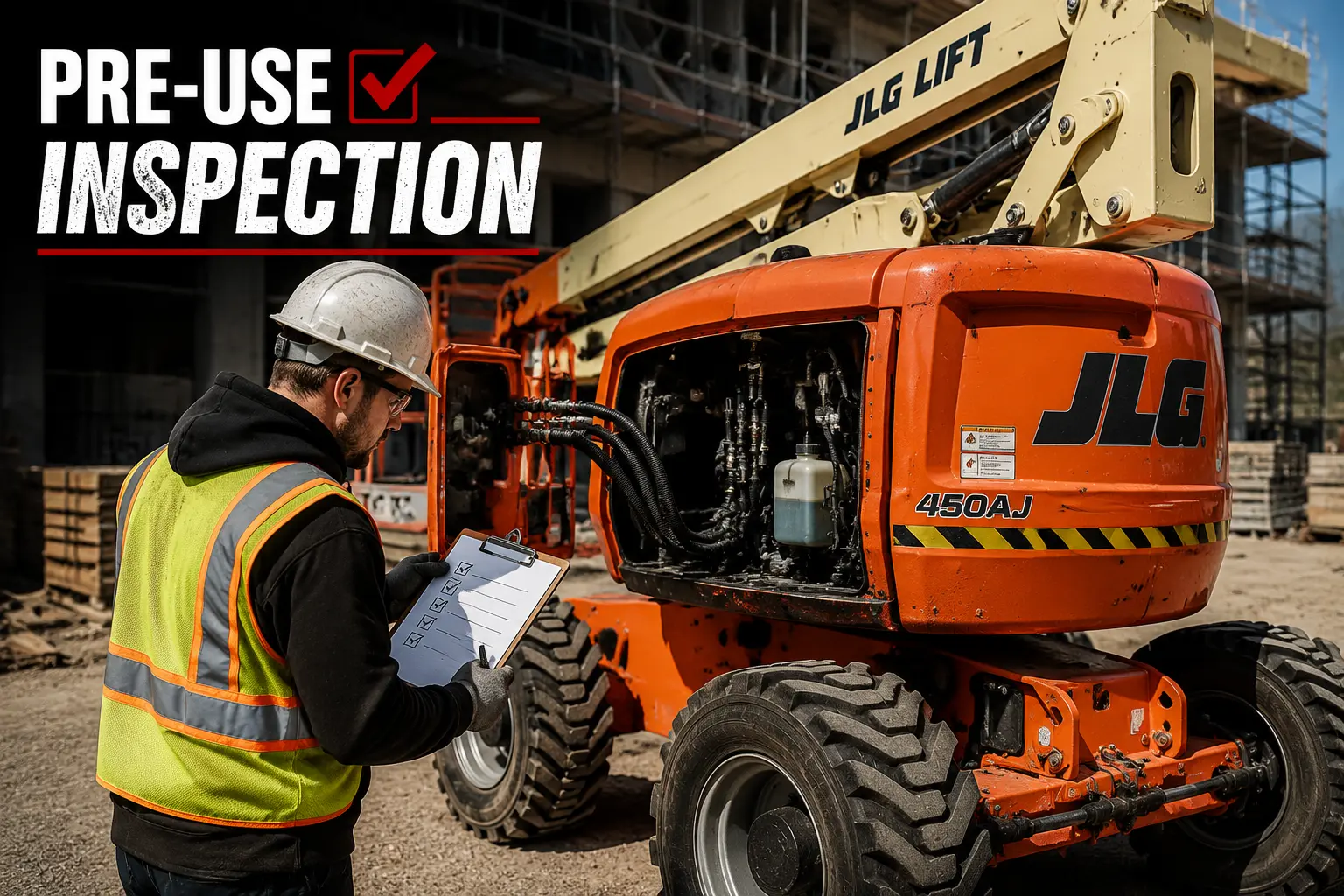
Every boom lift should get a documented inspection before the first lift of the day, regardless of how new the equipment looks. Skipping this step is one of the more common ways operators get caught off guard by a mechanical issue mid-shift.
Run through this before powering up:
- Check hydraulic hoses and fittings for leaks or visible wear.
- Test all controls, including the emergency lowering system, from the ground before anyone enters the platform.
- Inspect tires or tracks for damage, especially after a lift has traveled over rough terrain.
- Confirm the platform gate latches properly and guardrails are secure.
- Verify the alarm and horn function, particularly important on sites with limited sightlines.
Every unit that leaves our yard goes through a documented inspection first. If you want to see the specific model specs before booking, our boom lift and aerial platform inventory (jehrentals.com/product-category/lifts/) lists current availability across articulating, telescopic and electric models.
How Does Weather Affect Boom Lift Safety in NYC?
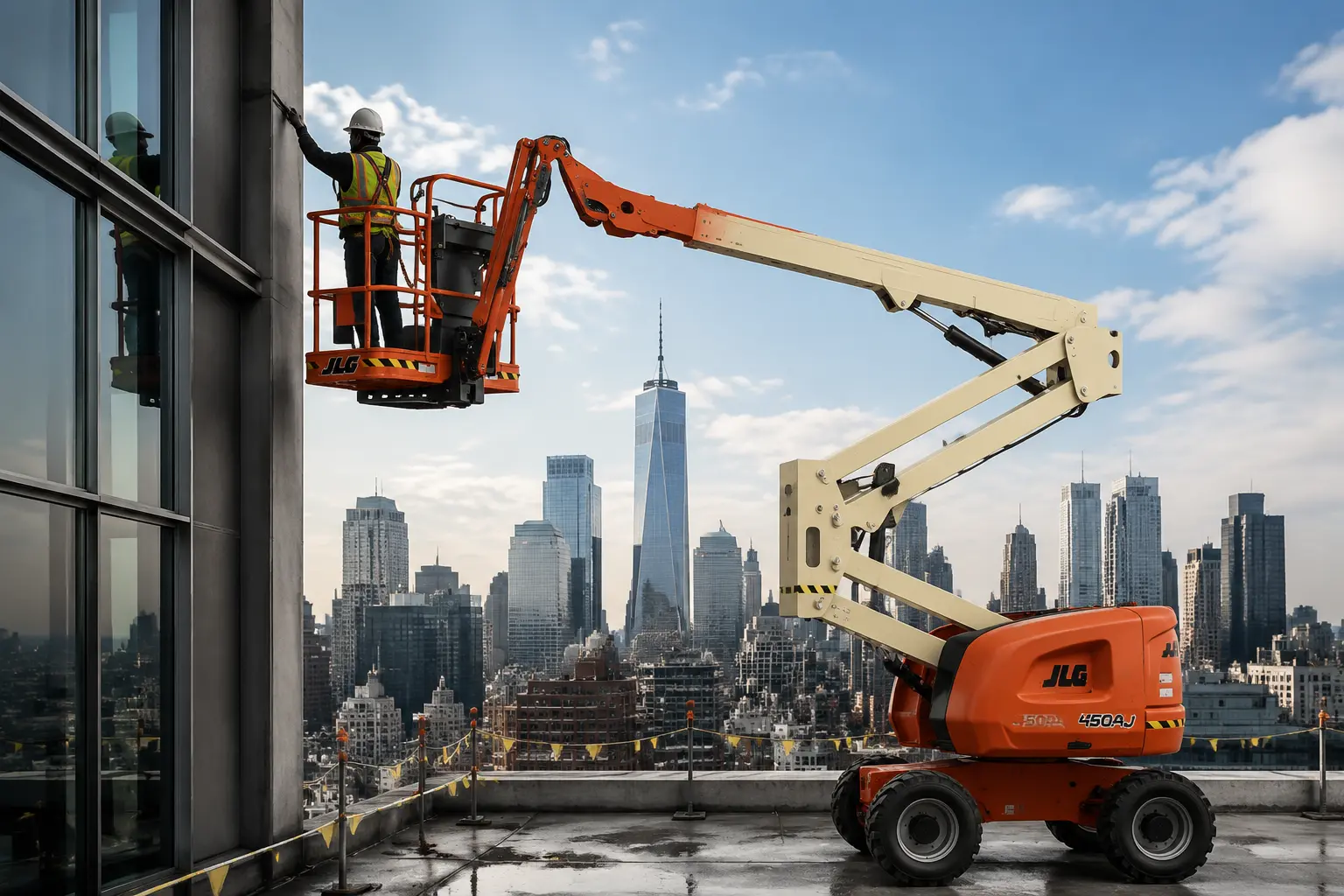
Wind is the big one. Most boom lifts have a manufacturer-rated maximum wind speed, typically in the 28 to 31 mph range and that limit doesn’t bend for a deadline. Between the East River corridors and the wind tunnels created by high-rise construction, gusts in NYC can climb faster than the forecast suggests. Check conditions before the lift goes up, not just at the start of the shift.
Rain and ice bring a separate risk: reduced traction on the platform and slippery controls. Winter jobs need extra time built in for de-icing surfaces and checking hydraulic fluid performance in cold temperatures. If a storm rolls in mid-shift, the safest move is almost always to lower the platform and wait it out rather than push through.
What About Boom Lift Safety on Tight or Indoor NYC Jobsites?
A lot of NYC work happens in spaces that weren’t designed with aerial lifts in mind: narrow retail buildouts, parking garages, warehouse interiors with low ceilings. Electric boom lifts are usually the right call here since they run quiet and produce zero emissions, which matters for indoor air quality and for buildings with strict noise rules during business hours.
Before booking for a restricted-access site, measure doorway widths, ceiling heights and floor load capacity. A compact model that fits through a standard door won’t help much if the platform can’t reach your working height, so it’s worth a quick call to confirm the right unit for the space rather than guessing.