
Blog
Standing on a jobsite trying to figure out which lift to rent can eat up more time than it should. The scissor lift vs boom lift question comes up on nearly every project we deliver across Long Island and NYC and for good reason: pick the wrong one and you’re either paying for reach you don’t need or fighting a machine that can’t get where you need to go. We’ve been putting both types of equipment on jobsites throughout Nassau County, Suffolk County and the five boroughs long enough to know exactly where each one earns its keep.
This guide breaks down the real differences so you can make the call with confidence, not guesswork.
Scissor Lift vs Boom Lift: The Core Difference
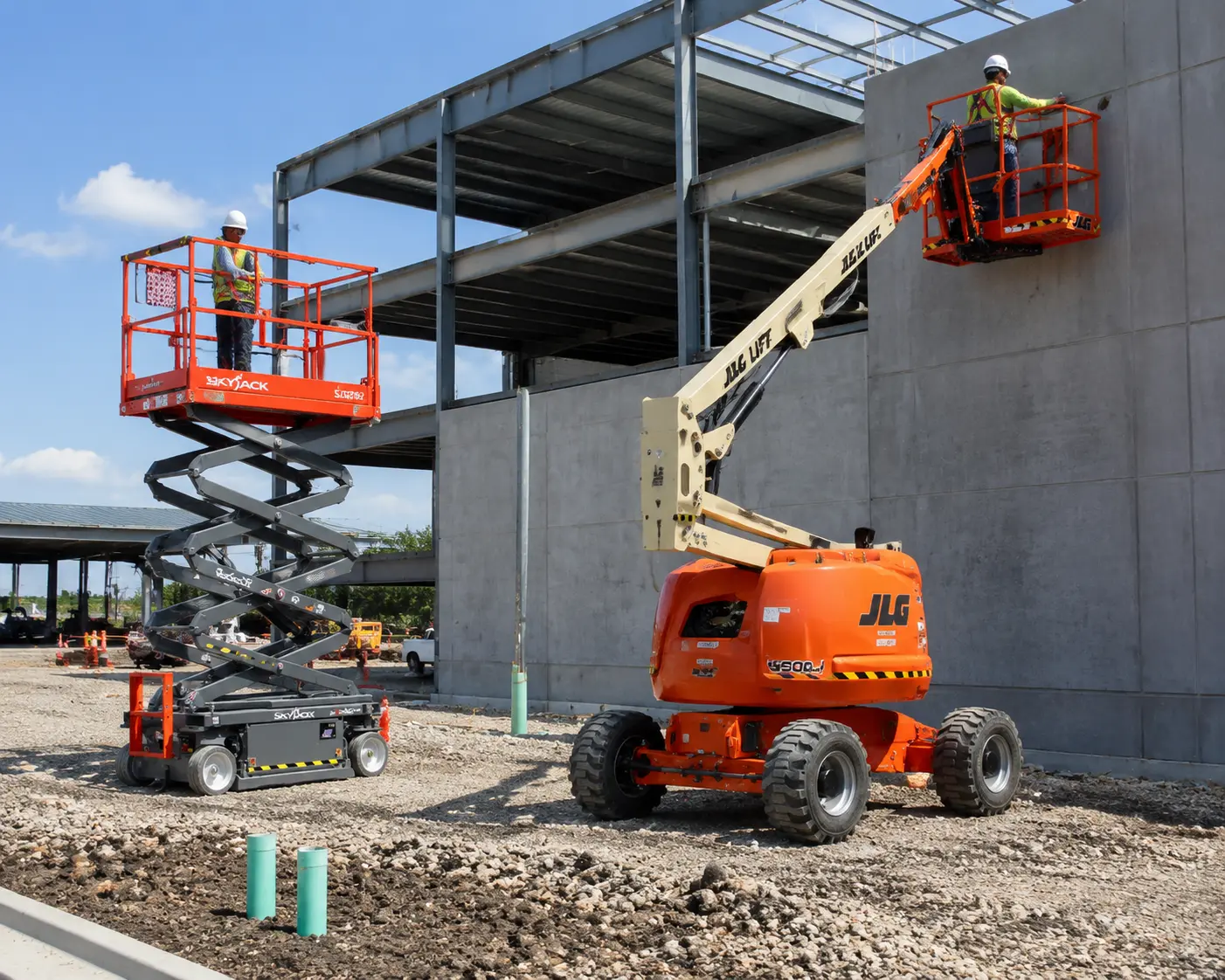
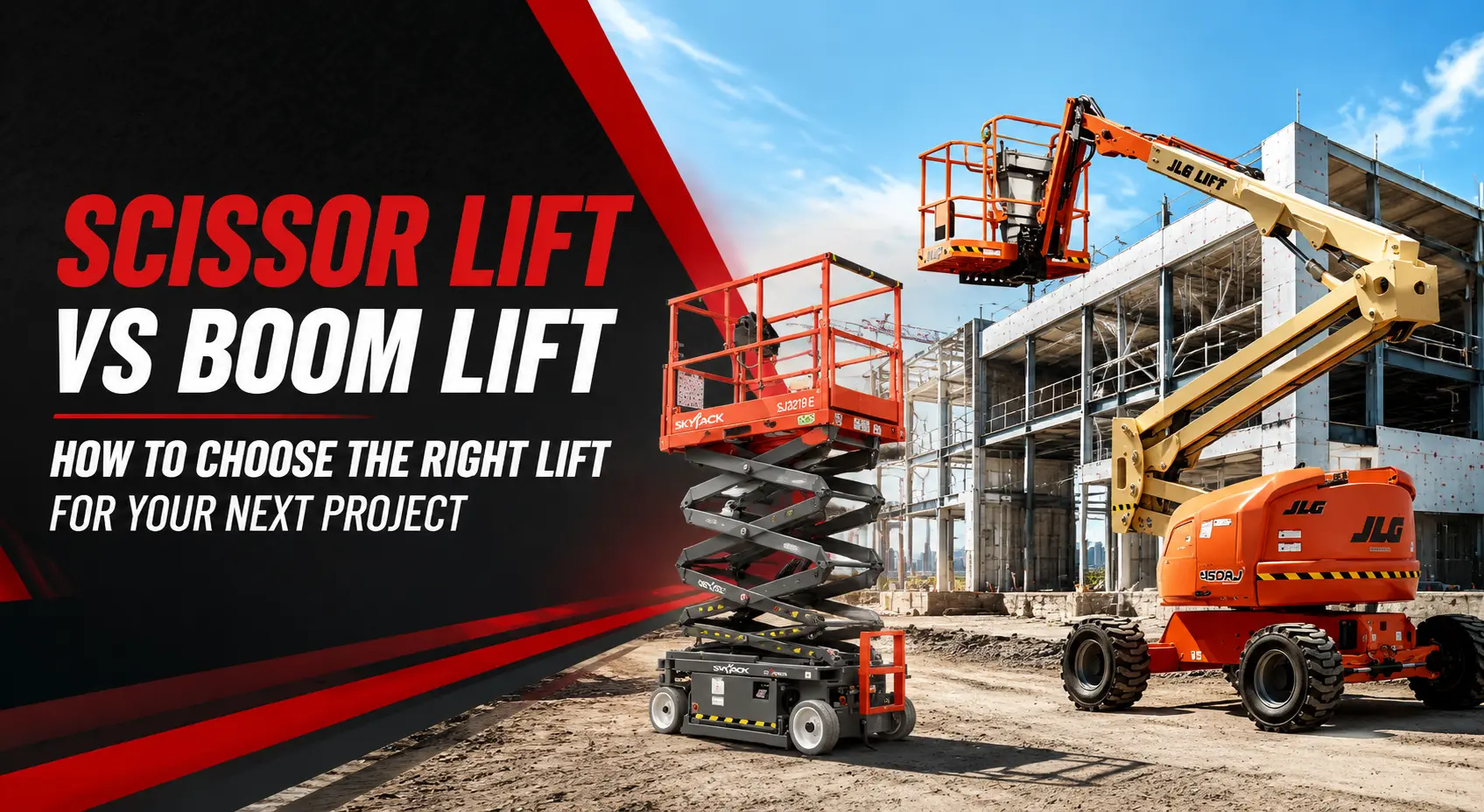
A scissor lift moves straight up and down on a crisscrossing metal frame, giving you a wide, stable platform directly above its base. A boom lift, on the other hand, uses an extending arm that can reach up, out and around obstacles, which makes it the better choice when you need horizontal reach or have to work around something in the way.
Put simply: if your work is directly overhead, a scissor lift usually gets the job done for less money. If you need to reach past a wall, over equipment, or around a building corner, a boom lift is built for that.
Which Lift Reaches Higher?
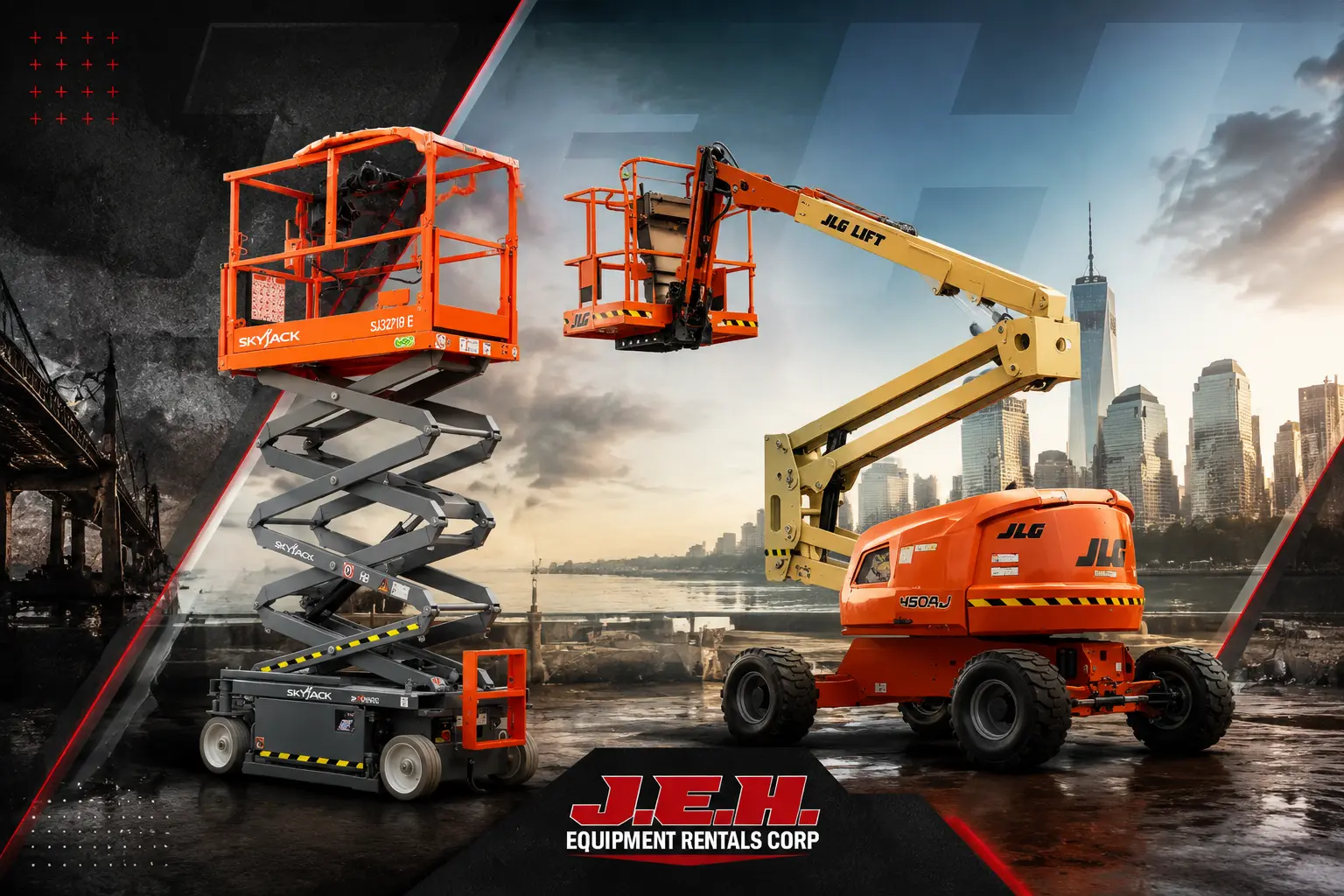
Boom lifts generally win on total working height and horizontal outreach, especially the articulating and telescopic models. Our JLG 450AJ articulating boom lift can extend up and over obstacles with a working height that most scissor lifts simply can’t match. Scissor lifts top out lower, but they make up for it with a bigger, steadier platform for vertical work like ceiling installs or interior maintenance.
Which Lift Is Better for Tight Spaces?
This one depends on the jobsite. A compact electric scissor lift can slip through a standard doorway and work well in narrow warehouse aisles or finished interior spaces. A boom lift, particularly an articulating model, is actually the better pick when you’re boxed in by equipment or landscaping and need to bend the arm around it rather than drive straight up. If you’re working a congested site in Manhattan or Brooklyn where every foot of clearance counts, talk to us before you book. We can walk through your site conditions and point you to the right machine.
Scissor Lift vs Boom Lift for Indoor and Outdoor Work
Indoor jobs, especially on finished floors, usually call for an electric scissor lift with non-marking tires. It’s quiet, produces no emissions and the flat, stable deck is ideal for tasks like drywall, painting, or fixture installation. Outdoor work is where boom lifts, particularly rough-terrain models, tend to shine. They handle uneven ground better and give you the reach to get to building exteriors, rooflines and signage without repositioning every ten minutes.
Platform Capacity and Crew Size
Scissor lifts typically offer a larger deck, which means room for two or more workers along with tools and materials. That makes them a solid option for crews who need to move a job along without constantly sending someone back down for supplies. Boom lifts tend to have smaller baskets built for one or two workers, which fits jobs where precision and mobility matter more than crew size, such as electrical work or spot repairs high above ground.
Cost Considerations: Scissor Lift vs Boom Lift Rental
Scissor lifts are generally the more affordable rental, largely because they’re simpler machines with fewer moving parts. Boom lifts cost more to rent due to the added reach, articulation and engineering involved. That said, the cheaper option isn’t always the smarter one. Renting a scissor lift for a job that actually needs horizontal reach means wasted time repositioning the lift or, worse, workers improvising in ways that aren’t safe. Matching the machine to the task upfront almost always saves money over the life of the rental.
Terrain and Jobsite Conditions Matter
Long Island and NYC jobsites vary a lot, from paved commercial lots to gravel yards to sloped ground on residential builds. Standard scissor lifts are built for flat, solid surfaces. If your site has rough or uneven terrain, you’ll want a rough-terrain scissor lift or a boom lift designed to handle those conditions safely. Getting this wrong isn’t just inconvenient, it’s a safety issue, so it’s worth a quick conversation about your ground conditions before the equipment shows up.
Operator Certification and Safety
Both machines fall under OSHA’s aerial lift and mobile elevating work platform requirements and both call for trained, certified operators. Fall protection, daily pre-use inspections and a proper ground assessment aren’t optional extras, they’re standard practice on any job involving this kind of equipment. If your crew needs guidance on certification requirements before a rental, our team is glad to point you toward accurate resources, including guidelines published by the Occupational Safety and Health Administration.
Scissor Lift or Boom Lift: A Quick Decision Guide
- Working straight overhead on a flat surface: scissor lift
- Need to reach around or over an obstacle: boom lift
- Multiple workers with tools and materials: scissor lift
- Uneven or outdoor terrain: rough-terrain scissor lift or boom lift
- Tight indoor spaces with finished floors: compact electric scissor lift
- Building exteriors, rooflines, or signage: articulating or telescopic boom lift
Renting the Right Lift on Long Island and in NYC
We keep both scissor lifts and boom lifts in our rental fleet because contractors rarely need just one or the other over the course of a year. Our Skyjack SJ3219 E scissor lift handles most interior and flat-surface jobs across Nassau and Suffolk County, while the JLG 450AJ steps in when a project needs real horizontal reach. We deliver throughout Long Island and NYC and we’re happy to walk through your jobsite details, working height, terrain and crew size, before you commit to either machine.
If you’re still weighing scissor lift vs boom lift for an upcoming project, reach out through our equipment rental reservation page or contact us directly. We’ll help you land on the right piece of equipment the first time, so your crew isn’t losing hours to the wrong lift.