
Blog
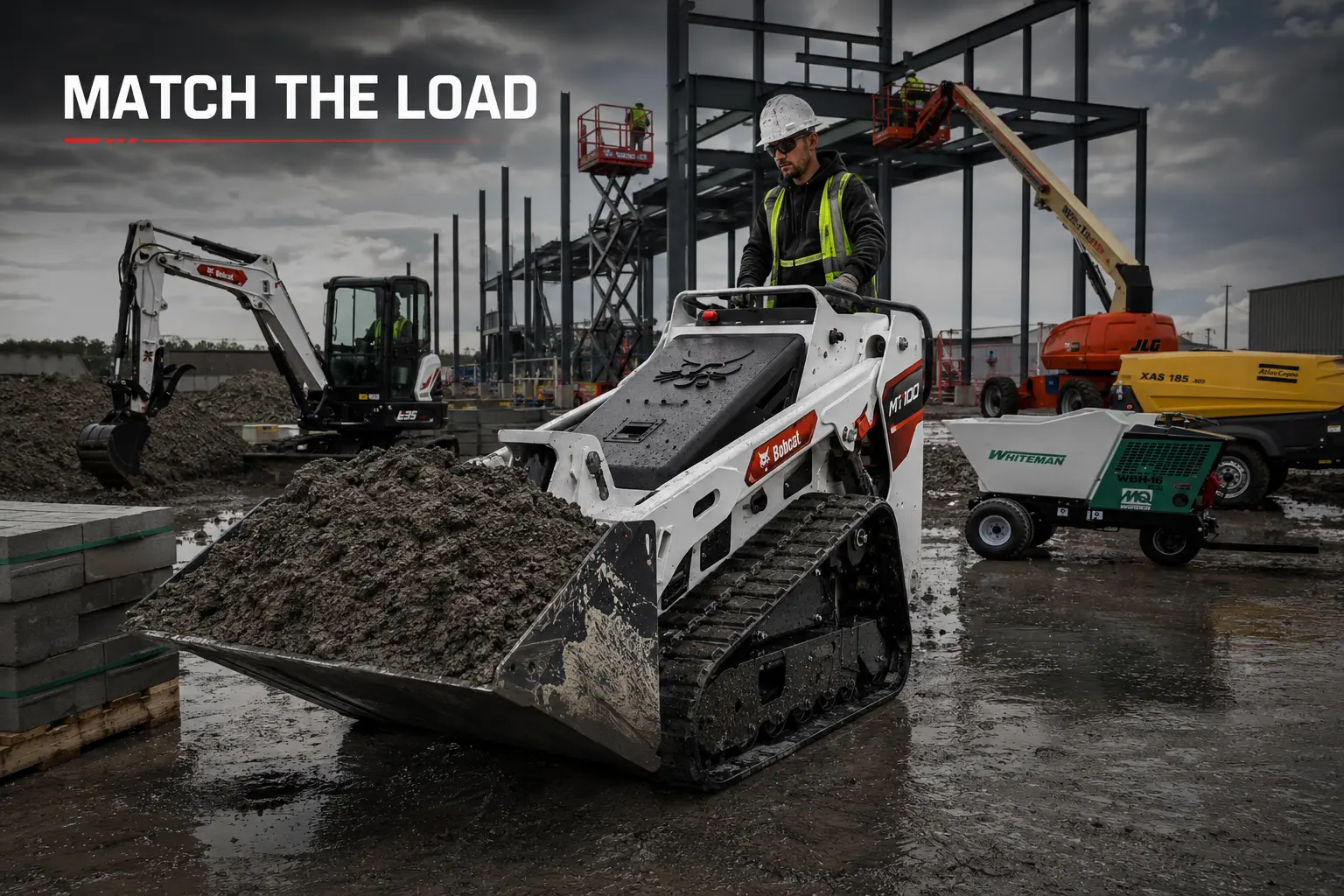
A mini track loader looks small next to a full-size skid steer and that throws people off. The size makes contractors assume the capacity is small too. It isn’t always the case and getting this wrong on a jobsite in Nassau or Suffolk County can mean a machine that tips, stalls under load or simply can’t finish the day’s work.
If you’re planning a grading job, a landscaping install or a material move on a tight Long Island lot, capacity is the number that decides whether the machine fits the task. Here’s what it actually means, how it’s measured and how to size it correctly before you book a rental.
What Does “Capacity” Actually Mean on a Mini Track Loader?
Capacity isn’t one number. It’s a set of ratings that work together to tell you what a machine can safely lift, carry and move without losing balance.
The three you’ll run into most often:
- Rated operating capacity (ROC): the safe working load, usually set at 50% of the tipping load for tracked machines
- Tipping load: the point where the front of the machine would lift off the ground under a static load
- Operating weight: the total weight of the machine itself, which affects stability, ground pressure and trailer requirements
Manufacturers publish these figures under ISO 14397 testing standards, so numbers are comparable across brands when you’re shopping specs. The Occupational Safety and Health Administration also outlines why respecting rated capacities matters for jobsite safety, not just equipment performance.
Rated Operating Capacity vs. Tipping Load: Why the Difference Matters
New operators sometimes assume tipping load is the number to plan around. It isn’t. Tipping load is the failure point, not a working limit.
Rated operating capacity builds in a safety margin so the machine stays stable while working on uneven ground, on a slope or with a load carried at height. Load a mini track loader past its ROC and you’re eating into that margin fast, especially once the bucket or forks come up off the ground.
A good rule of thumb: if a spec sheet lists a tipping load of roughly 2,900 lbs., expect the safe rated capacity to sit closer to half that. Anything beyond it should be handled with a larger machine, not by pushing the small one harder.
Bobcat MT100 Capacity: A Real-World Example
The Bobcat MT100 is a good machine to walk through because it’s one of the more popular mini track loaders on Long Island jobsites right now.
Key figures on the MT100:
- Rated operating capacity (ISO): 1,000 lbs.
- Carry position ROC with counterweight adjusted: up to 1,300 lbs.
- Tipping load: 2,898 lbs.
- Operating weight: 3,390 lbs.
- Width: 35.6 in.
- Height to bucket hinge pin: 80.9 in.
- Engine: 24.8 hp Kubota diesel
That 1,000-lb. rated capacity is enough to handle pallet forks loaded with pavers, a full bucket of soil or gravel or landscape material moved across a backyard install. The narrow 35.6-inch width means it clears standard gates and side yards that a full-size skid steer can’t touch, which is exactly why it shows up so often on residential and tight-access commercial sites across NYC and Long Island.
How Machine Size and Weight Affect What You Can Carry
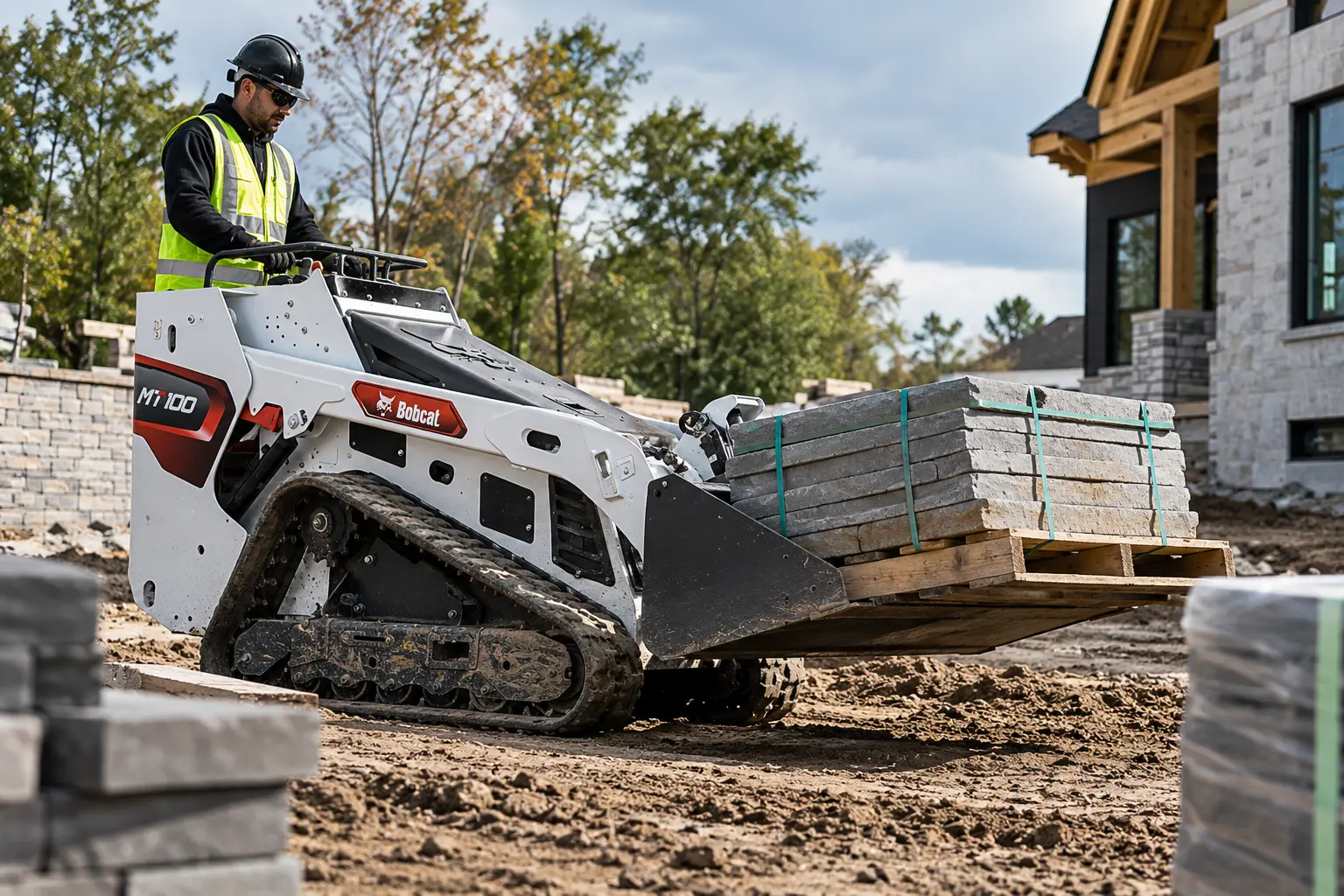
Operating weight isn’t just a spec on a sheet. It’s the counterbalance that lets the machine lift without tipping forward.
A heavier machine with a wider stance can generally carry more before reaching its tipping point. That’s why mini track loaders in this class sit in the 3,000 to 3,500-lb. range: enough mass to stay planted under a loaded bucket, but light enough to run on rubber tracks without tearing up lawns, pavers or finished grading.
Ground pressure matters here too. Tracks spread the machine’s weight over a larger footprint than tires, which is part of why mini track loaders handle soft or freshly graded ground better than a wheeled alternative of similar size.
Matching Capacity to the Job: Grading, Landscaping and Material Handling
Not every project needs the same lift capacity and matching the load to the machine is the whole point of this guide.
Grading and site prep: moving soil, spreading fill and rough grading rarely exceeds the MT100’s rated capacity, even on a full bucket. This is a strong fit for site preparation work ahead of hardscape or foundation projects.
Landscaping installs: mulch, stone, sod and paver pallets are all within range for a mini track loader carrying forks or a bucket. Crews handling repeat material moves across a property benefit from the tight turning radius as much as the capacity itself. Our post on using a compact loader for landscaping covers this in more depth.
Debris and cleanup: demolition debris tends to be lighter by volume than soil or stone, so capacity is rarely the limiting factor. Bucket size usually is.
Heavier material handling: if you’re consistently near or above the 1,000-lb. mark, that’s a signal to size up rather than overload the machine on every pass.
How Lift Height and Attachments Change the Load You Can Handle
Capacity ratings assume a specific lift height, usually at or near maximum reach. As the load goes higher, the effective stability margin shrinks, even though the rated number on the spec sheet doesn’t change.
Attachments matter just as much. Pallet forks, grapples and augers each carry their own weight and that weight comes out of your available payload before the material even gets loaded. A quick way to think about it: attachment weight plus material weight needs to stay under the rated operating capacity, not the tipping load. Our breakdown of attachments for compact loaders walks through weight differences across common tools.
Ground Conditions and Stability: The Part Most Guides Skip
Capacity numbers are tested on flat, stable ground. Real jobsites rarely offer that.
A few conditions that reduce your effective safe capacity below the rated number:
- Working on a slope or side hill
- Soft, wet or recently disturbed soil
- Loading material on one side of the bucket rather than centered
- Carrying a load at full lift height while traveling
None of this means the MT100 or similar machines can’t handle challenging ground. It means operators need to load conservatively when conditions aren’t ideal and that’s a judgment call experienced crews make instinctively but newer operators should be told directly.
Mini Track Loader vs. Mini Skid Steer: Which Has More Capacity?
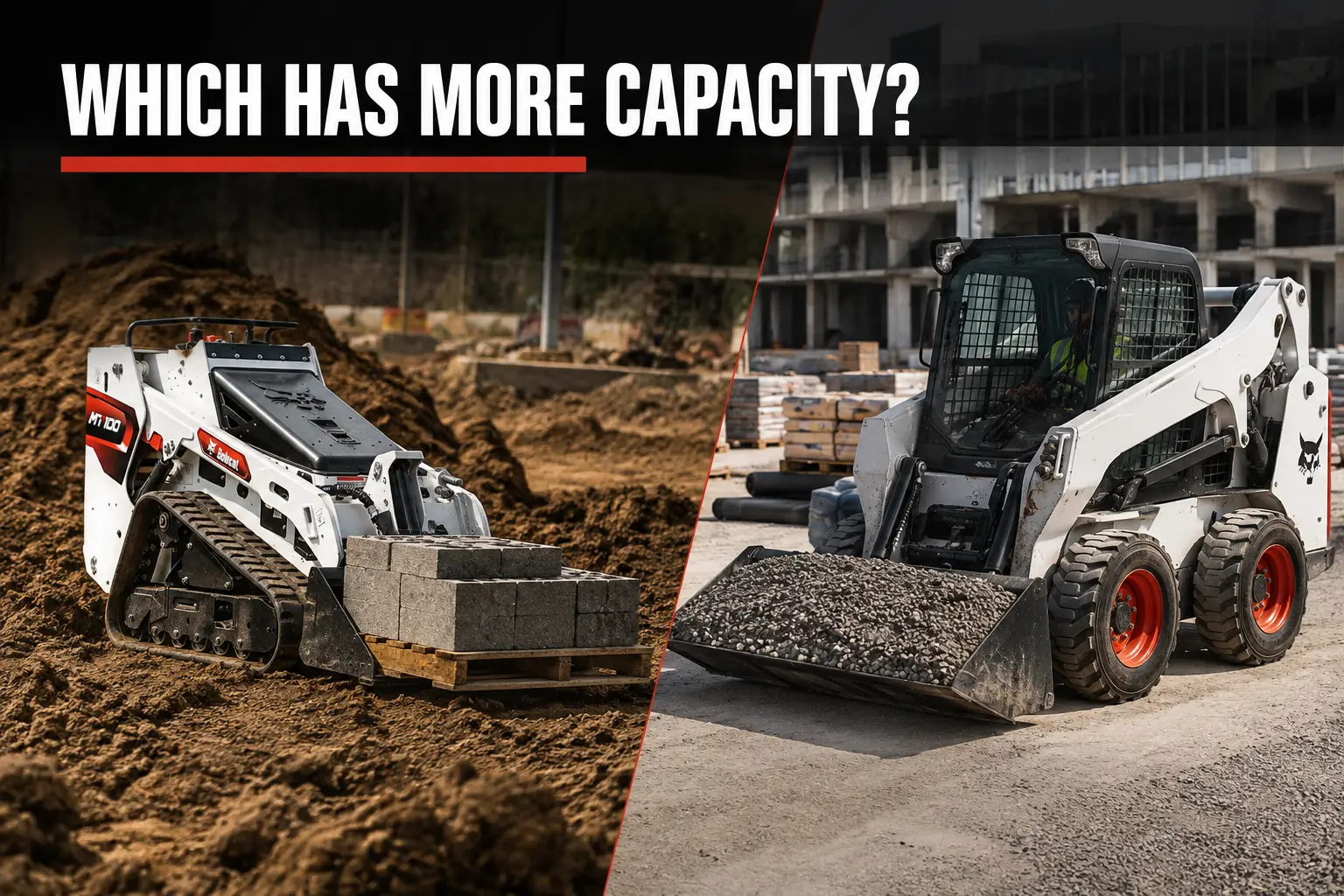
This comes up constantly and the honest answer is: it depends on the specific models being compared, not the category name.
Mini track loaders generally offer better traction and lower ground pressure thanks to tracks, which can translate into more usable capacity on soft or uneven ground even when the rated number looks similar to a wheeled competitor. Mini skid steers can be lighter and quicker to maneuver on hard, stable surfaces.
We’ve laid out a full side-by-side in our MT100 vs. skid steer comparison if you’re still deciding between the two for a specific job.
How to Choose the Right Capacity for Your Long Island Jobsite
A few questions to run through before booking:
- What’s the heaviest single load you’ll be lifting, including the attachment?
- Will that load be carried at height or mostly kept low and close to the machine?
- What’s the access width at the jobsite and does that rule out larger machines?
- What’s the ground condition: finished grade, active dig or soft fill?
Answer those honestly and the right machine becomes obvious fast. If you’re not sure, our team can walk through the job with you before you reserve anything.
Serving contractors, landscapers and property teams across Melville, Nassau County, Suffolk County and NYC, J.E.H Equipment Rentals keeps mini track loaders ready for jobs where size, access and capacity all have to line up correctly.