
Blog
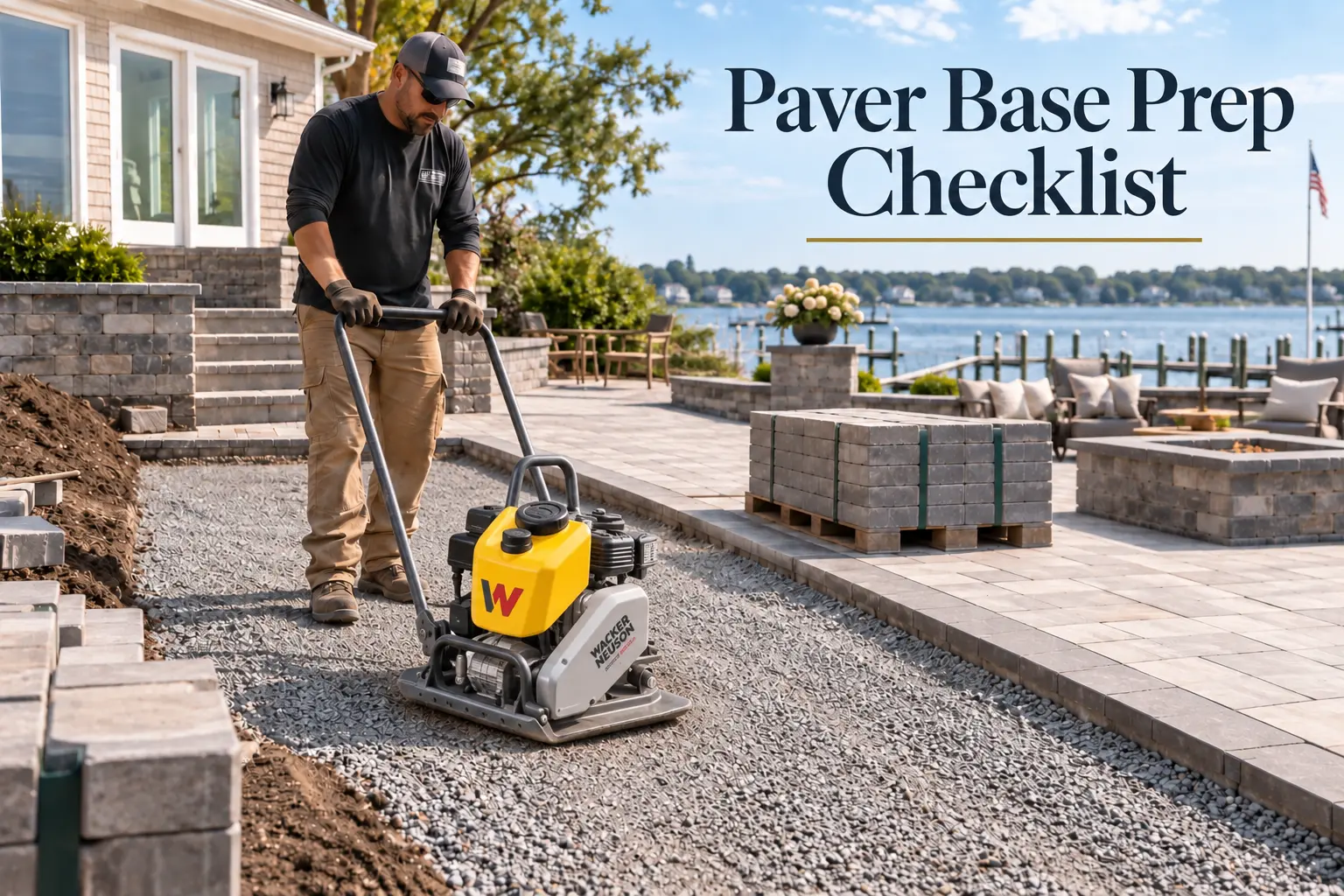
A paver patio or driveway is only as good as the ground underneath it. Skip the compaction step or rush it and you’ll be looking at sunken pavers, shifting joints and drainage problems within a year or two. That’s not a guess. It’s the single most common callback issue landscapers and hardscape crews deal with across Nassau and Suffolk County.
If you’re planning a paver installation on Long Island, whether it’s a backyard patio in Huntington or a commercial walkway in Melville, the plate compactor you use for base prep matters as much as the pavers themselves. This checklist walks through why compaction matters, how to do it correctly and what to look for when you rent a plate compactor for pavers.
Why Base Preparation Determines How Long Your Paver Project Lasts
Pavers sit on a compacted base of crushed stone, not directly on soil. That base carries the weight of foot traffic, vehicles and seasonal ground movement. If the base isn’t compacted properly, it settles unevenly over time and the pavers on top follow that movement.
Long Island’s soil composition makes this even more important. Much of the region sits on sandy, well-draining soil, which is good news for drainage but means loose material compacts less predictably than clay-heavy soil found elsewhere. A soil compaction guide for Long Island conditions is worth reviewing if you’re working with variable ground on your site.
Proper compaction reduces air voids in the base material, increases load-bearing capacity and creates a stable, uniform surface for the pavers to rest on. Miss this step and no amount of careful paver-laying will fix it later.
What a Plate Compactor Does for Paver Base Preparation
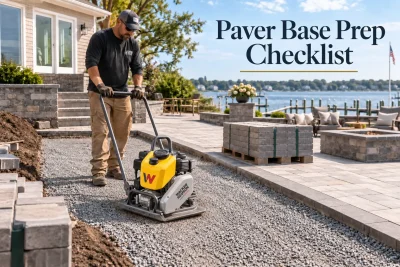
A plate compactor uses a vibrating steel or polymer base plate to apply rapid, repeated force to loose material, driving out air pockets and forcing aggregate particles tighter together. For paver work, this typically means compacting the crushed stone sub-base in lifts, then compacting again after the bedding sand layer goes down and once more after the pavers are set to lock the joint sand in place.
This is different from compacting soil for a foundation or a trench, which usually calls for a jumping jack rammer instead. For paver base work specifically, a forward-plate vibratory compactor gives you the flat, even surface pavers need. The Wacker Neuson plate compactor rental from J.E.H Equipment Rentals is built for exactly this application, with the plate width and vibratory force suited to residential patios and larger driveway or commercial hardscape projects alike.
How Many Passes Does a Plate Compactor Need for Paver Base?
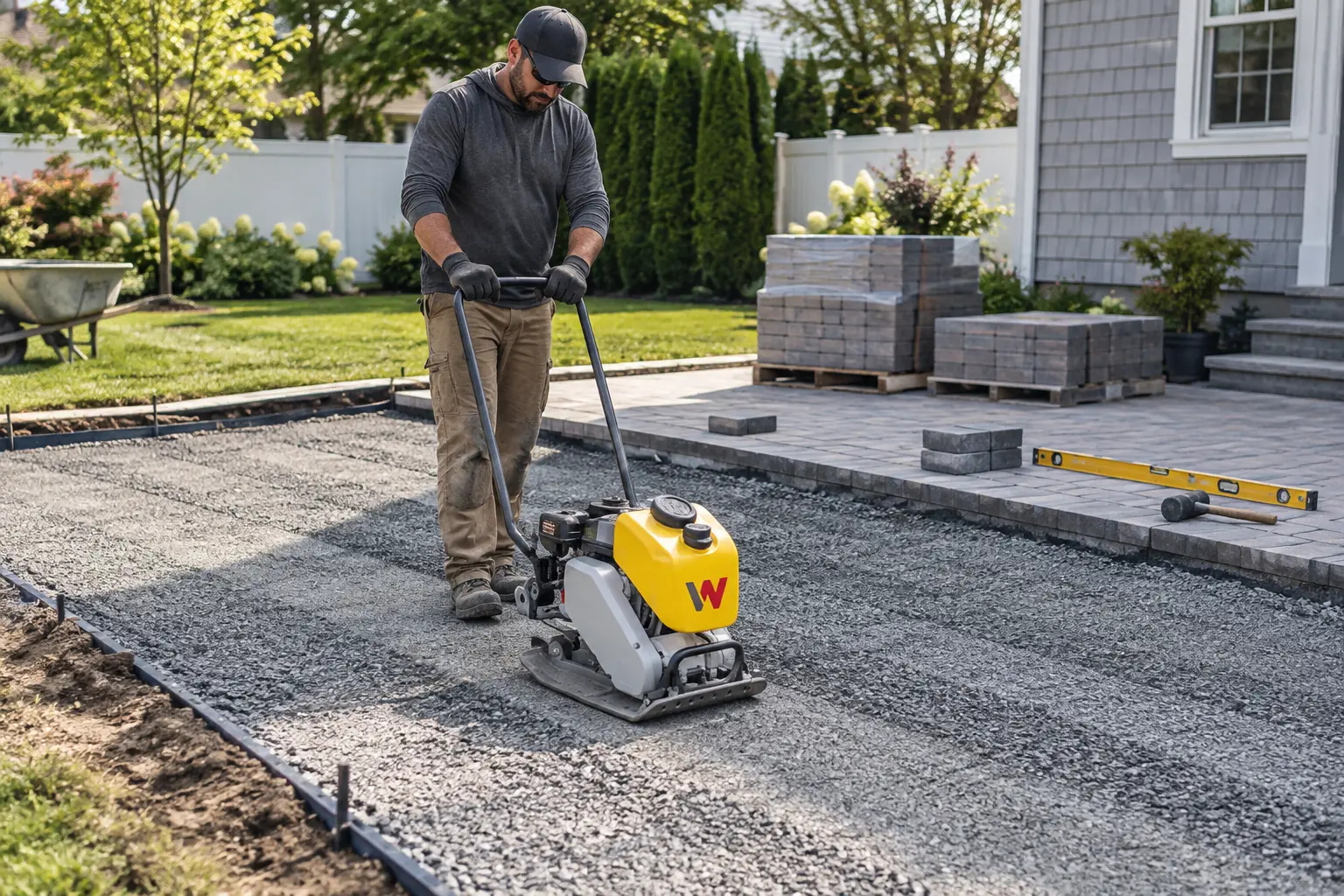
Most paver base sections need two to three passes per lift of material, with each lift kept to roughly 2 to 4 inches before compacting. Thicker lifts don’t compact evenly all the way through, even with a heavier machine.
A good field test: if the surface no longer shows movement or “give” underfoot after a pass and you don’t see fresh compactor marks reappearing, you’ve reached density. Running the compactor beyond that point wastes time without adding benefit.
Choosing the Right Size Plate Compactor for a Paver Patio
Plate compactor sizing depends on the footprint of the job and the material you’re compacting.
- Small residential patios or walkways: A lighter, 17 to 20 inch plate compactor gives you maneuverability in tight spaces without sacrificing compaction force.
- Driveways and larger patios: A wider plate with higher centrifugal force covers ground faster and handles denser base material, which matters on bigger commercial or residential driveway pours.
- Tight-access backyards: Confirm gate widths and side-yard clearance before booking; a compactor that can’t reach the work area doesn’t help anyone.
If you’re unsure which size fits your project, our team can match the machine to your square footage and access conditions before you commit to a booking.
Step-by-Step Base Preparation Checklist
- Excavate to proper depth. Account for base material thickness, bedding sand and paver height.
- Install geotextile fabric if the sub-grade is soft or drains poorly.
- Add crushed stone in 2 to 4 inch lifts, compacting between each layer.
- Check for a consistent slope, typically a 1 to 2 percent grade away from structures for drainage.
- Add and screed the bedding sand layer, keeping it uncompacted before pavers go down.
- Set the pavers, then run the plate compactor over the finished surface to seat them and lock in joint sand.
- Sweep in polymeric or joint sand and compact once more if the manufacturer recommends it.
Contractors handling larger jobsites often pair this with broader site preparation equipment rental to grade and prep the area before base material even arrives.
Common Base Preparation Mistakes Contractors and Homeowners Make on Long Island
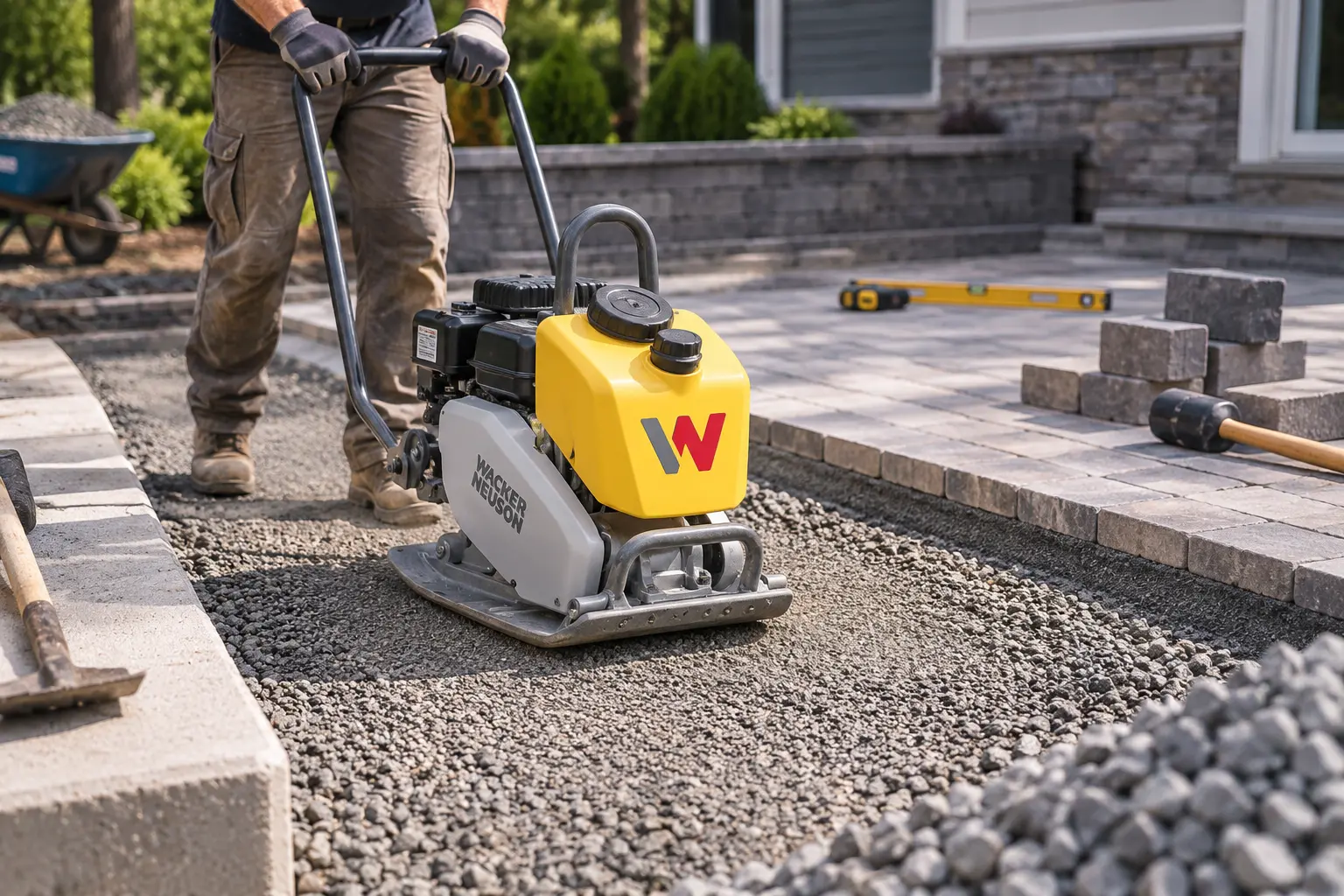
Even experienced crews run into the same handful of issues:
- Skipping compaction between lifts. Compacting one thick layer instead of several thin ones leaves the bottom loose.
- Ignoring drainage slope. Flat or backward-sloped bases pool water under the pavers, which accelerates settling.
- Using the wrong compactor for the material. A machine sized for soil won’t deliver the vibratory force gravel base needs.
- Compacting wet, saturated material. Wait for material to reach proper moisture content; over-saturated base can actually loosen under vibration instead of tightening.
Reviewing base standards from the Interlocking Concrete Pavement Institute is a solid reference point if you want manufacturer-backed compaction and lift-thickness specs before starting a larger commercial installation.
Plate Compactor vs. Jumping Jack Rammer: Which One Do You Need for Pavers?
This question comes up often enough that it’s worth answering directly. A forward-plate vibratory compactor is the right tool for granular, cohesionless materials like the crushed stone and sand used in paver base work. A jumping jack rammer is built for cohesive soils, typically in trenches or narrow excavations, where its high-impact ramming action compacts clay-heavy soil better than a plate can.
For paver patios, driveways and walkways, the plate compactor is almost always the correct choice.
Renting a Plate Compactor for Pavers on Long Island: What to Know Before You Book
A few practical details make the rental process smoother:
- Confirm the plate size fits your access points, gates and grading.
- Ask about fuel type and starting method, since some jobsites restrict certain equipment.
- Factor in project timeline. Multi-day jobs may run more efficiently on a weekly rate than a series of daily rentals.
- Review current equipment rental rates for Long Island projects so the compactor rental fits your overall project budget alongside other machinery.
Landscapers running multiple paver jobs per season often pair a plate compactor with other landscaping equipment rental from the same provider to simplify delivery logistics and keep a consistent point of contact for every job.