
Blog
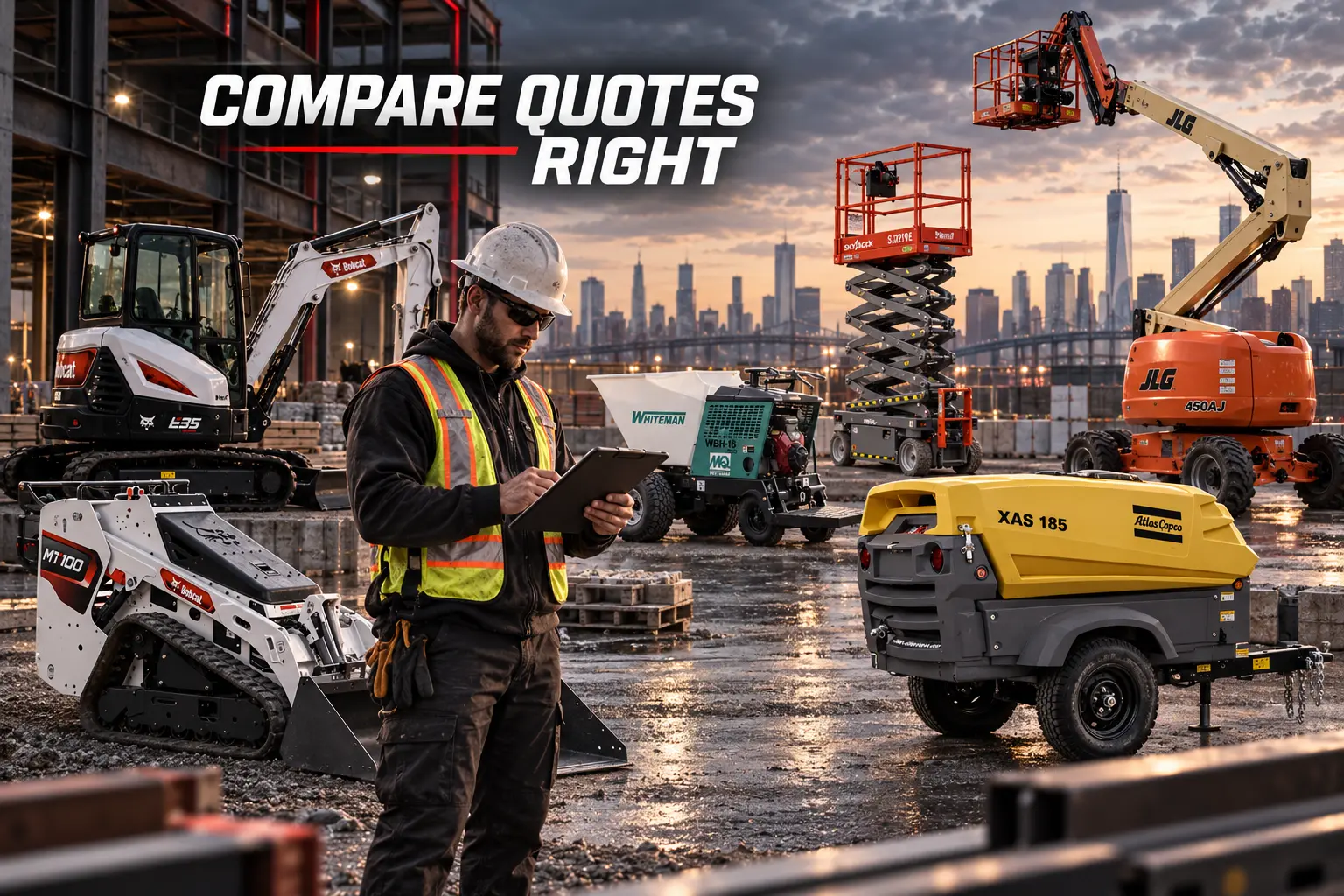
Two rental quotes can list the same machine and still land thousands of dollars apart by the time the job wraps. That gap almost never comes from the daily rate on page one. It comes from delivery charges, fuel policy, damage waivers and overtime fees buried further down.
If you’re a contractor, property manager or project lead sourcing equipment for a Long Island or NYC job, knowing how to compare equipment rental quotes properly is what keeps a project on budget. This guide breaks down exactly what to look at, in what order, before you sign anything.
What Should Be Included in a Construction Equipment Rental Quote?
A complete rental quote should spell out the daily, weekly or monthly rate, the rental period it covers, delivery and pickup charges, fuel or damage waiver terms, deposit requirements and any overtime or extension fees. If a quote skips any of these, ask for the full breakdown before comparing it against another supplier.
Rental houses that operate on current, published rental rates tend to be more transparent from the first conversation. That transparency is usually a good sign of how the rest of the rental will go.
Compare Rental Rates by Term: Daily, Weekly and Monthly
The length of your job should drive the rental term you request, not the other way around. Suppliers price each term differently and the math doesn’t always scale in a straight line.
Daily Rentals
Daily rates make sense for short tasks: a single trenching job, one day of compaction work or a same-week landscaping project. They carry the highest per-day cost but the lowest total commitment.
Weekly Rentals
Weekly terms usually bring the per-day cost down significantly compared to booking day by day. Anyone renting a mini excavator or skid steer for more than three or four days should ask about weekly rental pricing before defaulting to daily rates.
Monthly and Long-Term Rentals
Monthly rentals fit ongoing site work, phased builds or facility maintenance contracts. Rates typically drop further at this tier, but confirm what happens if the job wraps early or runs long. Some suppliers prorate; others don’t.
Not sure which term fits your timeline? This daily versus weekly rental comparison walks through the break-even point in more detail.
Delivery, Pickup and Transportation Fees to Watch
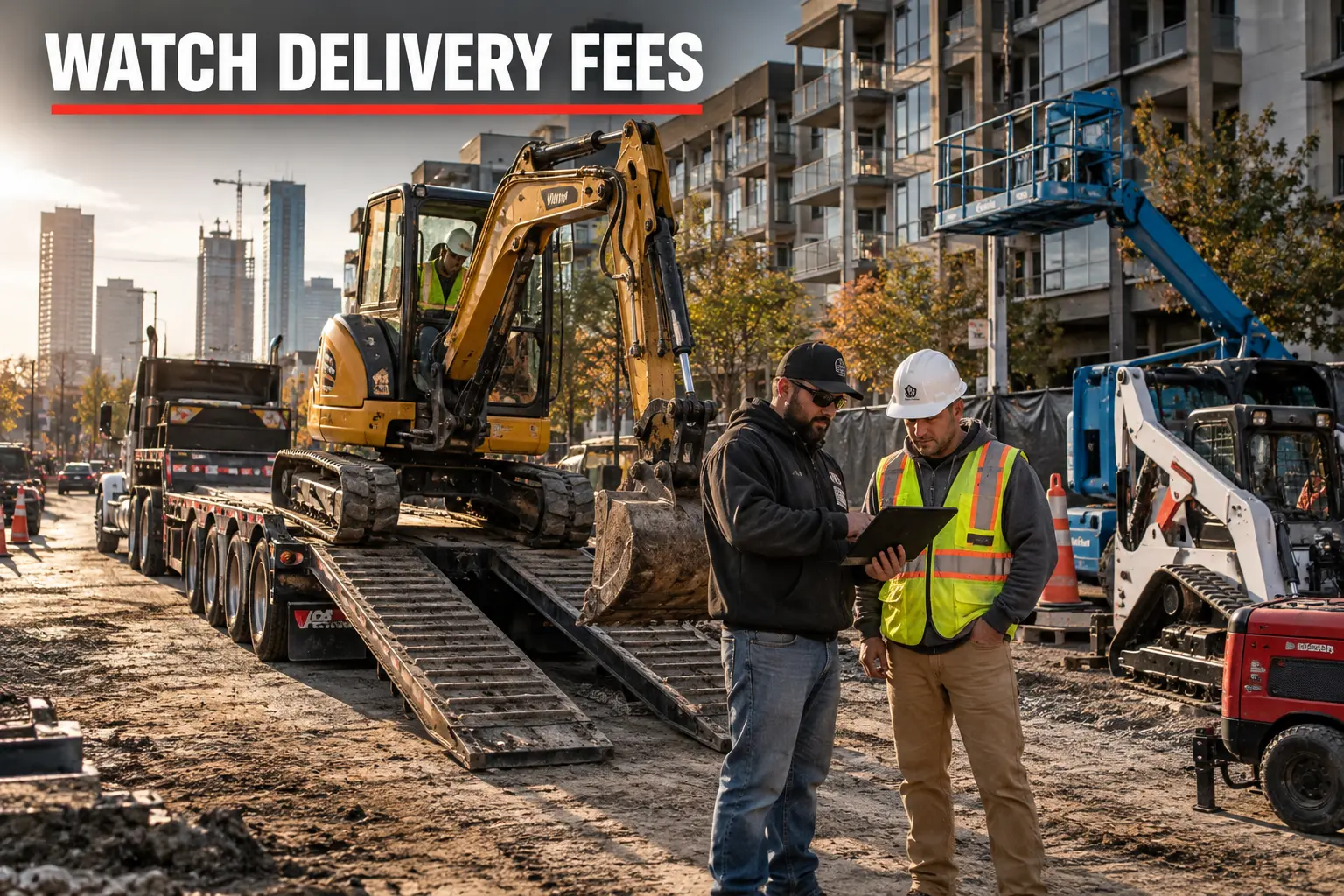
Delivery is where two quotes for the same machine can diverge the fastest. Distance from the rental yard, jobsite access and equipment size all factor into the final delivery charge.
Before comparing quotes side by side, confirm:
- Whether delivery and pickup are quoted separately or combined
- Whether the fee changes based on jobsite access (tight streets, no crane access, restricted hours in NYC boroughs)
- Whether a minimum order value is required for delivery to be included at all
J.E.H handles equipment delivery across Long Island and the surrounding boroughs and delivery costs are always confirmed before a rental is finalized, not added as a surprise on the invoice.
Damage Waivers, Insurance and Deposits
Every rental supplier handles risk differently and this section of a quote is where contractors get caught off guard most often.
Ask each supplier to clarify:
- Whether a damage waiver is optional or built into the rate
- What the waiver actually covers and what it excludes
- Whether your existing general liability policy can satisfy insurance requirements instead
- The deposit amount and whether it’s refunded automatically or requires a request
Jobsite safety and equipment handling standards set by OSHA’s construction guidelines are worth reviewing if your crew is operating rented equipment for the first time, particularly for aerial lifts and compaction equipment.
Fuel Policy and Overtime Charges
Fuel policy sounds minor until it isn’t. Some suppliers rent equipment with a full tank and expect it returned full. Others charge a flat refueling fee regardless of how much fuel was actually used. Ask which model applies before you compare the base rate.
Overtime and extension fees matter just as much. A rental quoted for eight hours a day that runs into a ninth or tenth hour on a busy jobsite can trigger extra charges if that wasn’t clarified up front. Get the hourly overage rate in writing, not verbally.
How to Compare Equipment Rental Companies on Long Island and in NYC
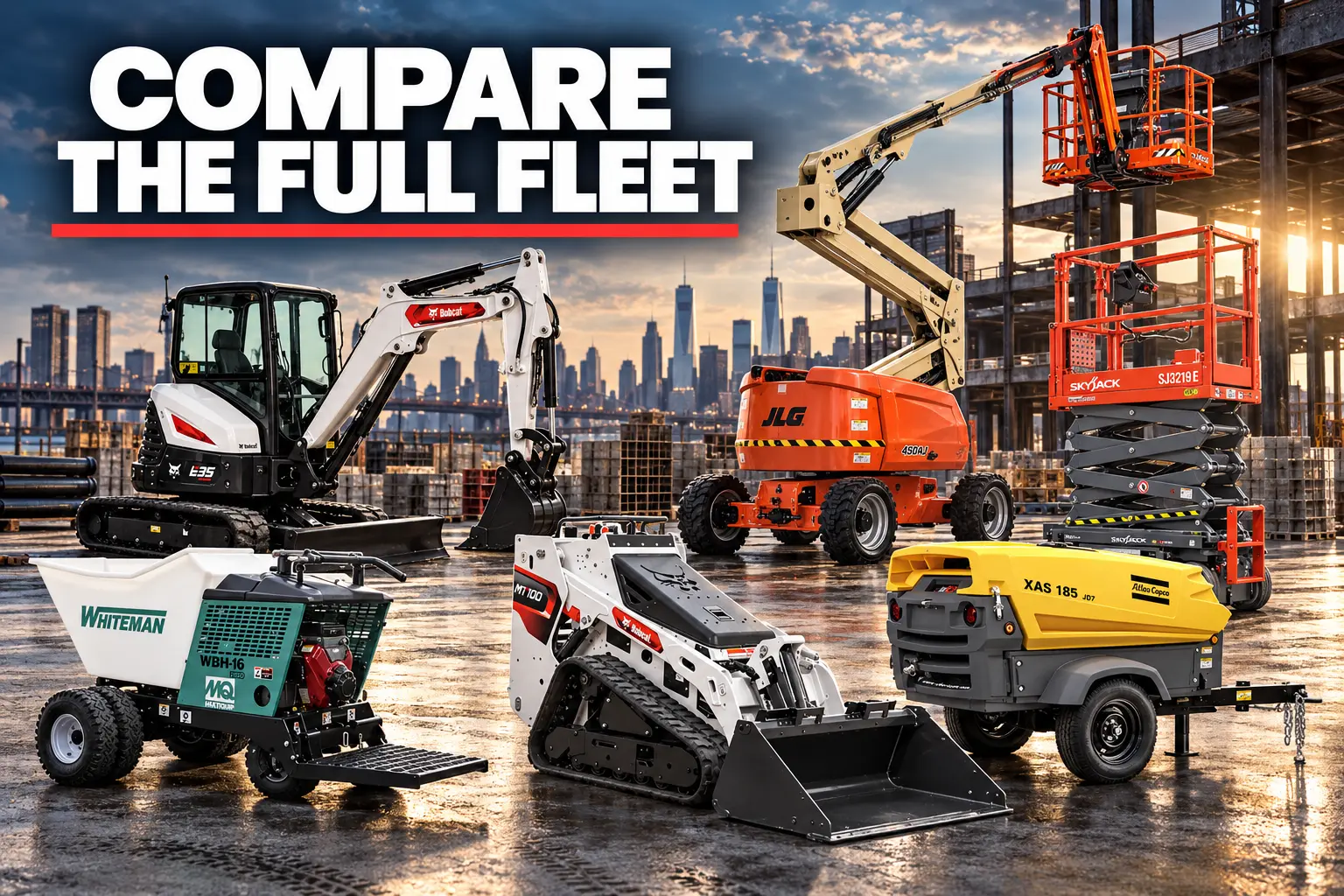
Start by confirming each supplier can actually service your job site. A company with strong contractor equipment rental options across Long Island should be able to speak specifically to your project type, whether that’s excavation, aerial access or compaction work, not just recite a price list.
From there, compare:
- Equipment condition – Ask how recently the unit was serviced and inspected.
- Response time – How quickly can they answer questions or resolve an issue mid-rental?
- Fleet range – Can one supplier cover your whole scope or will you be sourcing from multiple vendors?
- Total cost, not base rate – Add delivery, waiver, fuel and any add-ons before comparing final numbers.
- Communication – A supplier who explains every line item is one you can plan around.
Pricing on its own rarely tells the full story. A slightly higher daily rate from a supplier with dependable delivery and clear terms often costs less over the full rental than a lower rate with hidden fees.
Quick Checklist for Comparing Equipment Rental Quotes
Before you commit to a supplier, run every quote through this list:
- Rental rate matches the correct term (daily, weekly, monthly)
- Delivery and pickup fees are itemized
- Damage waiver terms and coverage are clear
- Deposit amount and refund process are confirmed
- Fuel policy is stated in writing
- Overtime and extension rates are disclosed
- Equipment specs match what your job actually requires