
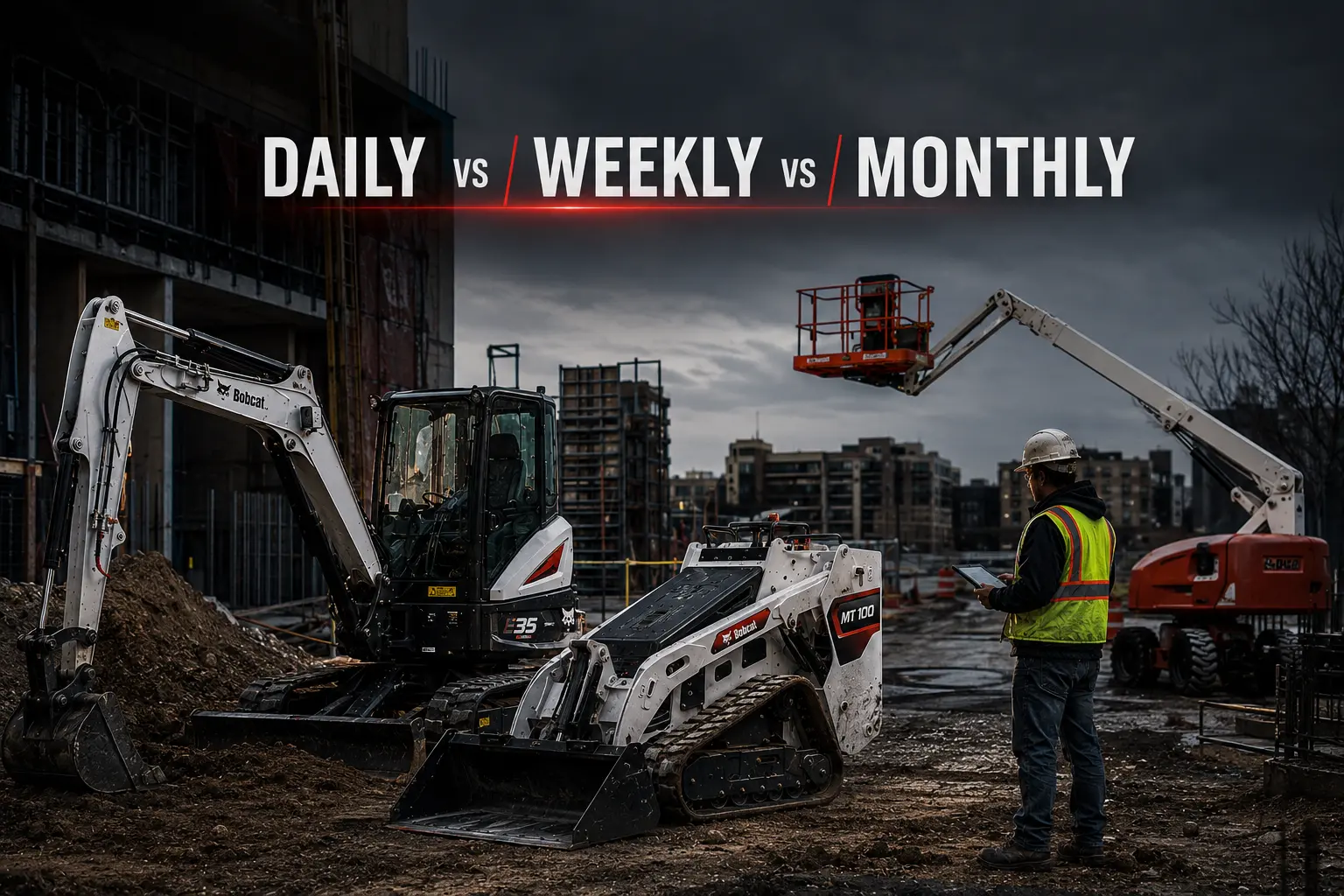
Picking the wrong rental period is one of the fastest ways to overpay on a job. Rent by the day when you needed a week and the daily rate eats your budget alive. Rent by the month when the work wraps in four days and you’re paying for machine time you never used.
For contractors working across Melville, Long Island and NYC, the daily vs weekly equipment rental decision comes down to one question: how long will the equipment actually earn its keep on your site? Here’s how to answer that with confidence, not guesswork.
What Daily vs Weekly Equipment Rental Actually Means for Your Bill
Rental companies don’t price by the hour and multiply. Daily, weekly and monthly rates are each set independently and the gap between them is where the savings live.
A daily rate covers a single 24 hour rental period and it’s built for short jobs where the machine is only needed once. A weekly rate typically runs somewhere around three to four times the daily rate, not seven times it, because rental companies expect the equipment to sit idle on weekends or between tasks. A monthly rate follows the same logic against the weekly number, usually landing around three to four weekly rates instead of a straight multiple of thirty days.
That pricing structure exists because equipment utilization, not calendar days, drives the cost. A machine parked on your site for a week isn’t running eight hours straight for seven days. It’s on standby between pours, between trenching passes or between grading runs. The rental rate reflects that reality.
For a deeper look at how these rate tiers are calculated across the industry, EquipmentWatch publishes a solid breakdown of time-basis rate calculation that’s worth a read if you want the full methodology behind it.
How Long Island and NYC Contractors Decide Between Rental Terms
Jobsite logistics on Long Island and in the five boroughs add another layer to this decision. Delivery and pickup take time and coordination, especially in tight NYC lots or high traffic Nassau County corridors. Every mobilization has a cost, whether that’s a delivery fee or crew hours spent waiting on a drop-off.
That’s why the smartest approach isn’t just comparing daily rate versus weekly rate on paper. It’s asking how many mobilizations your project actually needs. One delivery for a five day job almost always beats two deliveries for two separate three day rentals, even if the raw daily math looks similar.
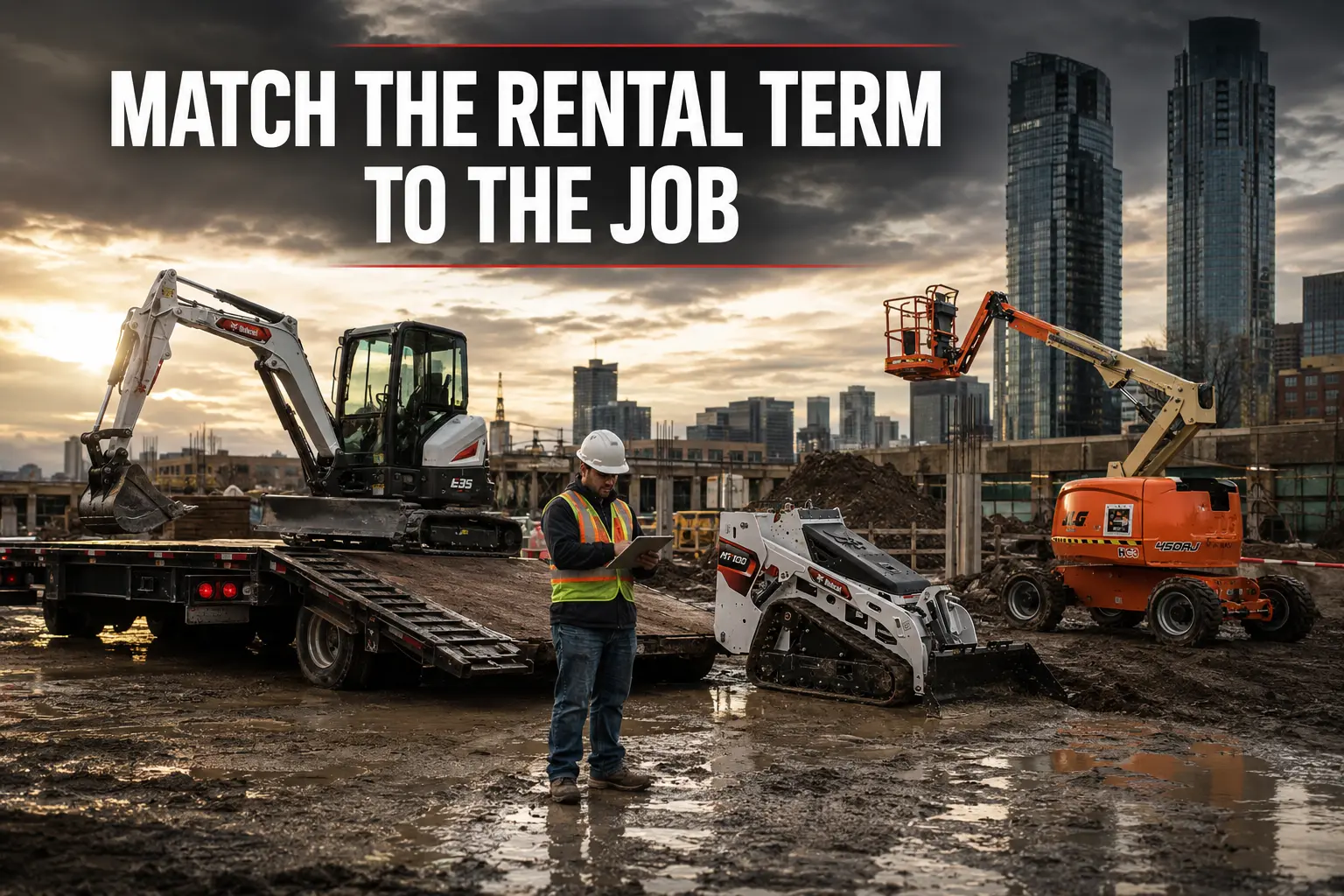
Project scope matters just as much. A landscaper regrading a backyard in Farmingdale has a different rhythm than a utility contractor trenching a multi block section in Queens. The first job might wrap in an afternoon. The second could run for weeks. Matching the rental term to the real pace of the work, not the estimate you made before breaking ground, is what actually controls cost.
When a Daily Rental Is the Right Call
Daily rentals make sense for short, defined tasks where the equipment does one job and comes back.
- Backfilling a trench or finishing a small grading task with a mini excavator
- Compacting a driveway base or patio subgrade with a plate compactor before a weekend pour
- Handling a single punch list item on an active commercial site
- Covering an equipment breakdown gap for a day while your own machine is serviced
If the job realistically finishes in a day, a daily rental keeps costs tight and avoids paying for idle time.
When a Weekly Rental Saves You More
Once a project stretches past two or three days, the math almost always favors a weekly rate. A five day daily rental can cost noticeably more than a single weekly rental covering the same span, since the weekly rate isn’t a straight multiple of the daily number.
This is where equipment like the Bobcat MT100 mini skid steer earns its keep on landscaping and hardscape jobs that run Monday through Friday or where a mini excavator handles a full week of site prep and trenching without a second delivery fee. J.E.H Equipment Rentals structures weekly equipment rental across Long Island around exactly this kind of multi day project, so contractors aren’t stuck recalculating rates every 24 hours.
Concrete crews running a multi day pour schedule see the same benefit with a Multiquip WBH concrete buggy on site for the full week instead of booked and returned between pours.
When Monthly or Long Term Rental Makes Sense
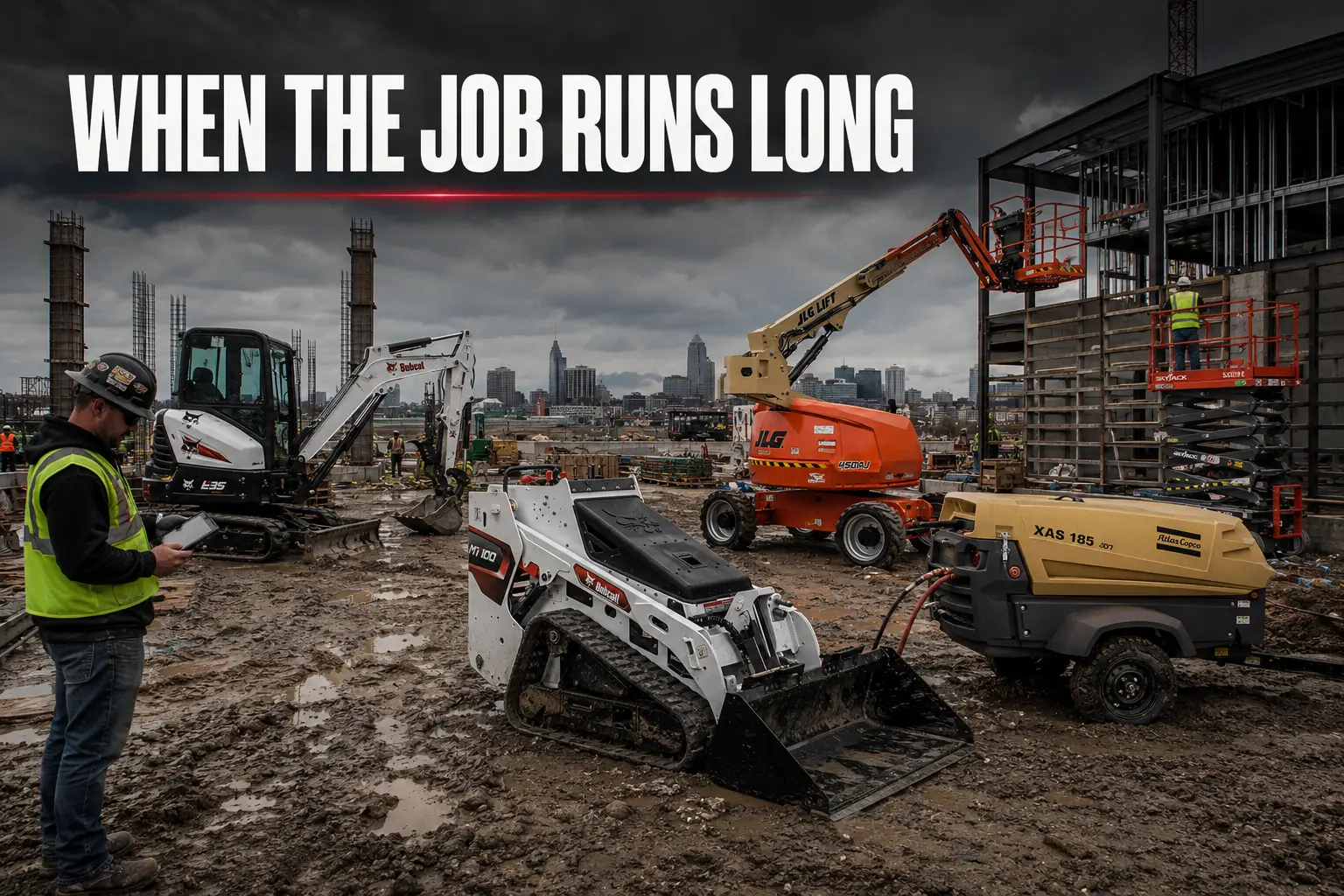
Larger site development, extended excavation or multi phase grading projects usually justify a monthly rental. Once a job crosses the three to four week mark, the monthly rate almost always beats stacking weekly rentals back to back and it cuts down on repeated delivery coordination.
Boom lifts and scissor lifts on extended commercial builds, air compressors staged for weeks of pneumatic tool use and track loaders on longer excavation phases are common candidates for monthly terms. If your project timeline is still moving targets week to week, it’s worth talking through the numbers directly rather than assuming month long pricing is automatically the better deal.
A Straightforward Way to Compare the Three
Before locking in a rental term, run the actual math against your project timeline instead of defaulting to habit.
- Estimate the realistic number of days the equipment will be on site, not the best case scenario.
- Compare the total daily rate cost for that span against the weekly or monthly rate covering the same period.
- Factor in delivery and pickup fees for each option, since fewer mobilizations often tip the decision.
- Build in a buffer day or two. Weather delays and material lead times on Long Island and NYC jobs are common enough to plan for.
Contractors who run this comparison before booking consistently land on the rental term that fits, rather than the one that felt safest to guess at. You can see current rate tiers on our construction equipment rental rates page for Long Island projects.