
Blog
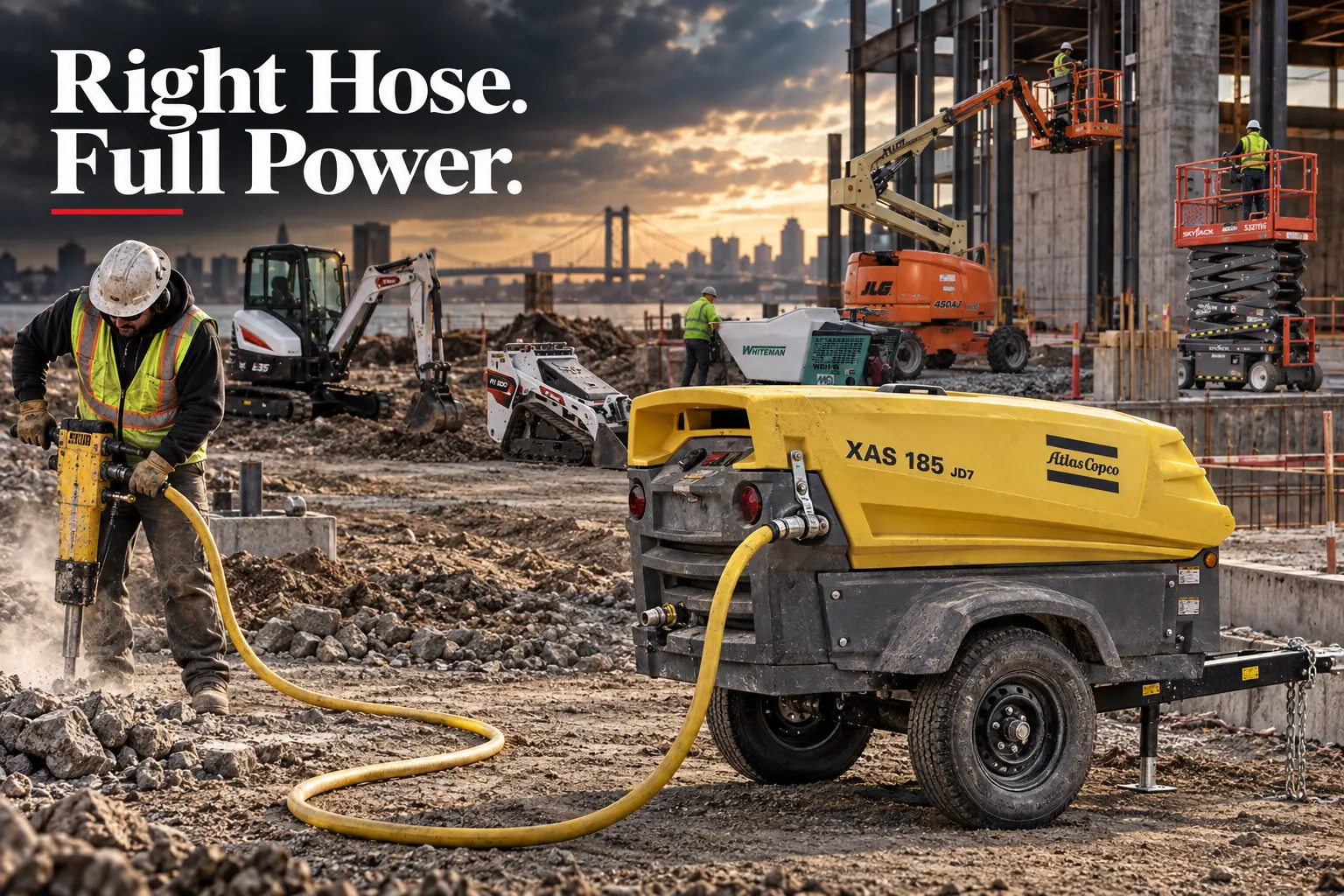
If you’re renting or operating a 185 CFM air compressor on a Long Island construction site, jobsite or demolition project, hose size directly impacts your tool’s power output and efficiency. Contractors and equipment managers often overlook this detail and it costs them time and money.
This guide explains the exact hose sizing rules, the math behind pressure drop and how to match hose size to your pneumatic tools. Whether you’re running jackhammers, pavement breakers, concrete buggies or air-powered tools, getting the hose right keeps your project on schedule.
Why Hose Size Matters for 185 CFM Compressors
A 185 CFM (cubic feet per minute) air compressor delivers substantial airflow that’s the volume of compressed air the unit produces at a given pressure (typically 90–125 PSI on towable units). But airflow alone doesn’t guarantee power to your tools.
The hose connecting your compressor to your pneumatic equipment is a bottleneck. If the hose is too small, friction inside the hose reduces pressure and flow rate before it ever reaches your tool. This condition is called pressure drop.
Pressure drop in a small hose forces your compressor to work harder, reduces tool striking force (for jackhammers and breakers), slows material handling equipment and can cause the compressor to cycle on/off more frequently shortening its service life.
Real example: A 50-foot run with a 1/2-inch hose on a 185 CFM compressor can lose 10–15 PSI by the time air reaches your tool. A 3/4-inch hose cuts that loss to 2–5 PSI. At a jobsite where every pound of pressure matters, that difference is the difference between finishing concrete breaking in one day or two.
Recommended Hose Sizes for 185 CFM Compressors
The industry standard for 185 CFM towable and stationary compressors is straightforward:
| Hose Diameter (ID) | Best For | Hose Length Limit | Pressure Drop (approx.) |
|---|---|---|---|
| 3/4 inch | Standard jobsite work, 50+ ft runs | Up to 75 feet | 2–5 PSI loss |
| 1 inch | Long runs (75+ ft), high-demand tools | 100+ feet | 0.5–1.5 PSI loss |
| 1/2 inch | Not recommended—excessive pressure drop | Max 25 feet | 10–20 PSI loss |
The takeaway: Always start with 3/4-inch ID for a 185 CFM compressor. If your hose run exceeds 75 feet or you’re powering multiple high-CFM tools simultaneously, upgrade to 1-inch ID.
Internal Diameter vs. External Diameter: What Matters
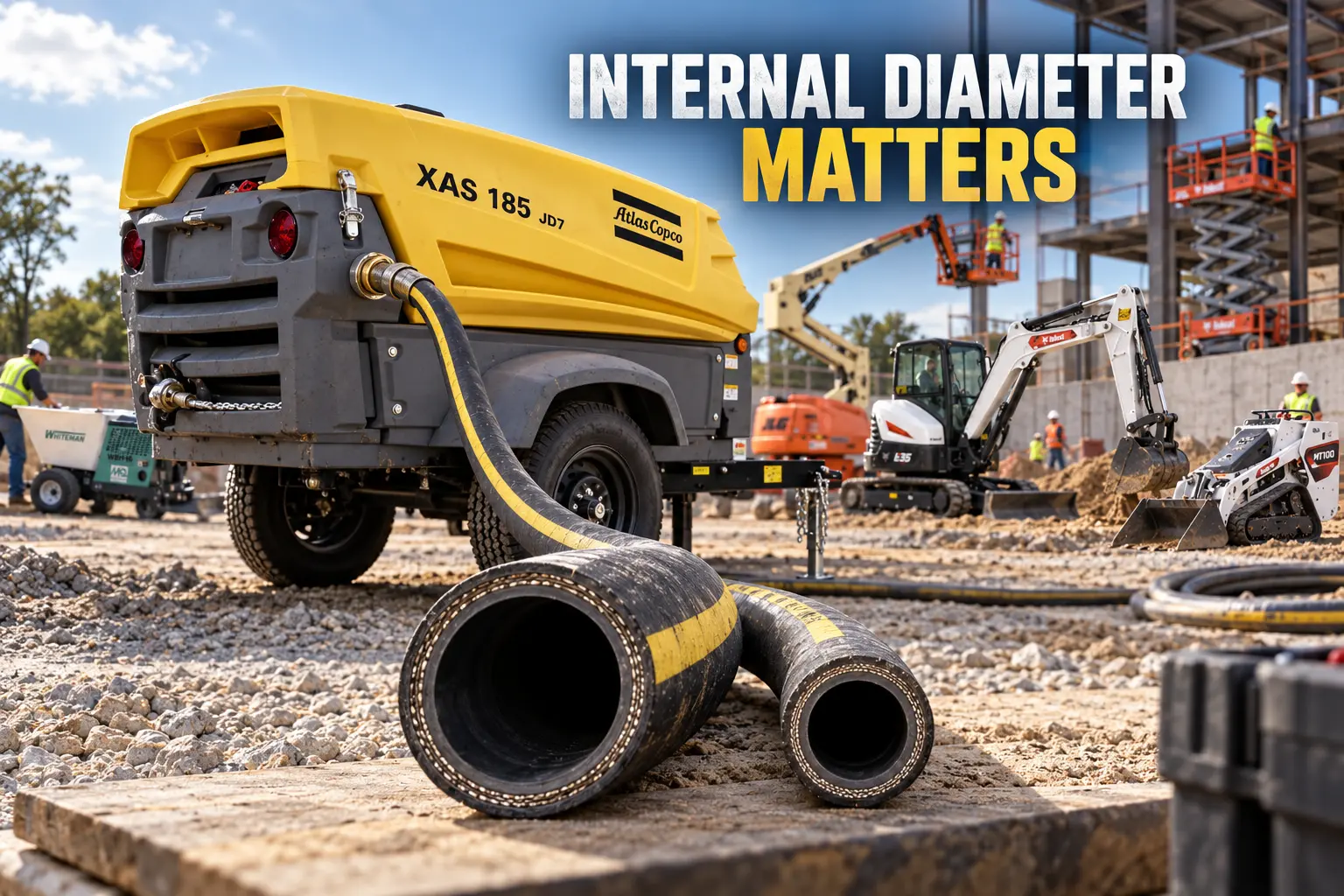
This is where contractors trip up. Hose sizes are labeled by internal diameter (ID), not external diameter. A hose marked “3/4 inch” refers to the inside opening where air flows, not the outside measurement.
The difference matters because a small change in internal diameter creates a huge change in cross-sectional area, which directly affects flow rate and pressure loss. This is why a 1/2-inch hose cannot safely power a 185 CFM compressor—the airflow physically won’t fit through the opening.
When you rent or purchase a hose for a 185 CFM compressor, confirm the ID specification on the packaging or product label. If you can’t find it, ask the supplier. Using the wrong ID costs you efficiency and frustration.
Hose Length and Pressure Drop: The Distance Factor
The longer your hose run, the more air resistance builds up and the greater your pressure loss. There’s no magic length threshold, but distance compounds the effect.
For a 185 CFM compressor with a 3/4-inch hose:
- 25–50 feet: Minimal pressure drop (1–2 PSI). Safe for most tools.
- 50–75 feet: Acceptable pressure drop (2–5 PSI). Monitor tool performance.
- 75–100 feet: Noticeable loss (5–10 PSI). Consider upgrading to 1-inch hose.
- 100+ feet: Upgrade to 1-inch hose or risk tool underperformance.
Pro tip: If your compressor sits 75 feet from the work area, use a 1-inch hose. The cost difference is small; the performance gain is large. When you’re renting equipment by the day, lost productivity costs far more than the hose upgrade.
CFM Requirements for Common Pneumatic Tools
Your 185 CFM compressor has enough airflow to power most jobsite tools. But here’s the catch: not all tools run simultaneously and some tools demand more CFM than others.
| Pneumatic Tool | CFM Required | Hose Size (recommended) |
|---|---|---|
| Jackhammer (90–120 lb) | 40–60 CFM | 3/4 inch |
| Pneumatic breaker (pavement) | 50–70 CFM | 3/4 inch |
| Impact wrench (1/2 inch) | 4–6 CFM | 1/2 inch (acceptable) |
| Die grinder | 8–12 CFM | 1/2 inch (acceptable) |
| Air drill (heavy-duty) | 12–20 CFM | 3/4 inch |
| Angle grinder (4.5 inch) | 10–15 CFM | 1/2–3/4 inch |
A 185 CFM compressor can run most of these tools individually without issue. The problem arises when you run multiple high-demand tools at once—say, a jackhammer and a pneumatic breaker on the same jobsite. At that point, hose size becomes critical because even a small pressure drop multiplies across both tools.
Tool Compatibility: Power and Performance
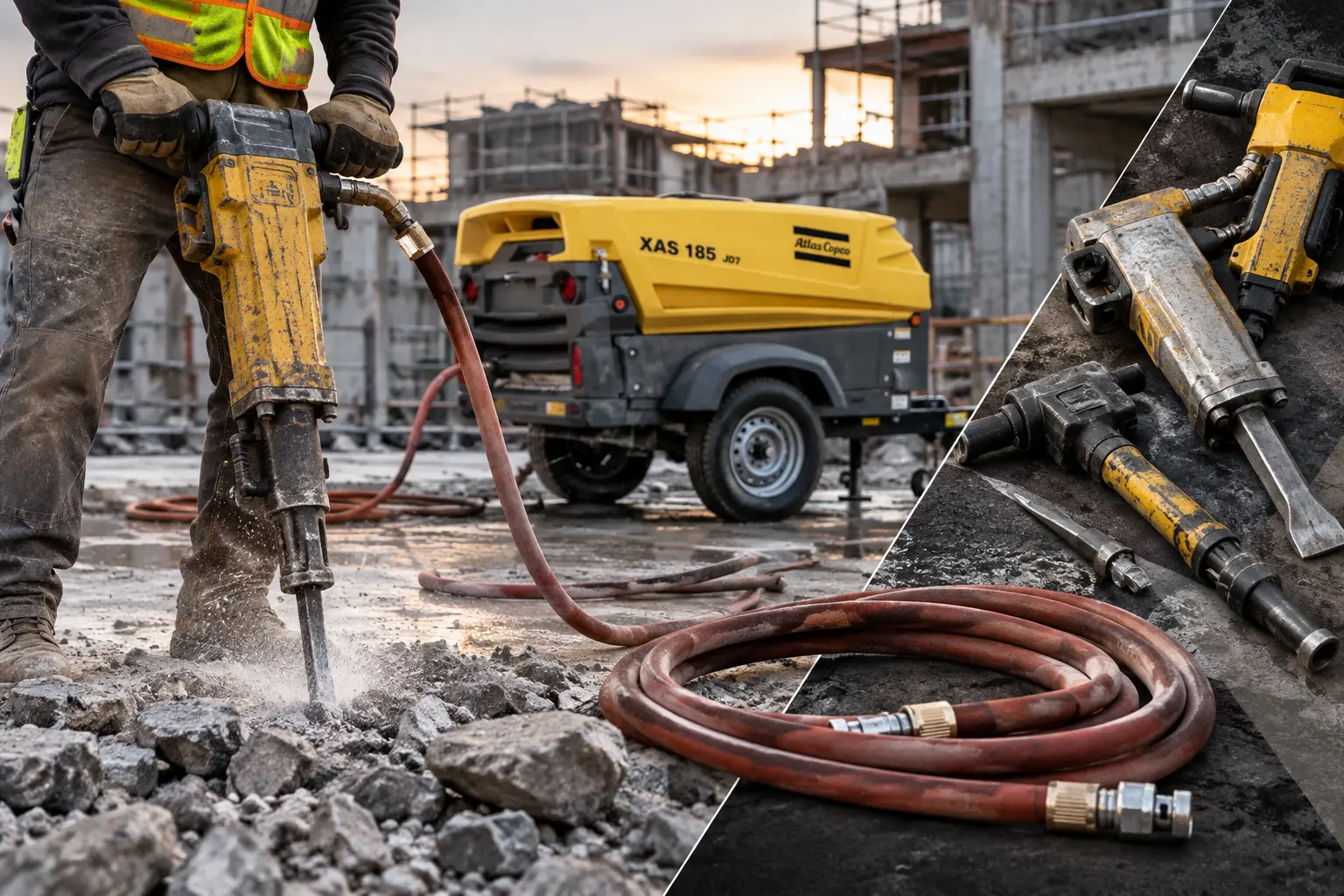
The right hose size ensures your pneumatic tools deliver full power. Jackhammers and pavement breakers are especially sensitive to pressure loss. If the air arriving at the tool is 10 PSI below what the tool needs, you’ll feel the difference immediately slower striking action, reduced breaking power and operator fatigue.
For demolition work, concrete breaking and heavy-duty applications, don’t cheap out on hose diameter. A 1-inch hose may cost $30–50 more than a 3/4-inch hose, but it’s a worthwhile investment when you’re renting a 185 CFM compressor by the day. The productivity gain pays for itself.
When you rent a 185 CFM air compressor from J.E.H Equipment Rentals, we include a standard 3/4-inch hose. For jobsites requiring longer runs or multiple simultaneous tools, we can supply a 1-inch hose or additional hose lengths to optimize your setup. Just let us know your layout and tool count when you reserve.
Hose Fittings, Couplers and Safety Considerations
Hose size also determines coupling size. A 3/4-inch ID hose uses 3/4-inch NPT (National Pipe Thread) couplers; 1-inch hose uses 1-inch NPT couplers. These aren’t interchangeable forcing a wrong-sized coupler onto a hose creates air leaks and pressure loss.
Additionally, compressed air hose must be rated for the working pressure of your compressor. A 185 CFM unit typically operates at 90–125 PSI. Industrial-grade hose is rated for 200+ PSI, providing a safety margin. Always check the pressure rating on your hose before use.