
Blog
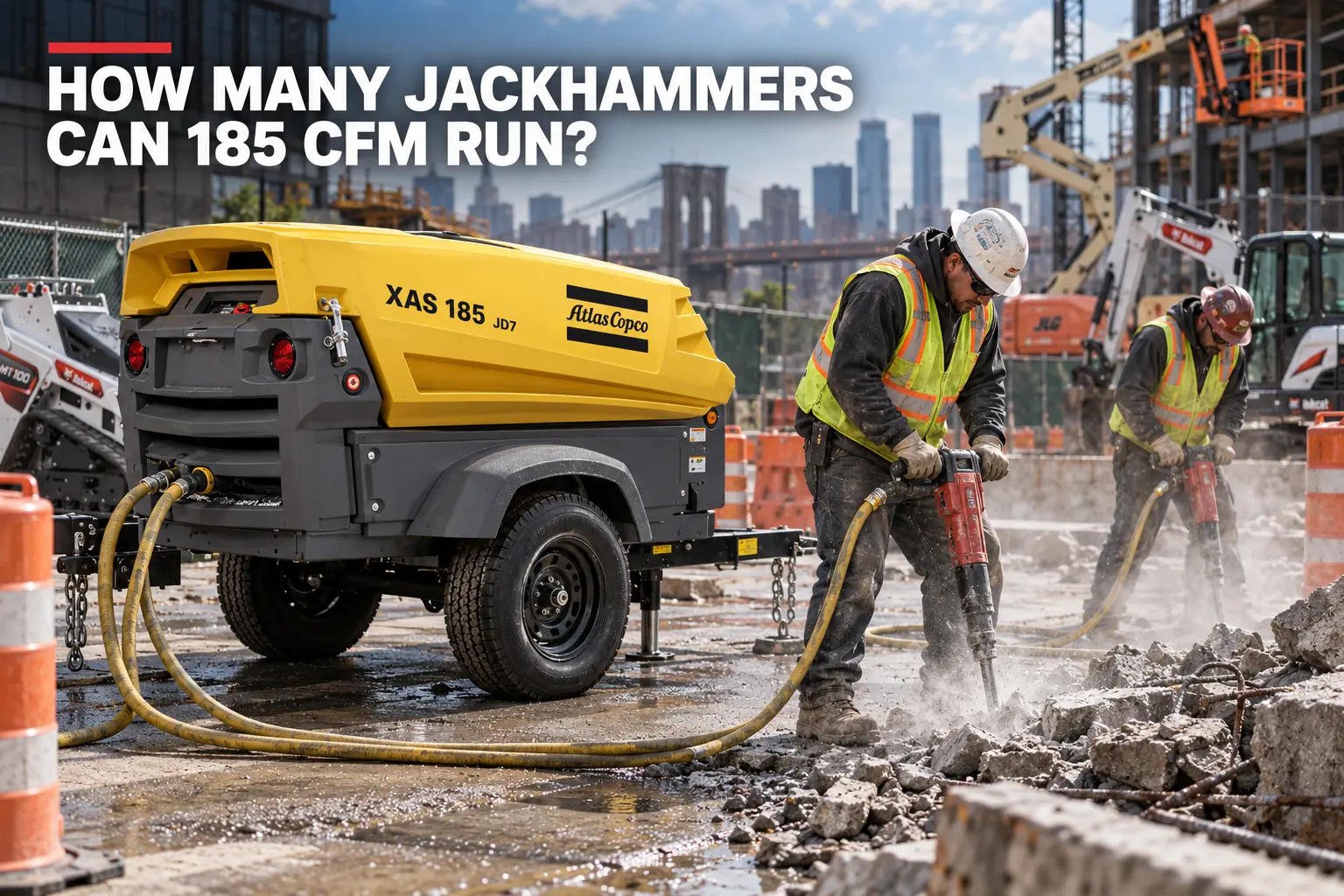
If you’re breaking concrete or pulling up old pavement, the compressor you show up with decides how fast the crew moves. A 185 CFM compressor for jackhammer work is a common size for Long Island and NYC contractors because it’s large enough to support serious breaker work while still staying compact enough for a job trailer or tow setup.
The question we hear most from demolition and utility crews is simple. How many jackhammers can it actually run at once? The honest answer depends on the size of the tools you’re running, the working pressure they need and how they’re set up on the hose line. Here’s how to size it correctly before you book.
What a 185 CFM Air Compressor Is Built to Handle
A 185 CFM unit is a mid-size, towable, diesel-powered compressor. Contractors use it for concrete demolition, pavement breaking, pneumatic drilling and general site prep work where a full industrial-scale compressor would be more air than the job needs.
It supplies air at the working pressure most contractor-grade pneumatic tools are built around, so you’re not left adjusting equipment or guessing at output on-site. Combined with a hose reel long enough to reach across a typical residential or commercial lot, it covers a wide range of breaker and drilling applications across Nassau and Suffolk County.
How Many Jackhammers Can a 185 CFM Compressor Run?
A 185 CFM compressor can typically run one heavy pneumatic breaker comfortably. Two medium breakers may be possible, but only when their combined airflow requirements, working pressure, hose setup and simultaneous demand stay within the compressor’s usable capacity. This isn’t a fixed rule of thumb. It’s a calculation worth running before you commit two tools to one air source.
Here’s how that breaks down by tool size.
Air Consumption by Jackhammer Class
Pneumatic breakers aren’t all built the same and their air demand varies a lot by class:
- Light breakers typically draw around 40 to 60 CFM
- Medium breakers typically draw around 70 to 90 CFM
- Heavy paving breakers typically draw around 80 to 100 CFM
A single heavy breaker fits well within a 185 CFM compressor’s output, with room left over to account for hose losses and normal pressure drop across the line. Two medium breakers running together, on the other hand, can call for roughly 140 to 180 CFM combined before you even factor in system losses, which leaves very little margin on a 185 CFM unit.
Running One Heavy Breaker Versus Two Medium Breakers
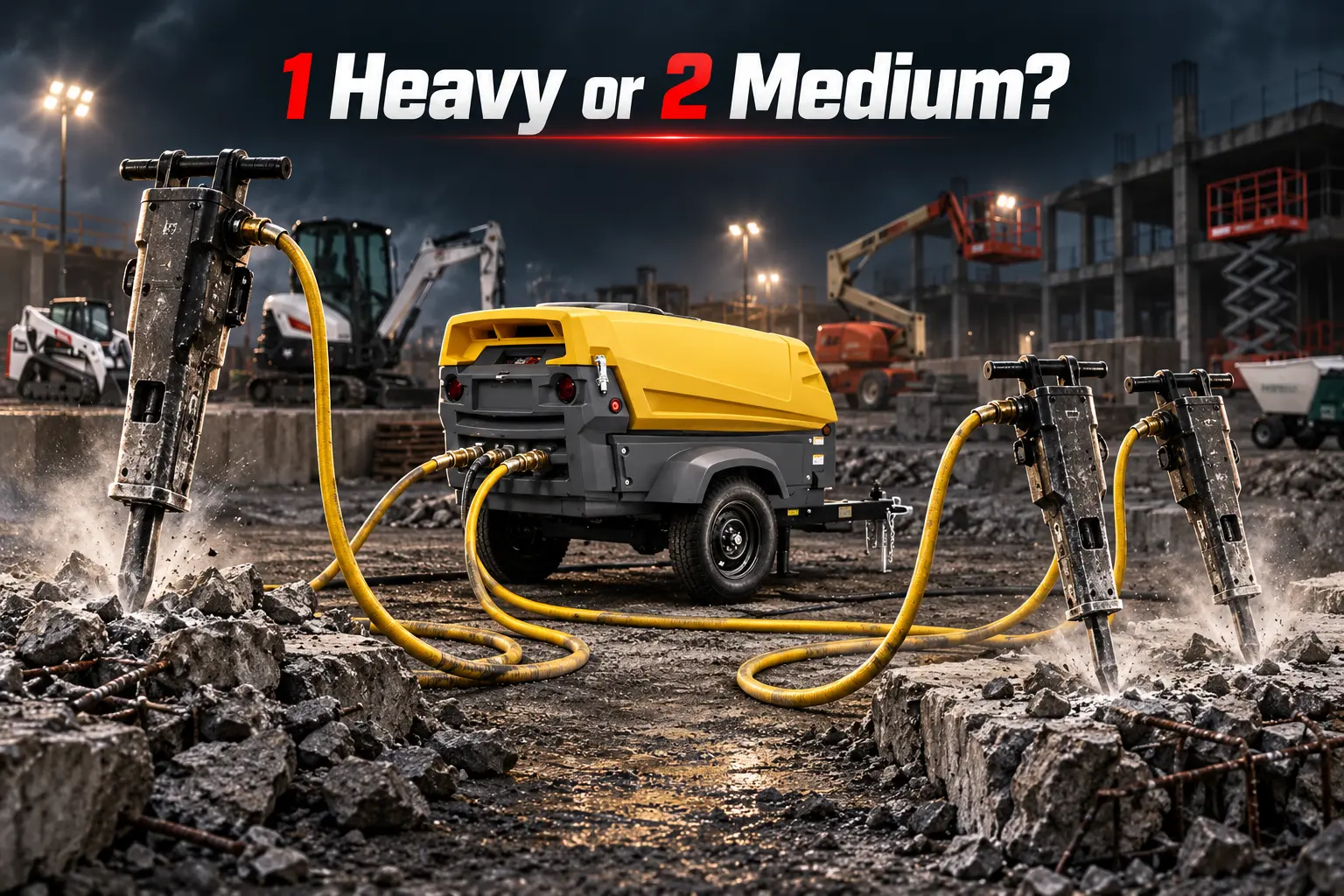
One heavy breaker is the most reliable, full-power configuration for a 185 CFM compressor. It gives the tool everything it needs with headroom to spare, which keeps output steady even as hose length and fittings introduce some pressure loss.
Two medium breakers can work, but it depends on the specifics: shorter hose runs, properly sized couplers, tools that aren’t both firing at max demand continuously and a compressor in good working condition. If your crew plans to run two breakers side by side for a full shift, it’s worth confirming the tool specs against the compressor’s rated output before the job starts, not after the second hammer stalls out.
Adding a Third Tool or a Larger Breaker
Stacking a third tool onto a 185 CFM compressor already running two medium breakers isn’t realistic. If your scope genuinely calls for three tools running at once or you’re working with larger, heavier-class breakers, that’s a sign to step up to a larger compressor rather than push a 185 CFM unit past its usable range. A quick call to our team before you book helps confirm the right fit for your tool count.
Why CFM and PSI Both Matter for Jackhammer Performance
Contractors sometimes size a compressor on pressure alone, but CFM and PSI work together and neither one tells the full story by itself. CFM is the volume of air the compressor delivers, which determines how many tools it can realistically supply at once. PSI is the working pressure each tool needs to actually cycle and strike with full force.
A compressor can hit the right PSI and still fall short if the CFM output can’t keep up with tool demand and a tool running at the correct CFM but under-pressured will lose striking power even with plenty of air moving through the line. Sizing correctly means matching both numbers to your tools, not picking one figure and assuming the rest takes care of itself.
Hose condition and fittings matter here too. Worn hoses, loose couplers and undersized connectors all bleed pressure before air reaches the tool. The Occupational Safety and Health Administration outlines specific requirements for pneumatic power tools and hose connections and keeping equipment within those standards protects both your crew and your air supply.
Where a 185 CFM Compressor Fits on Long Island and NYC Jobsites
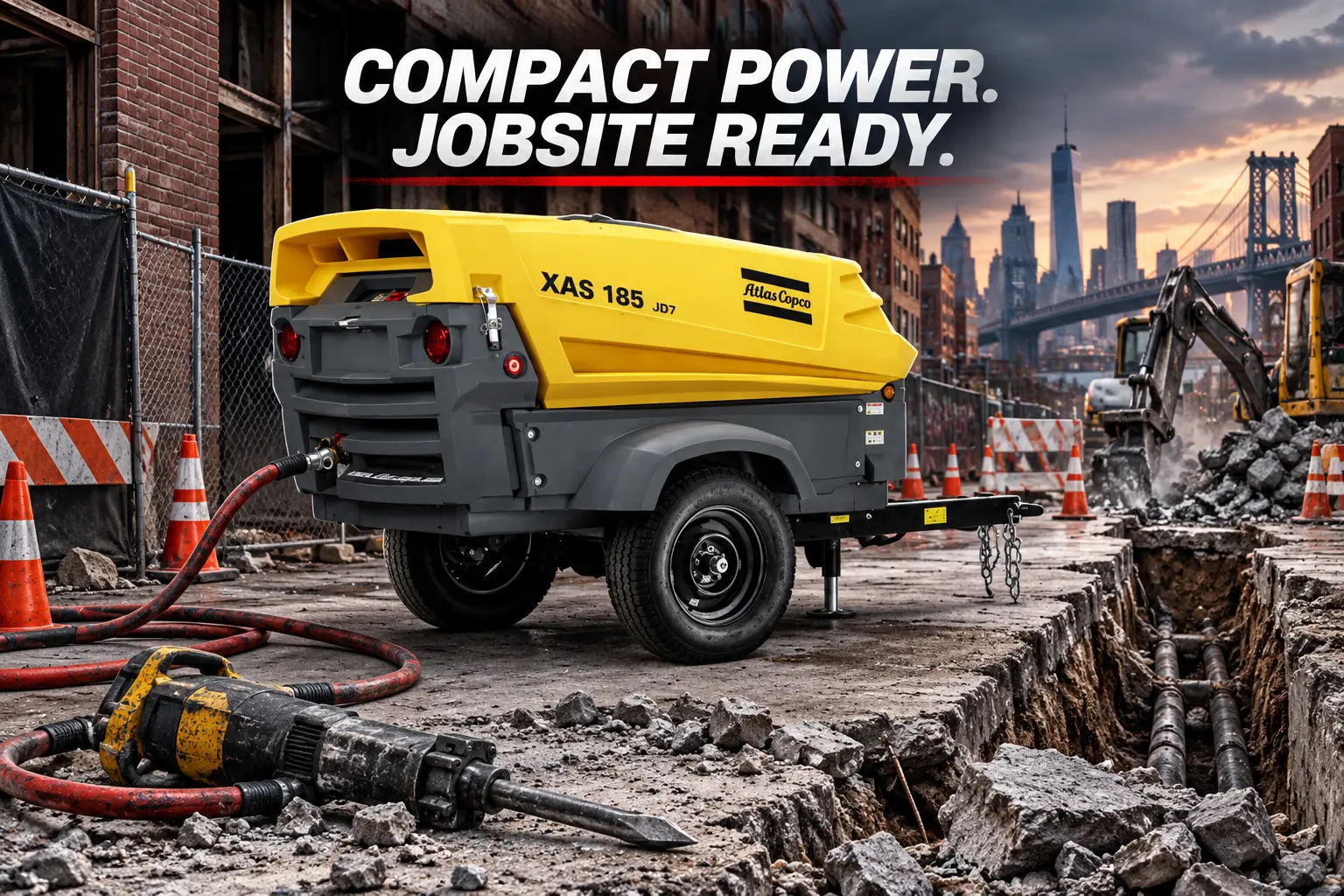
This size compressor supports a range of concrete and demolition work across the boroughs and Long Island, including:
- Concrete and pavement breaking on sidewalk and driveway replacement jobs
- Utility trenching where a jackhammer needs to open a cut before excavation starts
- Demolition of small slabs, curbs and footings ahead of new pours
- General pneumatic tool support on active.site preparation work
It’s a compressor we supply for jobs across our equipment rentals NYC service area as well as Long Island crews working in tighter lots where a compact, tow-behind unit is easier to stage than a larger industrial rig.
Renting a 185 CFM Air Compressor from J.E.H Equipment Rentals
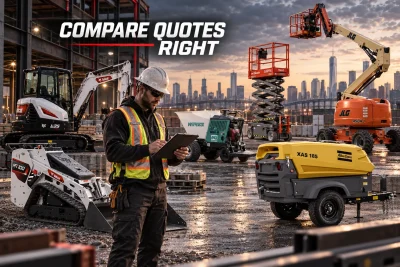
J.E.H Equipment Rentals supplies the Atlas Copco 185 CFM air compressor to contractors across Melville, Nassau County, Suffolk County and NYC. It’s a diesel-powered, tow-behind unit built for jackhammer and pneumatic tool work, including the applications described above.
Towing requirements depend on trailer weight, hitch rating and brake specifications, so our team can walk you through what tow vehicle you’ll need before pickup.
If you’re already comparing rental options, our 185 CFM air compressor rental page for Long Island covers rates and availability and our Atlas Copco compressor rental guide goes deeper on specs.
Our team can help confirm whether a 185 CFM unit fits your tool count before you book, so you’re not finding out mid-job that you need more air than you planned for.
Ready to lock in a compressor for your next demolition or breaker job?
Check Availability or call us direct at +1 800 845 3608.