
Not every Long Island jobsite gives you flat, dry, compacted ground to work with. Backyards, drainage areas, waterfront lots and freshly graded sites often mean soft soil, standing water or a slope that won’t forgive a bad equipment choice. Running a mini excavator on soft ground isn’t automatically a problem but it does change how the machine should be operated and it changes which machine you should be renting in the first place.
At J.E.H Equipment Rentals, we get calls from contractors and landscapers across Melville, Suffolk County and Nassau County who need a compact excavator for a lot that’s wet, sloped or simply too tight for a full size machine. Here’s what actually matters when soft ground is part of the equation and how to keep your project moving without tearing up the site or risking a tip over.
What Happens When a Mini Excavator Works on Soft or Wet Ground
A mini excavator on soft ground faces two real risks: sinking and instability. Soft or saturated soil can’t support concentrated weight the way compacted ground can, so the machine’s undercarriage may settle unevenly, especially once the bucket is loaded or the boom is extended past the tracks. On a slope, that same soft footing reduces traction right when you need it most.
The fix isn’t to avoid soft ground jobs. It’s to match the machine’s ground pressure and track type to the site and to operate with the boom low and the load close to the machine whenever the surface gets questionable.
Why Rubber Tracks Matter on Soft Soil, Lawns and Sensitive Ground
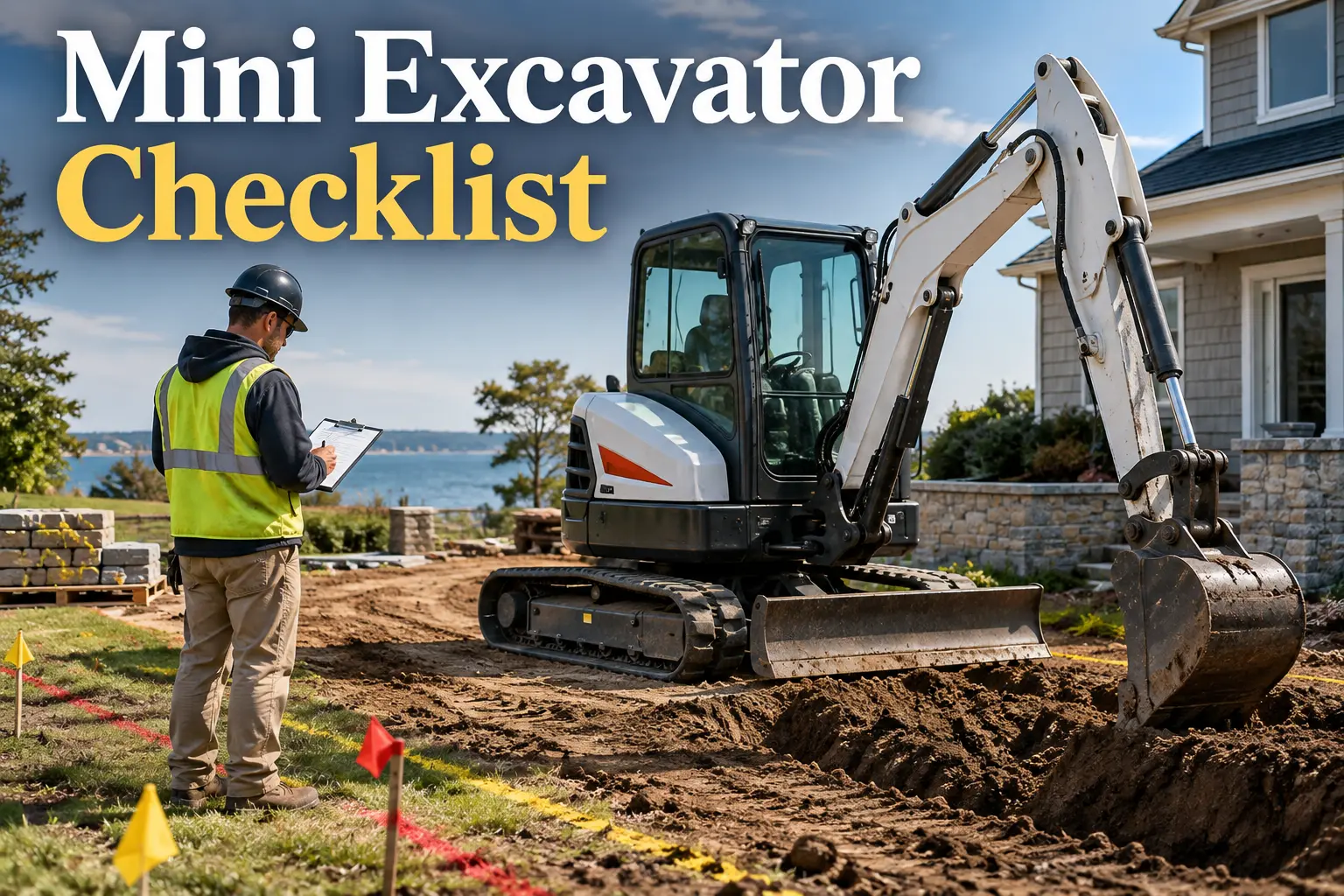
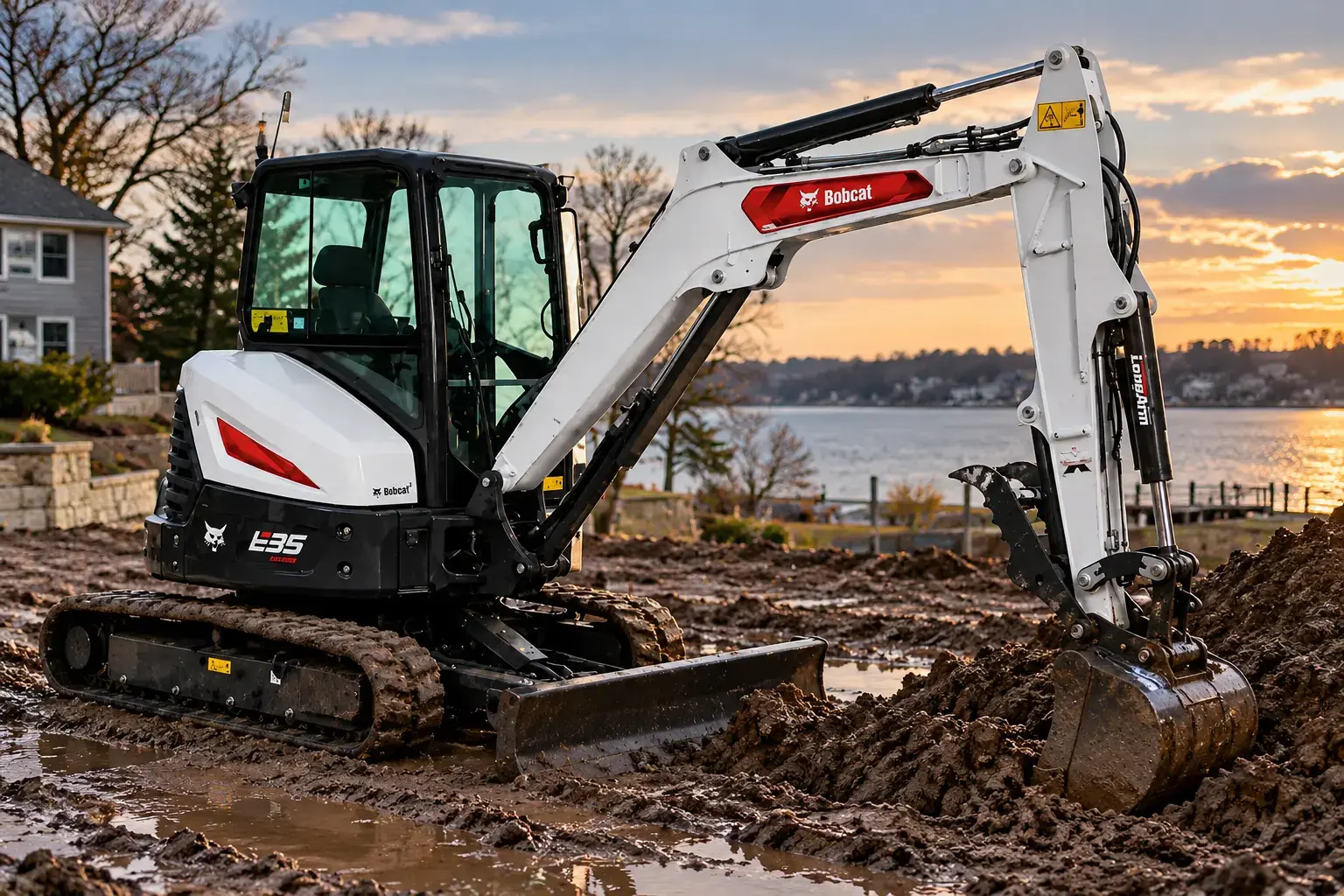
Rubber tracks spread a mini excavator’s weight across a wider footprint than tires ever could, which is exactly why they’re the standard on residential and landscaping jobs. A rubber tracked machine like the Bobcat E35 puts down low ground pressure, so it can move across a lawn, a softened backyard or a site with recent grading without leaving deep ruts behind.
That matters for two reasons. First, it protects the property homeowners and property managers notice torn up turf and it’s an easy way to lose a repeat client. Second, it keeps the machine from digging itself in. A tracked mini excavator with the right undercarriage design will often keep working in conditions that would stop a wheeled loader cold.
Rubber tracks also hold up better on wet clay and sandy soil, both of which show up regularly across Long Island depending on the town and the season. If you’re working near the coast or on a lot with poor drainage, don’t assume any mini excavator will do. Confirm the track type and machine weight before it shows up on site.
Working Safely on Slopes and Uneven Ground
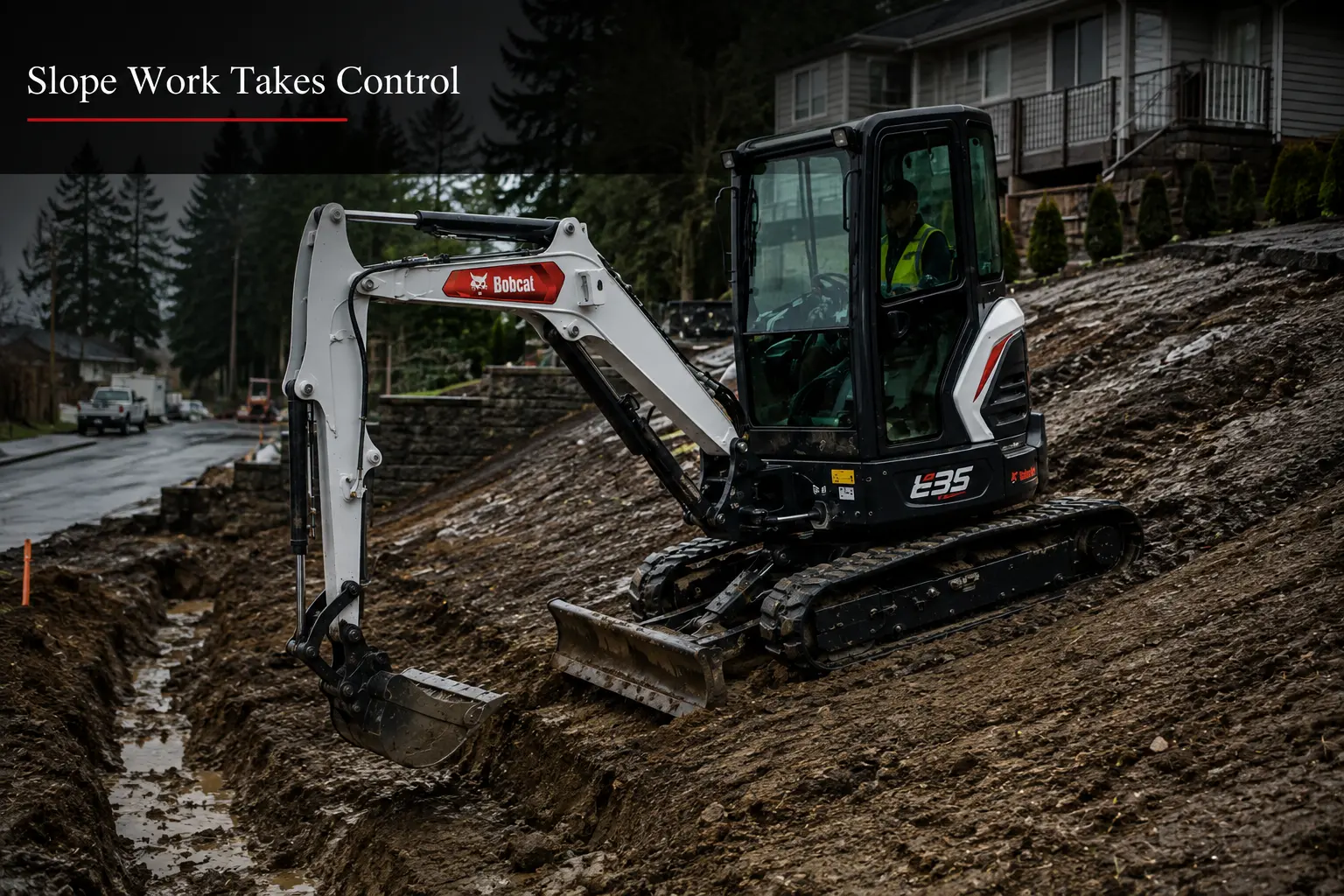
Slope work is where soft ground gets genuinely risky. A machine that’s stable on flat, compacted soil can lose traction fast on an incline once the surface softens and that’s when tip-overs and slides happen.
A few operating habits reduce that risk significantly:
- Keep the tracks perpendicular to the slope whenever possible, not angled across it.
- Travel with the bucket low and close to the machine, never extended out over a drop off.
- Avoid turning on an incline reposition on flatter ground first.
- Test the surface before committing full weight to it, especially after rain.
- Never exceed the manufacturer’s rated slope limits for that specific model.
These aren’t optional extras. The Occupational Safety and Health Administration treats excavation and earthmoving work as a high risk category precisely because ground failure and equipment instability cause a disproportionate share of jobsite injuries. Slope work on soft ground deserves the same level of caution you’d give a trench.
Ground Pressure Explained: Why It Determines What Machine You Need
Ground pressure measured in pounds per square inch tells you how much load a given surface has to support under the machine. A compact excavator with wide rubber tracks and a lower operating weight will typically run a lighter ground pressure than a comparable machine on steel tracks or narrow rubber, which is why it performs better on soft soil, sod and recently backfilled areas.
This is also why “just rent the biggest machine you can” is the wrong instinct for soft or sensitive ground. A larger footprint doesn’t always mean better traction if the added weight outpaces the tracks’ ability to distribute it. Matching the machine to the site not just the dig depth you need is what actually keeps a project on schedule.
Choosing the Right Mini Excavator for Long Island Ground Conditions
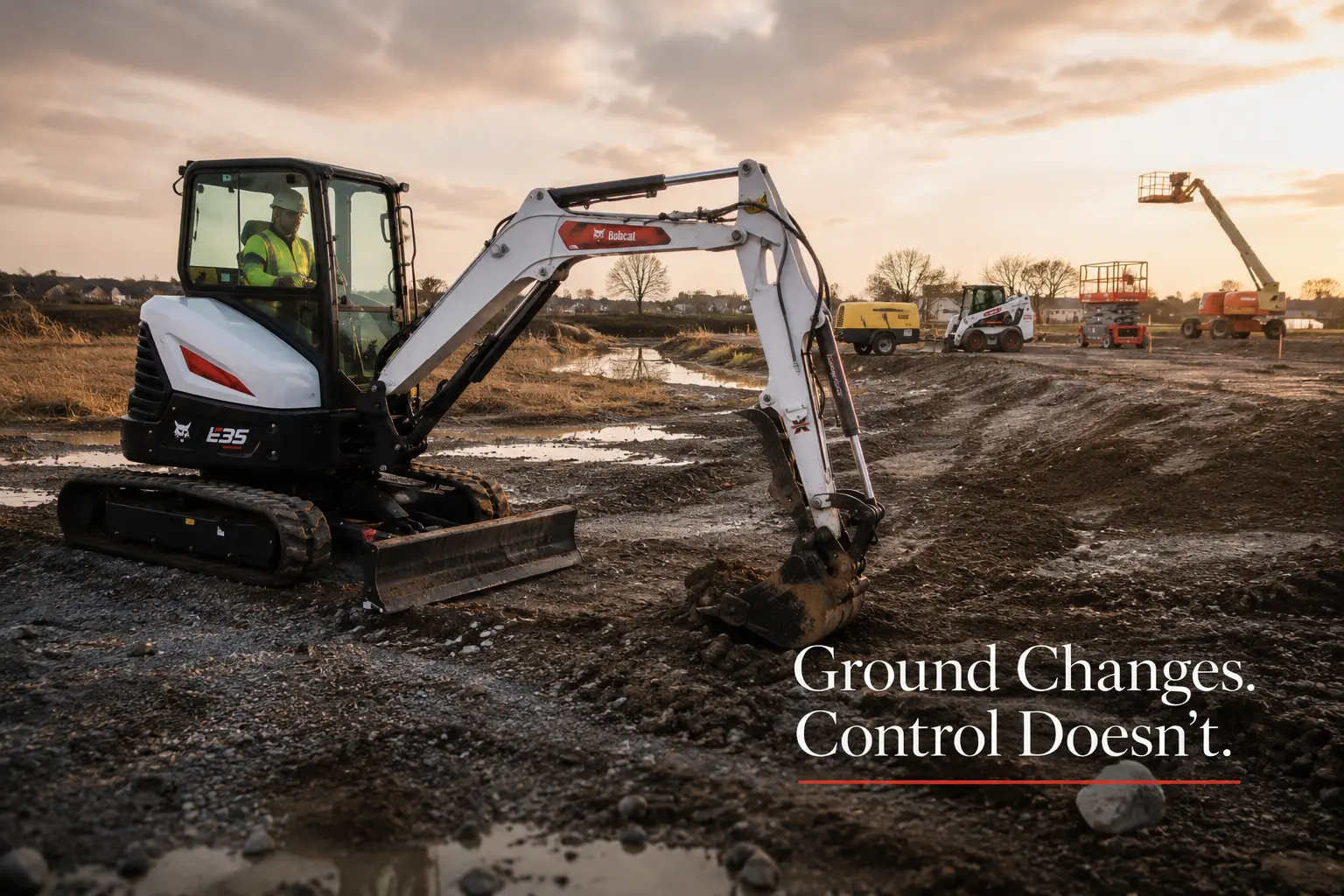
Long Island’s ground conditions vary block by block. A lot in Huntington might drain well and compact easily, while a site closer to the water table in parts of Suffolk County holds moisture for days after rain. Before booking, it’s worth telling your rental provider what the site actually looks like: wet, sloped, freshly graded, tight access or all of the above.
For most trenching, drainage and site preparation work on soft or mixed ground, a rubber tracked mini excavator in the 3 to 4 ton class covers the majority of Long
Island jobs without overloading the soil. If you’re deciding between a compact machine and something larger, our breakdown on Bobcat E35 vs. full-size excavator walks through when each size actually makes sense.
J.E.H supplies rubber tracked mini excavators for trenching, site preparation and landscaping projects across Melville, Suffolk County, Nassau County and NYC. If you describe the ground conditions when you reach out, we’ll help match the right machine to the site instead of leaving that to chance.