
Blog
Ask five contractors how many passes with a plate compactor a job needs, and you’ll hear five different answers: three, four, or just “run it till it stops moving.” All of them can be right, because the real number depends on what you’re compacting, how thick the layer is, and how wet the material is when the plate hits it.
This guide breaks down real pass-count ranges by material and lift thickness, and shows you how to tell when a base is actually ready to build on, from driveway sub-base prep in Nassau County to trench backfill in Queens.
How Many Passes With a Plate Compactor Do You Need?
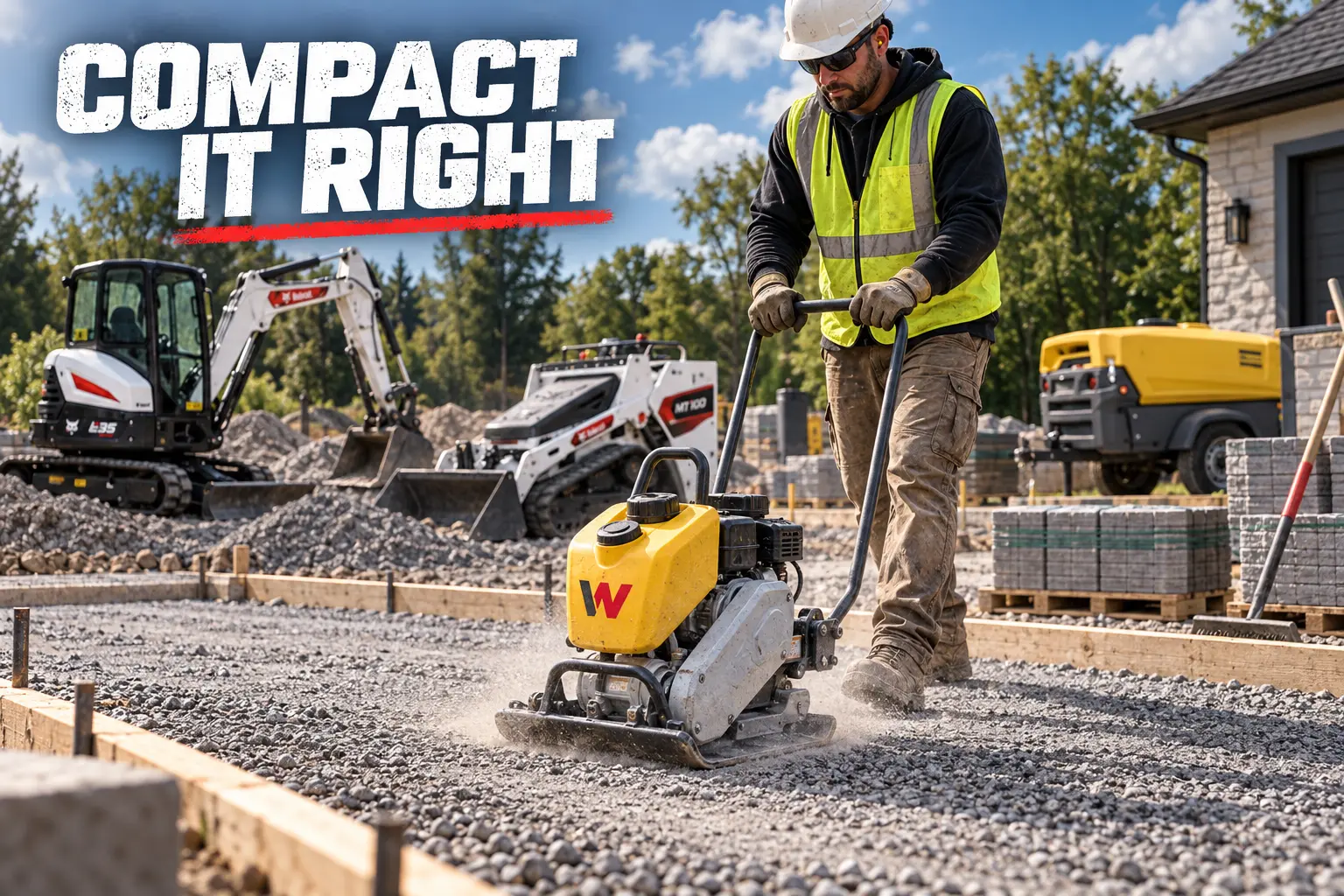
For most granular material, plan on three to four passes per lift, and two to three passes to bed pavers into their base. That’s the range contractors and rental yards fall back on because it works for the vast majority of driveway, patio, and walkway sub-base jobs.
It’s a starting point, not a rule. Lift thickness, plate weight, and moisture all shift that number, sometimes by a lot. A dry 8-inch lift under a light compactor might never reach proper density no matter how many passes you run, while a well-moistened 4-inch lift under a 3,000–5,000-pound-force plate can get there in three.
Quick reference:
- Gravel or crushed stone sub-base (4–8 in. lifts): 3–4 passes
- Paver bedding sand: 2–3 passes
- Native soil or granular backfill (6–8 in. lifts): 3–4 passes
- Cohesive or clay soil: use a rammer, not a plate compactor
Why Pass Count Alone Doesn’t Tell the Whole Story
Counting passes is a habit, not a measurement. Two contractors can run the same plate compactor over the same driveway base and get different results, because one added water and the other didn’t, or because one worked in 4-inch lifts and the other tried to save time with 8.
Pass count is a stand-in for density, and it’s only accurate once material, moisture, and lift thickness are already dialed in. That’s why experienced crews treat the first lift on any job as a test lift: run the expected pass count, then check it. If the surface still gives underfoot after four or five passes, you’re not overdue for more passes. You’re working with the wrong lift thickness, the wrong moisture level, or occasionally the wrong machine.
Plate Compactor Passes by Material
Gravel and Crushed Stone Sub-Base
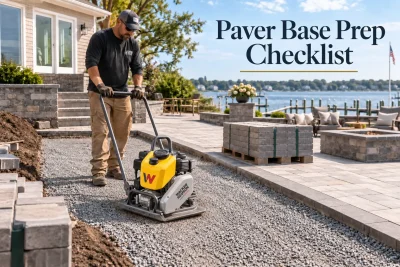
Crushed stone and gravel sub-base is the most forgiving material to compact, and the most common reason contractors rent a plate compactor in the first place. In 4-to-8-inch lifts, three to four passes is the standard range for a mid-size forward-plate compactor generating roughly 3,000 to 5,000 pounds of centrifugal force, which covers most driveway, patio, and walkway sub-base work. Thinner lifts near 4 inches compact faster and more evenly than thicker ones, so an extra lift at 4 inches usually beats one at 8 inches if the schedule allows it.
Paver Base and Bedding Sand
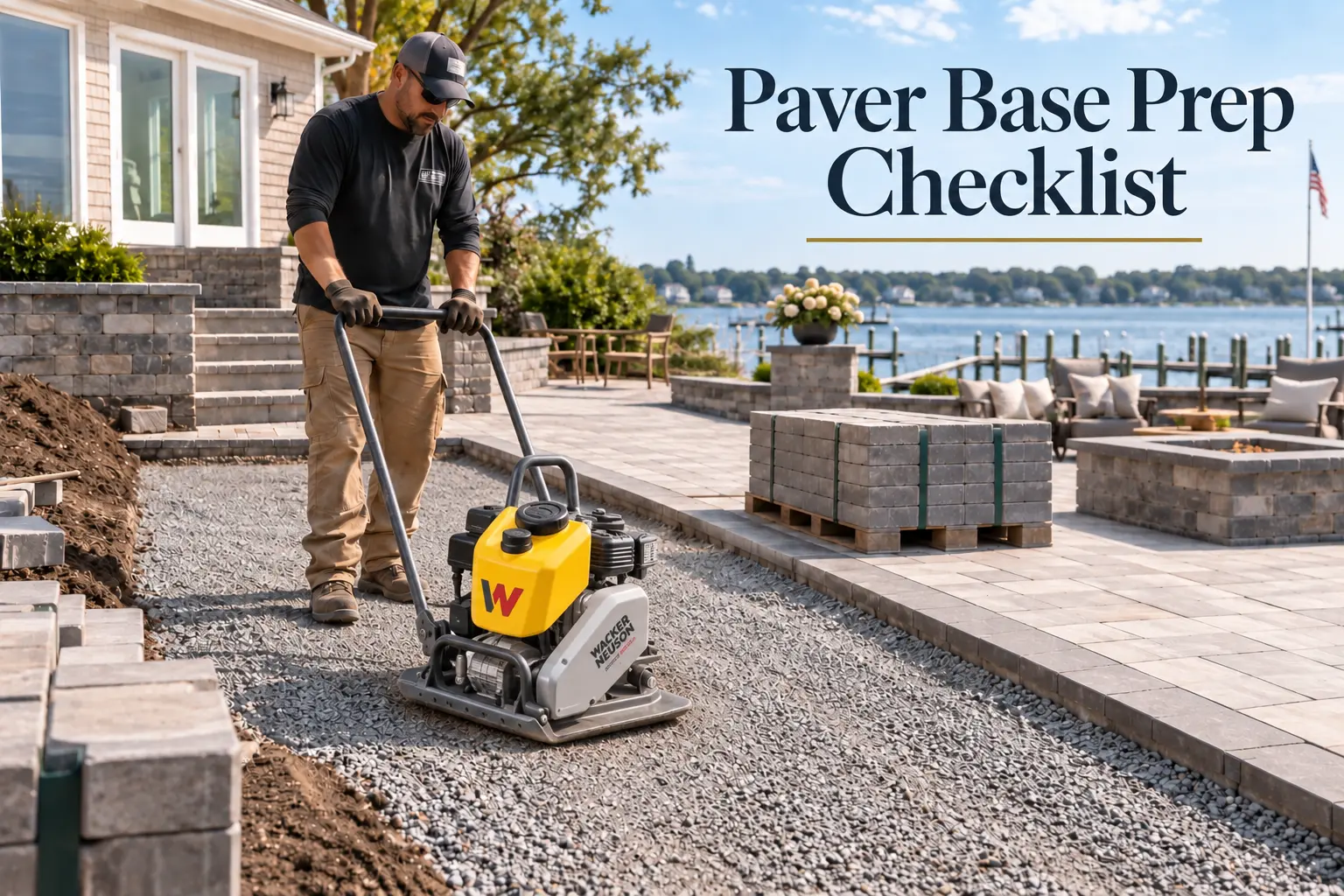
Once the crushed stone base is compacted, most contractors add a thin bedding-sand layer, set the pavers, then run the compactor again to seat them. Two to three passes is typically enough to lock pavers into the sand and pull joint sand down between them. More than that works against you: it risks cracking pavers or grinding sand-filled edges. A protective mat on the compactor’s base plate prevents chipped or scratched paver faces during this stage.
Soil and Trench Backfill
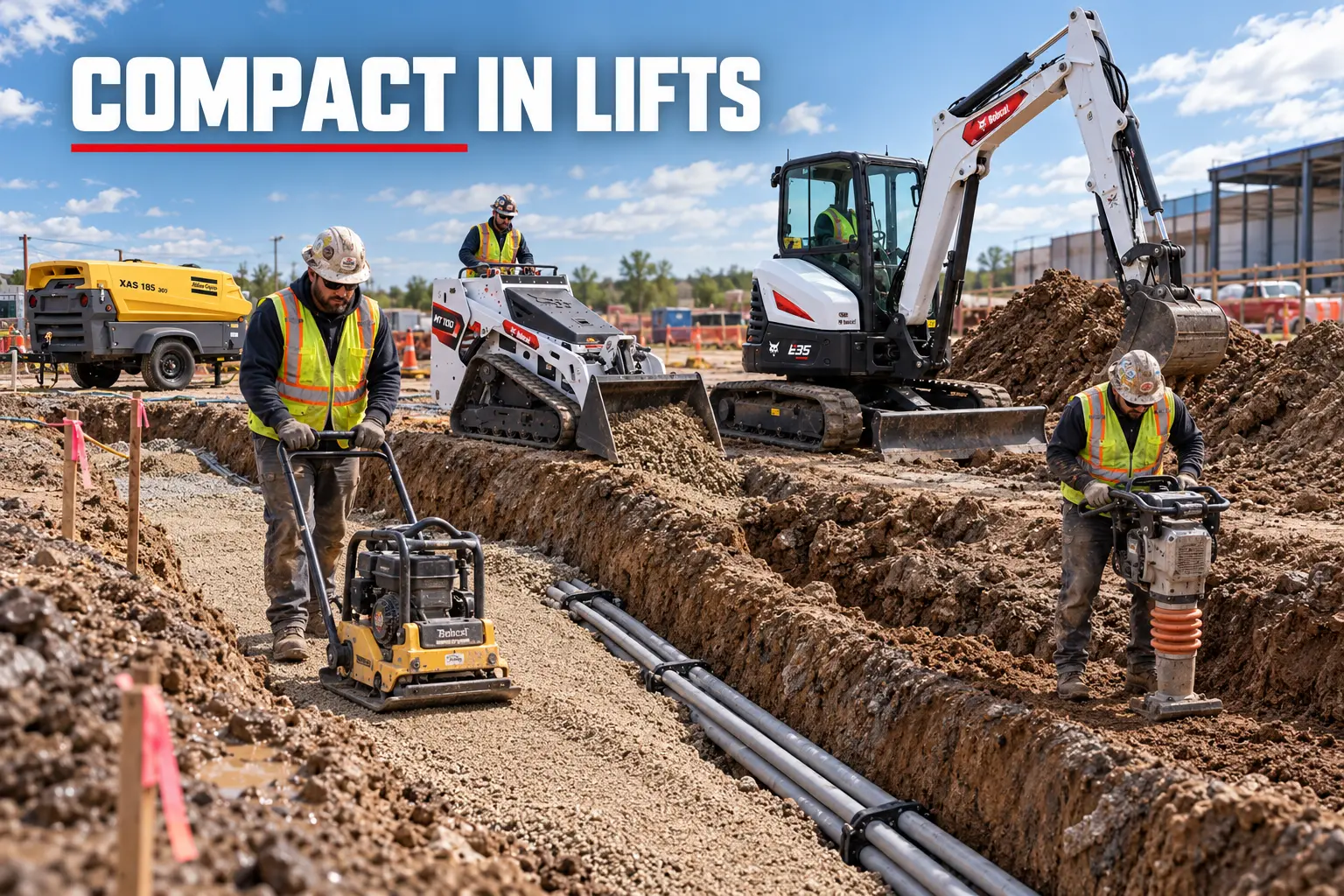
Native soil and trench backfill behave differently depending on whether the material is granular (sand, sandy loam) or cohesive (clay, silt). A vibratory plate compactor is built for granular soils, using rapid vibration to settle particles into a denser arrangement. Cohesive, clay-heavy soils respond better to a rammer, sometimes called a jumping jack, which uses impact rather than vibration to break the bonds between fine particles. Running a plate compactor over wet clay usually just smears the surface without adding real density.
For backfill around utility lines or trench work, plan on three to four passes per 6-to-8-inch lift on granular fill, and always compact in lifts instead of dropping the full trench depth in one pour.
How Lift Thickness Changes Your Pass Count
Lift thickness is the variable most people skip, and it matters as much as pass count itself. A plate compactor only transmits effective compactive force to a certain depth. Push that depth too far in one lift, and the surface can look compacted while the bottom stays loose, a problem that won’t show up until the driveway settles or the pavers start rocking six months later.
As a general range, light-duty compactors under roughly 200 pounds handle lifts around 4 inches well, while heavier reversible plates can manage lifts in the 8-to-12-inch range for road-base and embankment work. Matching lift thickness to the machine you actually have, rather than the machine you wish you had, is what keeps pass counts predictable.
Moisture: The Variable Most People Underestimate
Dry material won’t lock together, no matter how many times you run the plate over it. Oversaturated material does the opposite: it turns to soup and pushes out from under the plate instead of compacting. The target is what contractors and geotechnical engineers call optimum moisture content, the point where a material reaches its highest achievable density for a given compactive effort.
You don’t need a lab to get close. Grab a handful of the sub-base material and squeeze it. If it holds a loose shape without crumbling and without dripping water, it’s in the right range. If it falls apart, add water in light passes with a hose or the compactor’s onboard tank.
Moisture management matters enough that it shows up in formal highway engineering specifications, not just jobsite habit. New York State’s own excavation and embankment compaction standards treat moisture content as a primary control point on every lift, for exactly this reason.
How to Tell When Compaction Is Actually Done
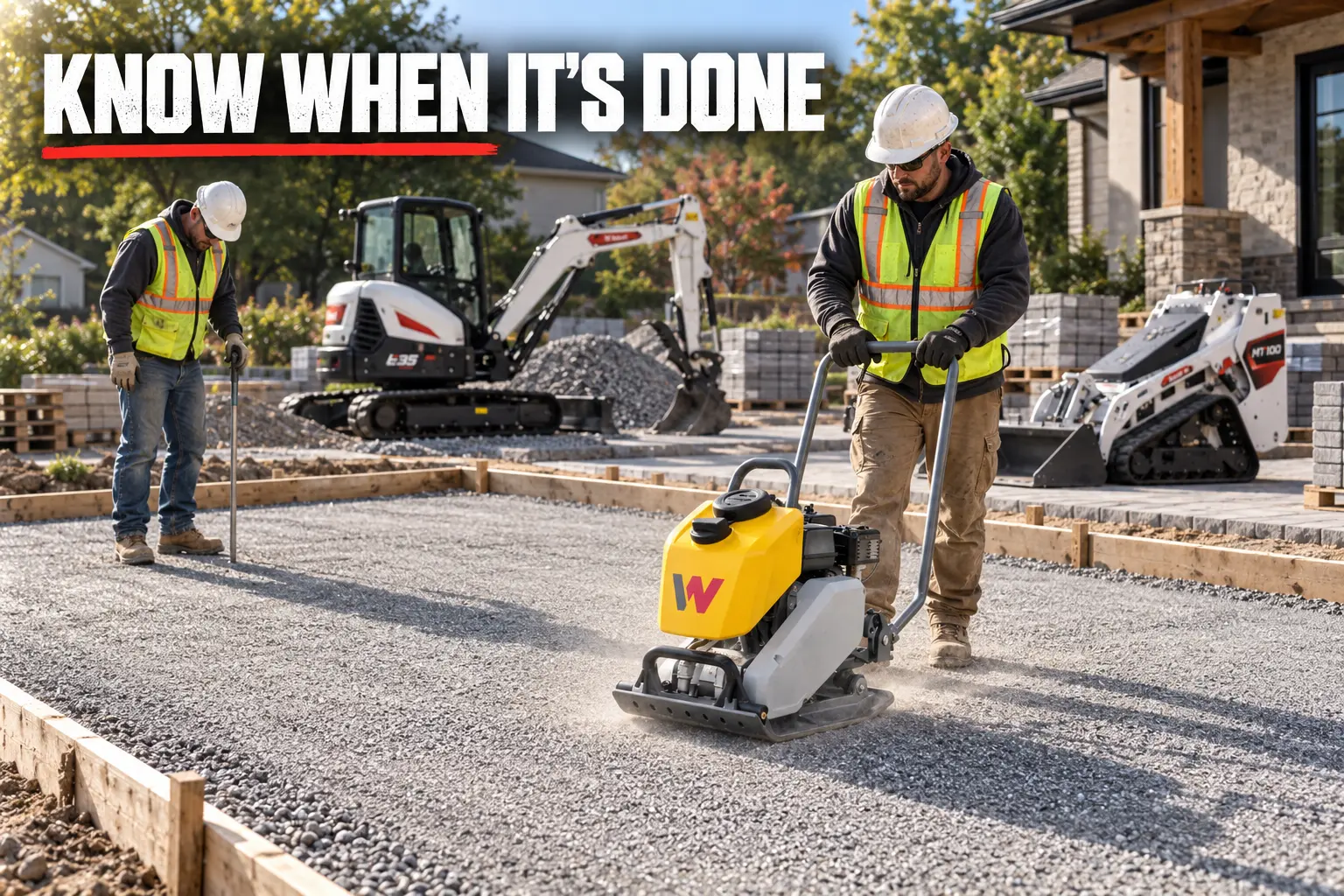
Pass count gets you close. These signs confirm you’re actually finished:
- The surface stops visibly moving or rippling under the plate.
- Footprints and vibration marks stop showing up between passes.
- A rod or stake driven into the lift meets consistent resistance across the area, not soft spots in the middle.
- The material sounds different underfoot: a duller, tighter response instead of a hollow or springy one.
None of these replace a real density test on projects that require one, like structural slabs, retaining walls, or permitted work that calls for compaction documentation. For those jobs, a compaction testing company can confirm density with a nuclear gauge or similar method. For most residential driveways, patios, and landscaping work, the signs above are what experienced crews rely on every day.
Choosing the Right Plate Compactor for the Job
Pass count and compactor size are connected. A heavier plate with more centrifugal force compacts a given lift in fewer passes than a light one, because it’s doing more work per pass. That’s part of why the machine matters as much as the technique.
For most Long Island driveway, patio, and walkway sub-base work, a mid-size forward-plate compactor in the 17-to-20-inch class, generating roughly 3,000 to 5,000 pounds of centrifugal force, covers the job without being harder to maneuver than it needs to be. J.E.H’s Wacker Neuson plate compactor rental fits that range and is built for exactly this kind of granular sub-base, gravel, and paver-base work.
Cohesive or clay-heavy soil, tight trenches, and backfill around utilities are better suited to a rammer instead of a plate. If you’re not sure which one your project calls for, that’s a five-minute phone call, not a guess you make on the jobsite.
Renting a Plate Compactor Across Long Island and NYC
J.E.H Equipment Rentals supplies plate compactors and the rest of the compaction, excavation, and site-prep lineup to contractors, landscapers, and homeowners across Melville, Long Island, Nassau County, Suffolk County, Queens, and Brooklyn. A residential driveway in Huntington and a commercial sub-base job in Hauppauge call for different lift schedules and different machines, and matching the right compactor to the right material is exactly where our team helps before the rental even leaves the yard.
We also carry the equipment that pairs with a compaction job start to finish: mini excavators and track loaders for the excavation stage, and concrete buggies for placement once the base is ready. Our team helps match plate size, weight class, and rental term to your project, so you’re not guessing at pass counts on a machine that’s under- or over-sized for the job.
For jobs where pricing and specs matter more than technique, our complete plate compactor rental guide covers rates and unit details. For background on why skipping this step causes problems down the road, see why soil compaction matters on Long Island.
Need the right plate compactor for your next pour, patio, or trench backfill? Reserve equipment online or call (800) 845-3608 to speak with our rental team about the right machine, lift plan, and delivery window for your site.